



Introduction
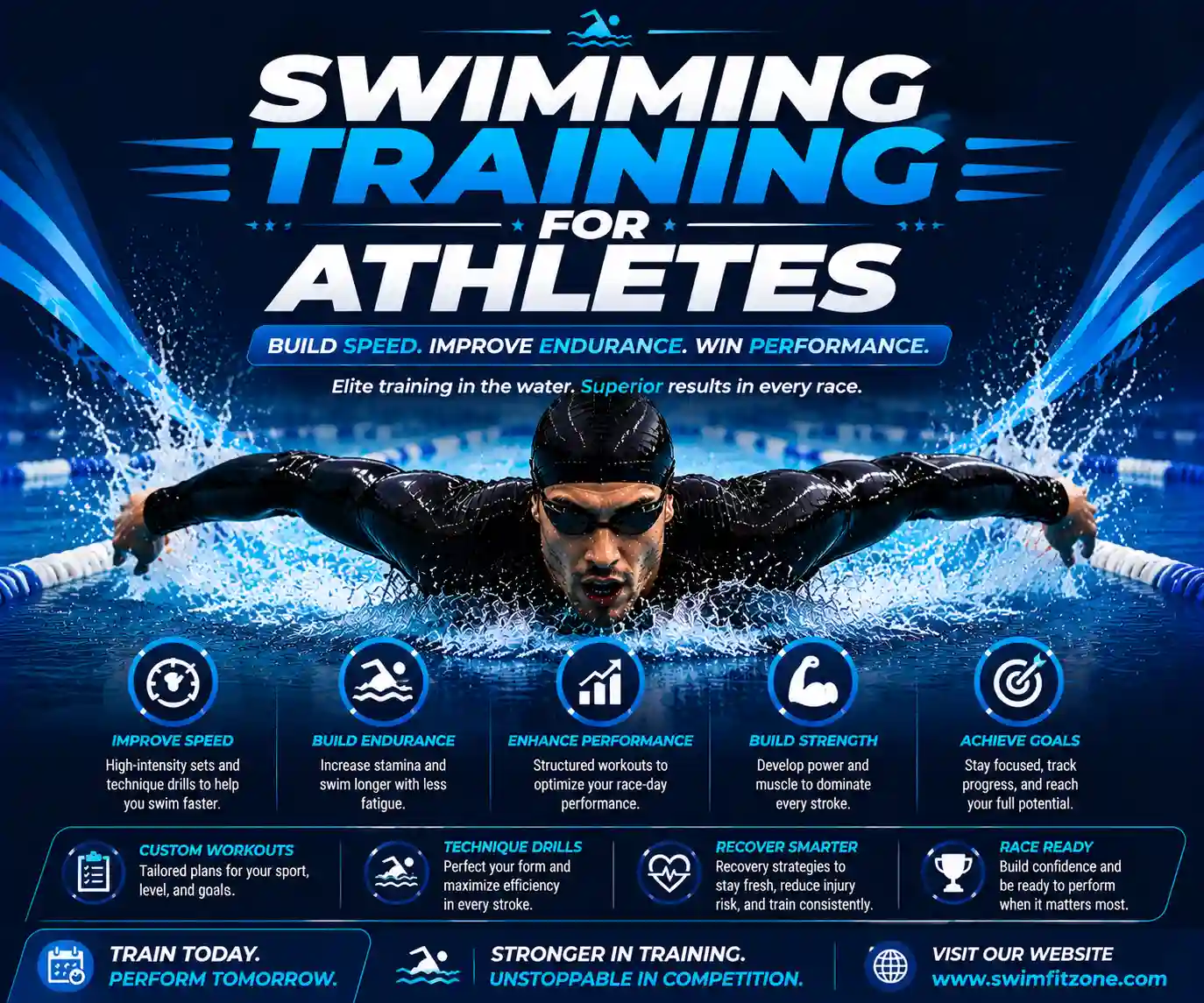
Swimming Training for Athletes is more than just doing laps. I know this from years of coaching and competing. Many swimmers feel stuck. They train hard but never see their times drop, or they get exhausted and frustrated despite swimming every day. This happens because without the right plan, technique, and recovery, even hours in the pool can be wasted. Structured training, combined with strength work, nutrition, and proper tracking, is what separates good swimmers from top performers.
I have worked with swimmers at all levels, from high school teams to elite competitors, and I have seen the same mistakes repeatedly. Athletes ignore stroke mechanics, skip dryland sessions, or do not track progress. Once they learn to balance pool workouts, dryland training, and recovery, everything changes. This guide on Swimming Training for Athletes will show you how to build a plan that works, avoid common pitfalls, and measure your improvement effectively.

Why Structured Swim Training Matters
Just swimming without a plan will not make you faster. Structured training helps you improve stroke efficiency, build endurance, and prevent injuries. It also gives you measurable progress so you can see real improvement in your times, stroke count, and efficiency. Knowing your goals and tracking them keeps training focused and rewarding.
Training Levels and Workouts
Swimming training changes depending on your level. Let us break it down.
Beginner Workouts
- Focus on building comfort in the water.
- Swim 2 to 4 times per week.
- Include short drills for kick, pull, and breathing.
- Practice basic strokes including freestyle and backstroke.
New swimmers should first learn the Best Swimming Strokes for Beginners before progressing to harder workouts.
Intermediate Workouts
- Swim 3 to 5 times per week.
- Introduce sprint and endurance sets.
- Start tracking intervals, pace, and stroke efficiency.
- Add technique-focused drills for all strokes.
Advanced Workouts
- Swim 5 to 6 times per week.
- Include race-pace and interval training.
- Add long endurance sets.
- Combine pool workouts with dryland strength and mobility sessions.
Training Phases and Periodization
Swim training works best in phases. Here is the breakdown.
- Base Phase: Build endurance and technique. Focus on easy-to-moderate swims and drills.
- Build Phase: Increase intensity. Add sprint sets and longer main sets.
- Peak / Taper Phase: Reduce total volume but keep intensity high. Prepare for races. Include light dryland work that does not cause fatigue.
- Transition Phase: Take a break or reduce training after a season. Recover before the next cycle.
Following phases helps your body improve steadily and avoids burnout.
Technique and Stroke Improvement

Technique is the foundation of speed. Learning proper mechanics through Swimming Stroke Techniques helps athletes move more efficiently in the water. Poor technique wastes energy. Focus on the following:
- Freestyle: Keep elbows high and pull straight back. Following proven Freestyle Swimming Tips can help improve stroke efficiency.
- Backstroke: Maintain a steady kick and body rotation. Proper Backstroke Techniques help swimmers stay balanced and efficient.
- Breaststroke: Time the kick with the pull for efficiency.
- Butterfly: Smooth rhythm, strong core, consistent breathing.
- Starts and Turns: Practice explosive push-offs and smooth flip turns.
Drills help fix specific flaws. For example, catch-up drill improves freestyle timing. Always focus on form, not speed.
Practicing targeted Swimming Stroke Drills can help athletes correct weaknesses and improve overall performance.
Drill Summary Table
| Drill Name | Stroke Focus | Purpose / Benefit | Recommended Reps / Sets |
|---|---|---|---|
| Catch-Up Drill | Freestyle | Improves timing and arm extension | 4 × 50 yards |
| Fist Drill | Freestyle / Backstroke | Improves feel for water and pull strength | 4 × 50 yards |
| 3-3-3 Drill | Butterfly | Enhances rhythm and breathing coordination | 6 × 25 yards |
| Kicking with Board | All Strokes | Builds leg strength and endurance | 6 × 25 yards |
| Pull Buoy Drill | All Strokes | Focuses on upper body strength and core stability | 4 × 50 yards |
Sample Swim Workout Structure
A typical swim session has three parts:
- Warm-Up: 5 to 10 minutes easy swimming, drills, or mobility exercises.
Structured Swimming Warm-Up Routines help prepare muscles and reduce injury risk before training.
- Main Set: The core of the workout. Can focus on endurance, sprint, or technique. Include rest between repeats.
- Cool-Down: 5 to 10 minutes easy swimming to help muscles recover.
Example Main Set
- 10 x 100 yards at moderate pace, 15-second rest between reps.
- 6 x 50 yards sprint, full rest between reps.
This layout helps you train efficiently and track progress clearly.
Strength and Dryland Training

Swimming alone will not build power. Dryland training strengthens muscles that help you swim faster. Include the following:
- Core exercises: Planks, Russian twists.
- Legs: Squats, lunges, jump squats.
- Shoulders and back: Pull-ups, resistance bands.
- Mobility: Stretching and shoulder warm-ups.
Do dryland 2 to 3 times per week. Do not overdo it. Combine with swim sessions for best results.
Nutrition and Recovery

Energy comes from food and rest. Here is how to fuel your training:
- Eat carbs before swimming for energy.
- Eat protein after workouts to help muscles recover.
- Stay hydrated with water or electrolyte drinks.
- Sleep at least 7 to 9 hours per night.
Recovery is as important as training. Overtraining leads to fatigue and injuries.
Following basic Swimming Safety Tips can help athletes avoid common training mistakes and reduce injury risk.
Nutrition Timing and Hydration Tips
- Eat carbs and protein within 30 minutes after training to help muscles recover.
- Drink water or electrolyte drinks during and after sessions.
- Avoid training on an empty stomach for long workouts.
- Plan meals around training times to maintain energy levels.
Performance Tracking
If you do not track your progress, you cannot improve efficiently. Measure the following:
- Stroke count and rate.
- SWOLF score for efficiency.
- Interval times.
- Race times.
Track these weekly. Adjust your training based on results. Use a notebook or swim app to record sessions and see improvements over time.
Many swimmers use performance data to guide their Swimming Technique Improvement efforts throughout the season.
Race Prep and Tapering

Before competitions, training changes. You taper to peak at the right time.
- Reduce total distance 1 to 3 weeks before a race.
- Keep intensity high but sessions shorter.
- Focus on technique and speed.
- Maintain light dryland work without causing fatigue.
Tapering helps you feel fresh and fast on race day.
Race-Specific Training
Training changes depending on your main race distance:
- Sprints 50 to 100 yards: Focus on short, fast intervals with full rest.
- Middle Distance 200 to 400 yards: Mix endurance and speed sets.
- Long Distance 500 yards and above: Build aerobic endurance with longer swims at steady pace.
Adjust your workouts so your body is ready for your specific event.
Common Mistakes and How to Avoid Them
Even good swimmers make mistakes. Watch for the following:
- Overtraining leads to burnout.
- Ignoring technique wastes energy and can make it harder to improve swimming endurance during longer sessions.
- Skipping dryland work slows strength gains.
- Poor recovery increases injury risk.
Fix these by following a structured plan and listening to your body.
Beginner to Elite Progression
Everyone starts somewhere. A beginner can become elite with the following:
- Consistent training.
- Gradual increase in distance and intensity.
- Regular technique drills.
- Dryland strength and recovery focus.
Your plan should grow with your skills. Adjust workouts as you improve. Track your progress, set goals, and celebrate milestones.
Motivation and Mindset
Athletes improve faster when they stay motivated. Set small achievable goals. Celebrate small wins in time improvements or technique mastery. Track your progress visually with charts or logs. This keeps you committed and focused.
- Structured swim training beats random laps.
- Technique matters more than distance.
- Dryland strength and mobility improve performance.
- Track progress with stroke count, SWOLF, and intervals.
- Nutrition, hydration, and recovery are crucial.
- Race prep requires taper and race-specific training.
Final Thoughts
From my experience, Swimming Training for Athletes is as much about smart decisions as it is about hard work. I have coached swimmers who put in hours but saw minimal results until we focused on structured phases, technique drills, and proper recovery. Tracking progress and adjusting workouts based on performance makes every session count. The difference between plateauing and improving is not more laps; it is smarter, data-informed training.
Commit to a plan, focus on your technique, integrate dryland strength, and prioritize recovery. When you follow these principles, you will feel stronger in the water, swim faster, and prevent injuries. Swimming Training for Athletes is not just about training harder; it is about training smarter with purpose and measurable results.

