



Introduction
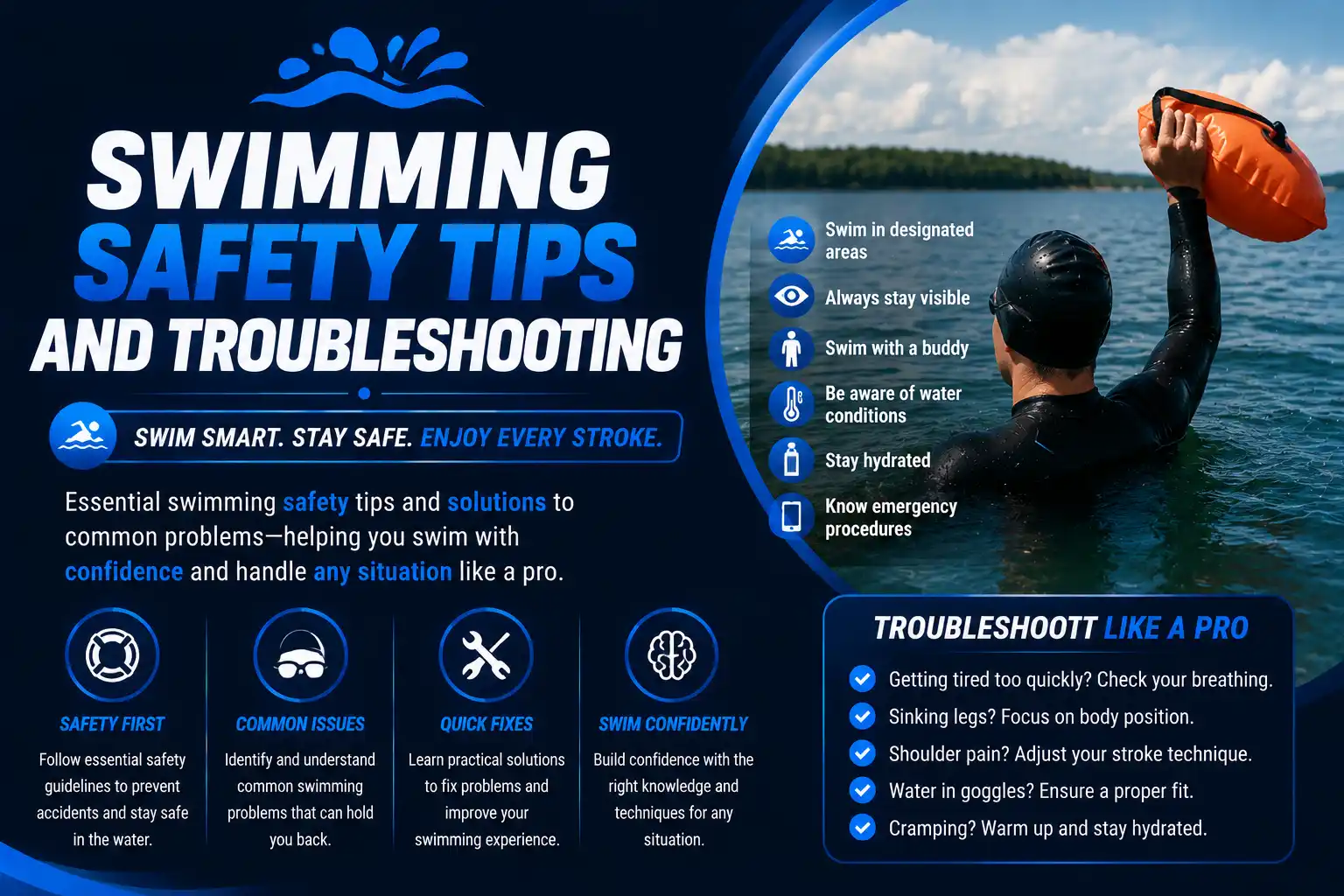
Swimming is one of the most enjoyable ways to stay active, but it can quickly become risky if you’re unprepared. I’ve seen firsthand how a moment of distraction can turn a fun day at the pool into a stressful emergency. Whether it’s kids struggling in shallow water, beginners panicking in deep pools, or adults misjudging currents in open water, these moments are real and can be dangerous. That’s why having clear Swimming Safety Tips and Troubleshooting knowledge is essential for anyone entering the water.

Over the years, I’ve worked with swimmers of all ages, teaching both safety and technique. From guiding a nervous child to float independently to helping adults fix their breathing problems, I’ve learned that understanding common swimming issues and knowing how to respond to them can prevent accidents and save lives. This guide combines practical tips, troubleshooting solutions, and expert advice so you can feel confident and prepared every time you swim.
Why Swimming Safety Matters
Accidents happen fast. Kids, beginners, and even experienced swimmers can face risks in pools, lakes, or oceans. Being prepared is key.
Safety is not just about rules. It’s about spotting problems early and knowing how to fix them. A small correction in technique or quick response in an emergency can make all the difference.
Learning the right swimming technique also lowers your risk of accidents. If you are just starting, choosing one of the best swimming strokes for beginners can help you build confidence, improve body control, and stay safer in the water.
Top Swimming Safety Tips
Building safe habits starts before you enter the water. These water safety tips reinforce simple practices that help swimmers of all ages reduce risks and stay prepared every time they swim.
- Always supervise children.
- Learn to swim. Everyone in the family should know basic swimming.
- Wear life jackets when needed, especially in open water.
- Never swim alone. Buddy swimming can save lives.
- Learn CPR. You might need it in an emergency.
- Check weather and water conditions. Avoid swimming in storms or strong currents.
- Avoid alcohol. It slows reactions and increases risks.
Pool Safety Tips

- Check drains and covers.
- Avoid slippery decks.
- Don’t dive in shallow water.
- Keep pool chemicals balanced.
- Make sure there’s a first aid kit nearby.
Open Water Safety Tips

Lakes & Rivers
- Watch for hidden rocks and sudden drop-offs.
- Check water quality before swimming.
- Avoid fast currents.
Beaches & Oceans
- Learn about rip currents.
- Swim near lifeguards.
- Follow beach flags and signs.
- Avoid swimming in rough waves.
Signs of Silent Drowning

Drowning doesn’t always look dramatic. Watch for:
- Head low in water
- Mouth barely above the surface
- Vertical body position
- Glassy or empty eyes
- Arms pushing down as if climbing an invisible ladder
- No shouting or waving
Knowing these signs can help you act fast.
Quick Swimming Troubleshooting Guide
| Problem | Quick Fix |
|---|---|
| Legs keep sinking | Look down and relax |
| Breathing issues | Exhale underwater |
| Panic in deep water | Practice floating |
| Muscle cramps | Hydrate and stretch |
| Water in nose | Blow bubbles slowly |

Beginner Swimming Mistakes
- Swimming alone
- Ignoring fatigue
- Looking forward instead of down
- Holding breath too long
- Skipping warm-up
- Diving in unknown water
- Overestimating ability
- Using pool toys as safety
- Swimming after alcohol
- Ignoring warning signs
Avoiding these mistakes improves safety and confidence.
Swimming Safety Equipment Checklist
Before entering water:
- Goggles
- Swim cap
- Life jacket if needed
- Rescue tube or float
- First aid kit nearby
- Water bottle
- Sunscreen
Swimming Health Troubleshooting
Swimmer’s Ear
- Symptoms: Itching, pain, drainage
- Fix: Dry ears immediately, use ear drops
Red Eyes
- Cause: Pool contaminants
- Fix: Rinse with clean water, wear goggles
Skin Rashes
- Cause: Chemicals or bacteria
- Fix: Shower immediately, change wet clothes
Muscle Cramps
- Cause: Overuse or dehydration
- Fix: Stretch, hydrate, rest
How to Stop Swimming Anxiety
- Start in shallow water
- Practice floating and kicking
- Gradually move to deeper areas
- Focus on slow, steady breathing
- Relax your body and mind
Feeling nervous in the water is common, especially for beginners and people returning to swimming after a long break. If fear keeps affecting your confidence, these practical tips for overcoming swimming anxiety can help you feel more relaxed and comfortable in the water.
For some people, the fear runs much deeper than normal nervousness. If you avoid swimming because of panic or discomfort around water, learning how to manage a fear of water is an important first step toward building confidence.
What to Do During a Swimming Emergency

- Call for help immediately
- Use a flotation device if possible
- Avoid jumping in unless trained
- Safely remove the person from water
- Start CPR if needed
- Keep the person warm and calm
What Is Water Competency
Water competency includes:
- Floating on your back
- Treading water
- Entering and exiting water safely
- Swimming basic strokes
- Safe breathing techniques
Everyone, especially kids and beginners, should practice these skills.
Developing water competency starts with learning proper swimming stroke techniques. Good technique makes floating, breathing, and moving through the water much easier and safer.
Use Layers of Protection Around Water
- Adult supervision
- Pool fences
- Life jackets
- Swim lessons
- Pool alarms
Combining these precautions reduces risk significantly.
Dangerous Weather Conditions For Swimming
- Lightning or thunderstorms
- Strong winds
- Heavy rain or flash floods
- Cold water or sudden temperature changes
Why Open Water Is More Dangerous
- Murky water
- Hidden objects
- Sudden depth changes
- Strong currents or rip tides
- Cold temperatures
Safety Tips For Weak or New Swimmers
- Stay in shallow water
- Swim near lifeguards or supervision
- Use approved life jackets
- Avoid swimming when tired
- Practice floating before attempting strokes
Pool Chemical Safety
- Never mix pool chemicals together
- Store chemicals away from children
- Leave the pool if eyes or skin burn
- Shower after swimming
What To Do In A Rip Current
- Stay calm
- Swim parallel to the beach
- Float or tread water if tired
- Wave for help
Reach or Throw Before Entering Water
- Use a pole, towel, or flotation device
- Call emergency services
- Enter water only if trained
Why Hydration Matters During Swimming
- Hydrate before and after swimming
- Dehydration can cause cramps, fatigue, and dizziness
Building endurance gradually also plays a big role in staying safe. If your body tires too quickly, your technique often breaks down, increasing the chance of accidents. Learning how to improve swimming endurance helps you swim longer while maintaining better control.
Swimming Safety Tips for Parents
Parents play the biggest role in preventing water accidents. These swimming safety tips for families explain why active supervision, swim lessons, and water safety skills are essential for children.
- Never leave children alone
- Keep phones away while supervising
- Teach basic water safety rules
- Use pool fences
- Keep rescue equipment nearby
Swimming Safety Tips for Kids
- Always ask permission before swimming
- Never run near pools
- Learn to float and tread water
- Swim with a buddy
Swimming Safety Tips for Teenagers
- Avoid risky diving
- Never swim after alcohol
- Follow beach and pool warnings
- Avoid showing off in deep water
- Stay aware of friends
Teenagers should also understand how risky behavior around water can lead to serious accidents. These swimming safety tips for teens offer practical advice on making safer decisions at pools, beaches, and lakes.
Swimming Safety Tips for Older Adults
- Warm up before entering water
- Avoid swimming alone
- Stay hydrated
- Take breaks to prevent fatigue
- Check with a doctor if needed
Tips for Swimming Coaches and Instructors
- Teach floating first
- Correct breathing mistakes
- Watch for signs of panic or exhaustion
- Keep emergency equipment nearby
- Teach response during emergencies
Water Safety Tips for Recreational Swimmers
- Check water depth before diving
- Avoid unfamiliar areas
- Rest when tired
- Stay visible in open water
- Follow local safety signs
Before You Swim Checklist
Before getting into the water, spend a few minutes preparing your body. Following proper swimming warm-up routines helps loosen your muscles, improve flexibility, and reduce the chance of cramps or strains during your swim.
- Check weather conditions
- Stretch your muscles
- Drink water
- Wear proper swim gear
- Identify lifeguard locations
- Avoid swimming alone
- Check water depth
Most Common Swimming Risks
- Lack of supervision
- Swimming alone
- Panic in deep water
- Alcohol use near water
- Poor weather conditions
- Lack of swimming skills
- Ignoring warning signs
Quick Swimming Safety Takeaways
- Never swim alone
- Watch children at all times
- Learn basic CPR
- Wear life jackets in open water
- Avoid swimming during storms
- Stay hydrated before and after swimming
- Practice floating and breathing skills
- Know the signs of silent drowning

Final Thoughts
Swimming safely isn’t just about rules. It’s about awareness, preparation, and knowing how to handle problems as they arise. I’ve seen how small corrections, like adjusting breathing rhythm or practicing floating, can completely change someone’s confidence in the water. By combining these Swimming Safety Tips and Troubleshooting strategies with supervision, proper equipment, and emergency readiness, you can enjoy swimming while minimizing risks. Whether you swim for fun, fitness, or plan to enter swimming competitions, making safety a daily habit will help you perform with greater confidence while reducing unnecessary risks.
What I’ve learned from working with beginners, children, and recreational swimmers is that safety and skill go hand in hand. When swimmers understand their body, recognize hazards, and know how to respond to common problems, the water becomes a safer place to learn, exercise, and have fun. Follow these tips, practice regularly, and stay alert. Your awareness and preparation are the best tools for swimming safely and confidently.

