



Introduction
Finding one exercise that supports both your body and your mind is not always easy. Many people deal with stress, long hours of sitting, poor sleep, or a lack of motivation to stay active. If that sounds familiar, swimming for physical and mental health could be the solution you are looking for. It gives you a full body workout while helping you relax and take a break from everyday pressure.
From my experience helping people learn about swimming, the biggest results come from staying consistent, not swimming perfectly. Many beginners notice small improvements first, such as better energy, improved sleep, and more confidence in the water. This guide explains how swimming can support your overall well being and how to make it part of a healthy lifestyle.
- Swimming supports both physical fitness and mental well being.
- It strengthens your heart, muscles, and endurance while being gentle on your joints.
- Regular swimming may help reduce stress, improve mood, and support better sleep.
- Swimming is suitable for beginners and people of all fitness levels.
- Consistency is the key to enjoying long term health benefits.
Why Swimming Is Good for Physical and Mental Health

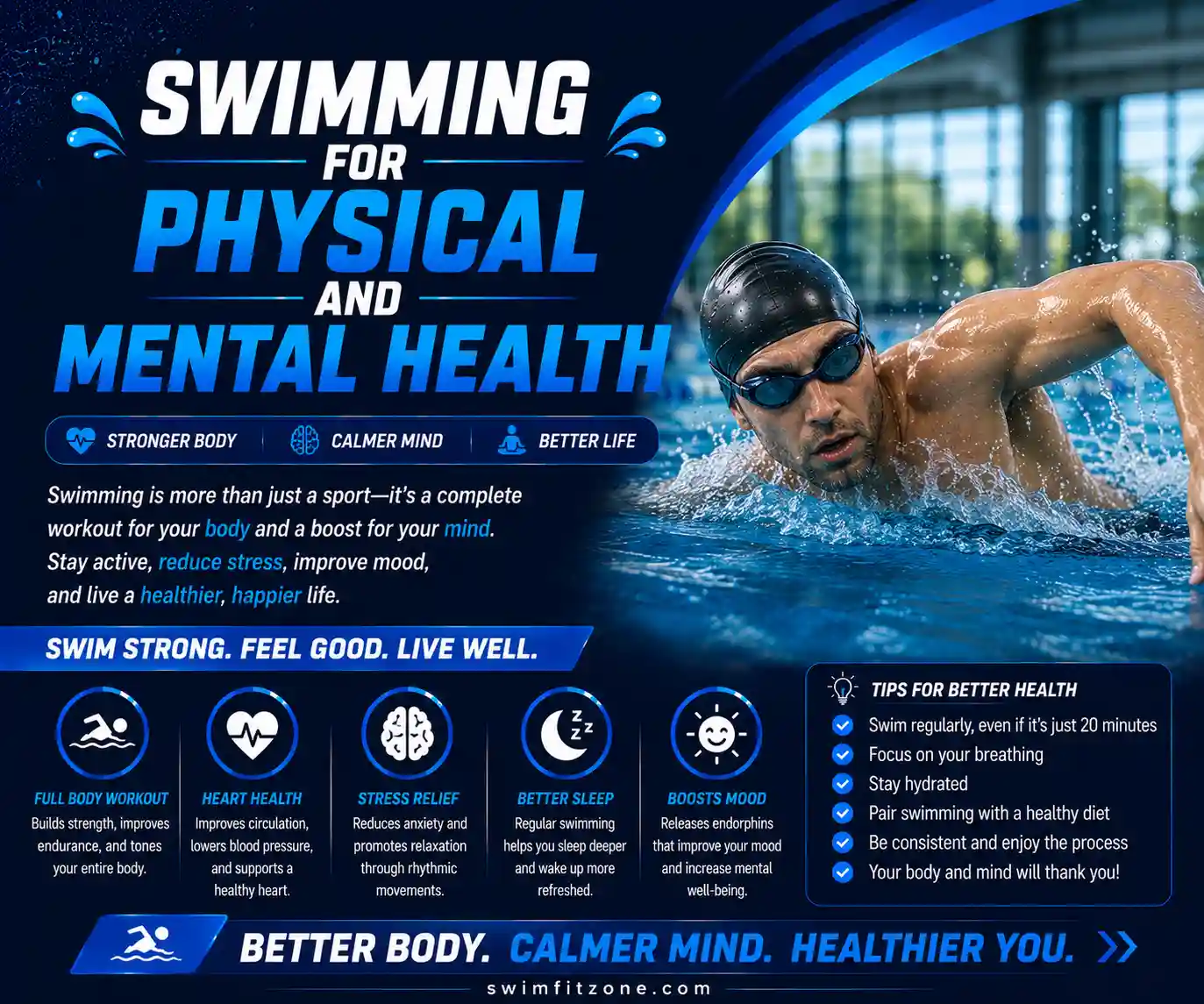
Swimming is one of the few activities that benefits your body and mind at the same time. Every swim session strengthens your muscles, improves your heart health, and helps you stay active. At the same time, the steady rhythm of swimming and controlled breathing can help you feel calmer and more relaxed. Research also suggests that regular swimming can improve physical fitness, support mental well being, and contribute to overall quality of life.
Another advantage is that swimming suits almost every fitness level. Whether you are learning your first stroke or swimming several laps, you can adjust the pace to match your ability. This makes it easier to enjoy swimming as a long term part of a healthy lifestyle.
Physical Health Benefits of Swimming
Gives You a Full Body Workout
Swimming works almost every major muscle group. Each stroke uses your upper body, lower body, and core together, helping you build balanced strength.
During a swim session, you work your:
- Arms and shoulders
- Chest and back
- Core muscles
- Hips and legs
Because so many muscles work together, swimming also improves balance, coordination, and overall fitness. These benefits are one reason many experts consider swimming one of the best full body exercises.
Improves Heart Health

Swimming is an excellent aerobic exercise. It makes your heart work harder to pump oxygen rich blood throughout your body. Over time, this helps improve cardiovascular fitness and supports a healthier heart. To learn more about these long term cardiovascular benefits of swimming, explore our detailed guide.
With regular swimming, you may notice benefits such as:
- Better cardiovascular fitness
- Improved endurance
- Healthier blood circulation
- More energy during daily activities
A stronger heart can also make climbing stairs, walking longer distances, or carrying groceries feel easier.
Builds Muscle Strength Without Heavy Impact
Water creates natural resistance with every movement. This means your muscles work harder without needing heavy weights.
Swimming helps strengthen your:
- Arms
- Back
- Core
- Shoulders
- Legs
The water also supports much of your body weight, reducing pressure on your joints. This makes swimming a great choice for people who want to build strength while avoiding high impact exercise.
Supports Healthy Weight Management
Swimming burns calories while giving your whole body a workout. The exact number of calories you burn depends on your swimming stroke, workout intensity, body weight, and session length.
Although swimming alone is not a quick solution for weight loss, it can become an important part of a healthy lifestyle when combined with balanced eating habits. If your main goal is losing extra body weight, our guide on swimming for weight loss explains how to combine swimming with healthy habits for better results.
Many people also enjoy swimming more than other forms of exercise, making it easier to stay active throughout the year.
Improves Endurance and Stamina
It is normal to feel tired after your first few swimming sessions. As you continue practicing, your body becomes more efficient at using oxygen, and your breathing becomes easier to control.
Over time, you may notice that you can:
- Swim longer without stopping
- Recover faster after exercise
- Stay active for longer periods
- Feel less tired during everyday tasks
Small improvements each week often lead to noticeable progress over the coming months.
As your fitness improves, you may want to swim longer without feeling exhausted. Our guide on how to improve swimming endurance shares practical tips to help you build stamina safely and consistently.
Gentle on Your Joints
Swimming is one of the best low impact exercises you can do. The water supports your body and reduces pressure on your knees, hips, and ankles.
This makes swimming a good choice for:
- Beginners
- Older adults
- People returning to exercise
- Anyone looking for a joint friendly workout
You can improve your fitness while lowering the risk of joint discomfort that sometimes comes with high impact activities.
Improves Flexibility and Posture
Swimming moves your body through a wide range of motion. This helps improve flexibility in your shoulders, hips, back, and legs over time.
Your core muscles also work continuously to keep your body balanced in the water. A stronger core supports better posture and makes everyday movement feel more comfortable.
Mental Health Benefits of Swimming
Swimming does more than strengthen your body. It also supports your mental well being by giving your mind a chance to slow down and focus on the present moment.
While swimming is not a replacement for professional mental health care, it can become a healthy habit that supports your emotional well being.

Helps Reduce Everyday Stress
Daily responsibilities can sometimes feel overwhelming. Swimming offers a simple way to take a break and focus on something positive.
As you swim, your attention naturally shifts to your breathing, body position, and strokes instead of work, school, or other worries.
Many people leave the pool feeling calmer and more refreshed than when they started. If relaxing is one of your main goals, you may also enjoy learning how swimming for relaxation can help reduce everyday stress and create a greater sense of calm.
Can Improve Your Mood
Regular physical activity encourages your body to release natural chemicals called endorphins that help support a positive mood.
Swimming also combines movement with steady breathing, creating a relaxing rhythm that many people enjoy.
After a swim, you may feel:
- More relaxed
- More energetic
- Better able to focus
- Mentally refreshed
These benefits often become more noticeable when swimming becomes part of your weekly routine.
May Help You Sleep Better
Good sleep plays an important role in both physical and mental health.
Swimming uses energy and challenges your muscles, helping your body feel ready for rest later in the day.
Many swimmers notice that they:
- Fall asleep more easily
- Sleep more deeply
- Wake up feeling refreshed
- Feel more energetic during the day
Better sleep can also improve your mood, concentration, and overall well being.
Gives Your Mind a Break
Modern life is full of distractions. Swimming gives you time to step away from phones, emails, and daily responsibilities.
Instead of thinking about everything you need to do, you focus on your breathing and movements in the water. This simple mental break can help you return to your day feeling more relaxed and focused.
Builds Confidence Through Progress
You do not need to swim perfectly to feel proud of your progress.
Every small improvement matters. You may notice that you can swim farther, breathe more comfortably, or complete your workout with fewer breaks.
These small achievements build confidence and encourage you to keep developing healthy habits.
How Physical and Mental Health Work Together
Your physical and mental health are closely connected. When your body feels stronger, your mind often benefits too.
For example, regular swimming can improve your fitness, increase your energy, and help you sleep better. These physical improvements can make you feel more confident, reduce everyday stress, and motivate you to stay active.

You may also find that daily activities become easier, such as:
- Climbing stairs
- Carrying groceries
- Walking longer distances
- Playing with your children
- Staying active throughout the day
That is one reason swimming stands out from many other exercises. It helps support your overall well being instead of focusing on just one area of health.
Swimming vs Other Exercises
Walking, running, cycling, and swimming all offer health benefits. The best exercise is the one you enjoy and can do consistently. Swimming has one clear advantage. It gives you a full body workout while putting very little stress on your joints.
| Exercise | Joint Impact | Full Body Workout | Best For |
|---|---|---|---|
| Swimming | Low | Yes | Overall fitness and mental well being |
| Walking | Low | No | Daily physical activity |
| Running | High | No | Cardiovascular fitness |
| Cycling | Low | Mostly lower body | Leg endurance |
If you enjoy being in the water, swimming can become a long term habit that supports both your physical and mental health.
How Often Should You Swim for Overall Health?
You do not need to swim every day to enjoy the benefits. For most people, swimming two to four times each week is enough to improve fitness and support overall health.
If you are just getting started, focus on good technique instead of speed. Increase your swimming time gradually as your fitness improves.

| Experience Level | Sessions Per Week | Time Per Session |
|---|---|---|
| Beginner | 2 to 3 | 20 to 30 minutes |
| Intermediate | 3 to 4 | 30 to 45 minutes |
| Advanced | 4 to 5 | 45 to 60 minutes |
Creating a regular schedule is easier when you follow structured swimming workout routines that match your fitness level and long term goals.
The most important goal is to build a routine you can maintain over the long term.
What Results Can You Expect?
Everyone improves at a different pace. Your age, fitness level, swimming technique, and consistency all affect your progress.
Instead of expecting dramatic changes after a few sessions, look for small improvements that build over time.
During the First Few Weeks
Many beginners notice:
- Better energy levels
- Less stress after swimming
- Improved breathing
- More confidence in the water
After One to Two Months
If you swim regularly, you may begin to notice:
- Better endurance
- Stronger muscles
- Improved cardiovascular fitness
- Better sleep
- Smoother swimming technique
Progress may seem slow at first, but staying consistent usually brings lasting results.
Common Mistakes That Reduce the Benefits of Swimming
Swimming is simple, but a few common mistakes can slow your progress or make your workouts less effective.
Try to avoid these habits:
- Skipping your warm up
- Swimming too fast too soon
- Holding your breath instead of breathing naturally
- Using poor swimming technique
- Not drinking enough water
- Expecting instant results
Focus on building good habits instead of trying to improve everything at once. Small changes often make the biggest difference over time.
Swim Safely While Protecting Your Health

Swimming is one of the safest forms of exercise, but following a few simple safety habits helps you get the most from every session.
Keep these tips in mind:
- Warm up before getting into the water.
- Drink water before and after swimming to stay hydrated.
- Shower before entering the pool.
- Avoid swallowing pool water.
- Swim in supervised areas whenever possible.
- Take a break if you feel tired or uncomfortable.
- Do not swim if you have diarrhea or another contagious illness.
- Follow pool rules and lifeguard instructions.
You can also review the CDC’s healthy swimming recommendations to help prevent recreational water illnesses and keep every swim safe.
These basic habits are a great starting point, but following complete swimming safety tips can help you enjoy every swim with greater confidence and reduce common risks in the water. If you have a serious medical condition, recently had surgery, or are recovering from an injury, talk to your doctor before starting a new swimming routine.
Final Thoughts
Swimming is one of the best activities for improving your physical fitness while supporting your mental well being. Whether your goal is to reduce stress, build strength, improve endurance, or simply become more active, regular swimming can help you build healthier habits that last.
From my experience, the people who benefit most are not always the fastest swimmers. They are the ones who stay consistent and enjoy the process of improving little by little. Start at a pace that feels comfortable, focus on steady progress, and celebrate every small achievement. Over time, those small steps can lead to meaningful improvements in both your physical and mental health.

