



Introduction
Many people feel drained by work, family responsibilities, or constant notifications. Stress builds up, leaving your body tense and your mind racing. I’ve experienced this myself after long weeks at the office. That’s when I discovered Swimming for Relaxation. It’s not about doing laps fast or burning calories, it’s about letting the water carry away tension and giving your mind a quiet space.
Through years of swimming and working with swimmers who struggle with stress, I’ve seen firsthand how a few minutes in the water can reset your mood. Slow strokes, deep breathing, and floating mindfully can calm your nervous system. This article shares practical techniques, routines, and expert-backed insights so you can use swimming to relax, improve sleep, and feel lighter both physically and mentally.

Why Swimming Helps You Relax
Here’s the thing: being in water changes how your body works. The buoyancy lifts your body, which may help reduce tension in muscles. The rhythm of swimming slows your heart rate and eases stress.
Breathing deeply while moving in water can calm your nervous system. Your brain releases endorphins, which improve mood and reduce anxiety. Even a short swim can make you feel lighter and calmer.
Swimming also gives you a break from screens and distractions, helping your mind reset. This is especially helpful for people with busy jobs, long commutes, or high-stress schedules.
Mental Health Benefits of Swimming
Swimming regularly can help with:
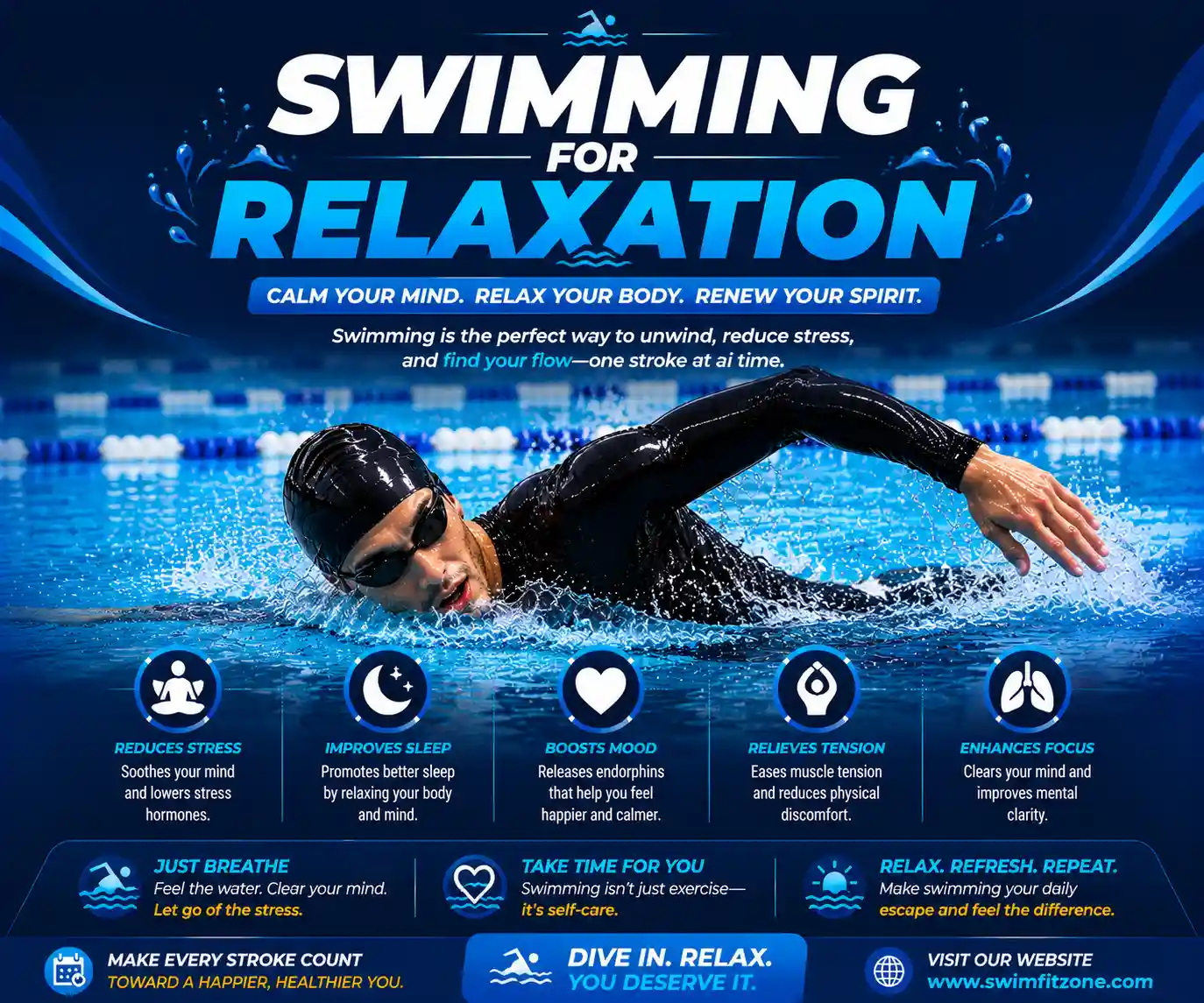
- Stress relief: slow strokes and floating calm your mind.
- Better mood: swimming releases feel-good hormones.
- Improved sleep: a gentle swim before bed can help you sleep deeper.
- Focus and clarity: being in water can clear your head and help you think better.
What this really means is that swimming is more than exercise. It’s a tool to manage your mental health.
How Swimming Helps Anxiety and Mood
Swimming can help reduce anxiety and improve your mood. Studies show people who swim regularly report feeling calmer and happier after sessions. Slow, mindful strokes and controlled breathing work like a gentle meditation. Even a short swim can lower stress levels and lift your mood.
This is especially helpful for people who deal with daily stress, anxiety, or restless thoughts. Swimming can give your mind a quiet, focused break. People who struggle with anxiety in the water may also benefit from learning strategies for overcoming swimming anxiety.
Physical Benefits Supporting Relaxation
The water works on your body too:
- Muscle tension relief: water supports your weight, easing sore muscles.
- Low-impact movement: good for joints, even if you have pain.
- Heart and lung health: swimming improves circulation and breathing, which helps you feel calm. Many of these improvements come from the cardiovascular benefits of swimming.
You don’t need to swim fast. Slow, gentle movement is best for relaxation. Even short swims of 10-20 minutes can give real benefits for both body and mind.
Relaxation Swimming Techniques
Here’s where most people get it wrong. Relaxation swimming is different from workout swimming. Focus on these techniques:
Focus on Breath

- Take long, slow breaths. Inhale through your nose, exhale through your mouth.
- Count your strokes and breaths to keep your mind on the rhythm.
- Let go of tension in your shoulders and neck while breathing.
Mindful Movement

- Choose slow strokes like backstroke or gentle freestyle. If you’re new to swimming, learning the best swimming strokes for beginners can help you feel more comfortable in the water.
- Float on your back occasionally. Feel the water supporting you. Many swimmers improve their relaxation sessions by practicing proper backstroke techniques, since this stroke naturally supports easy breathing.
- Don’t worry about distance or speed. Focus on calm movement.
If you are still learning basic technique, swim stroke lessons can help you swim with more confidence and less effort.
Sensory Immersion
- Notice how water feels on your skin.
- Listen to the sound of water splashing or your breath.
- Pay attention to the sensation of floating. This helps the mind relax.
This approach works well for people who enjoy mindfulness or meditative exercises. Combining swimming with a focus on sensations makes it even more calming.
Practical Tips to Dive In
- Choose the right water: warm water feels relaxing, while cool water can refresh you.
- Pick your spot: quiet pools or calm lakes are best for stress relief.
- Timing: 15-30 minute swim is enough to feel calmer.
- Start small: don’t try to swim long distances at first. Focus on calm strokes and steady breathing.
You can swim alone for quiet time or with friends for gentle social interaction. Both can help mental wellbeing.
Benefits of Open Water Swimming

Swimming outdoors, like in lakes, rivers, or the sea, can also help you relax. Research shows that being in natural water improves mood and reduces stress. The sights, sounds, and feel of nature add to the calming effect of swimming.
Before swimming outside a pool, review basic swimming safety tips to reduce risks and stay comfortable in unfamiliar water.
Open water swimming can also give a sense of freedom and connection to nature. For many, this is even more relaxing than a pool swim.
Sample Relaxation Routines

Here are simple routines you can try:
Beginner Routine
- Warm up: 2 minutes of gentle floating. Some swimmers prefer combining this with simple swimming warm-up routines before starting a relaxation session.
- Swim: 10 minutes slow freestyle or backstroke.
- Cool down: float on your back, breathing deeply for 3-5 minutes.
Midday Stress Relief
- Warm up: 2 minutes gentle kicks holding the pool edge.
- Swim: 15 minutes slow laps. Focus on breath.
- Mindful float: 3 minutes noticing sensations in water.
Evening Calm Swim
- Light stretching before entering the pool.
- 10 minutes slow strokes with long breaths.
- Float quietly, letting thoughts drift away.
- Swim slowly and focus on breath, not distance.
- Use quiet pools or open water for best relaxation.
- Short sessions of 10-30 minutes are effective.
- Swim 2-3 times per week for consistent mental benefits.
- Include gentle strokes like backstroke or floating on your back.

Drill Summary Table
Duration: 10-15 min | Benefits: Lowers stress, improves focus
Duration: 10-20 min | Benefits: Opens chest, supports deep breathing
Duration: 3-5 min | Benefits: Resets mind, releases tension
Duration: 15-30 min | Benefits: Boosts mood, connection to nature
Duration: 15 min | Benefits: Quick stress relief, refreshes mind
Frequently Asked Questions
1. How long should I swim to feel relaxed?
Even 10-15 minutes of slow swimming can calm your mind. Sessions up to 30 minutes give extra benefits, but short swims work well for busy schedules.
2. Which strokes are best for relaxation?
Backstroke, gentle freestyle, and floating on your back are the most calming. Focus on slow, rhythmic movements rather than speed or distance.
3. Can swimming reduce stress and anxiety?
Yes. Mindful swimming lowers stress hormones, improves mood, and gives your mind a quiet reset. Regular sessions also help with sleep and mental clarity.
4. Does swimming in open water help more than a pool?
Swimming outdoors in lakes, rivers, or the sea can boost mood even further. Natural surroundings, water sounds, and open space enhance relaxation.
5. How often should I swim for consistent mental benefits?
Two to three times a week is enough to feel improvements in stress, anxiety, and overall mental wellbeing. Consistency matters more than duration.
Final Thoughts
From my own experience and working with swimmers, Swimming for Relaxation works best when it’s intentional. Taking even 10-20 minutes to focus on breath, gentle strokes, and sensory awareness can transform a tense day into one of calm and clarity.
Swimming has become my personal reset button, and I’ve guided many beginners to feel the same. Whether you swim in a pool or open water, alone or with friends, the water gives a unique sense of calm you can’t get elsewhere. By practicing the techniques and routines shared here, you can make swimming a reliable tool for managing stress and improving mental wellbeing.

