



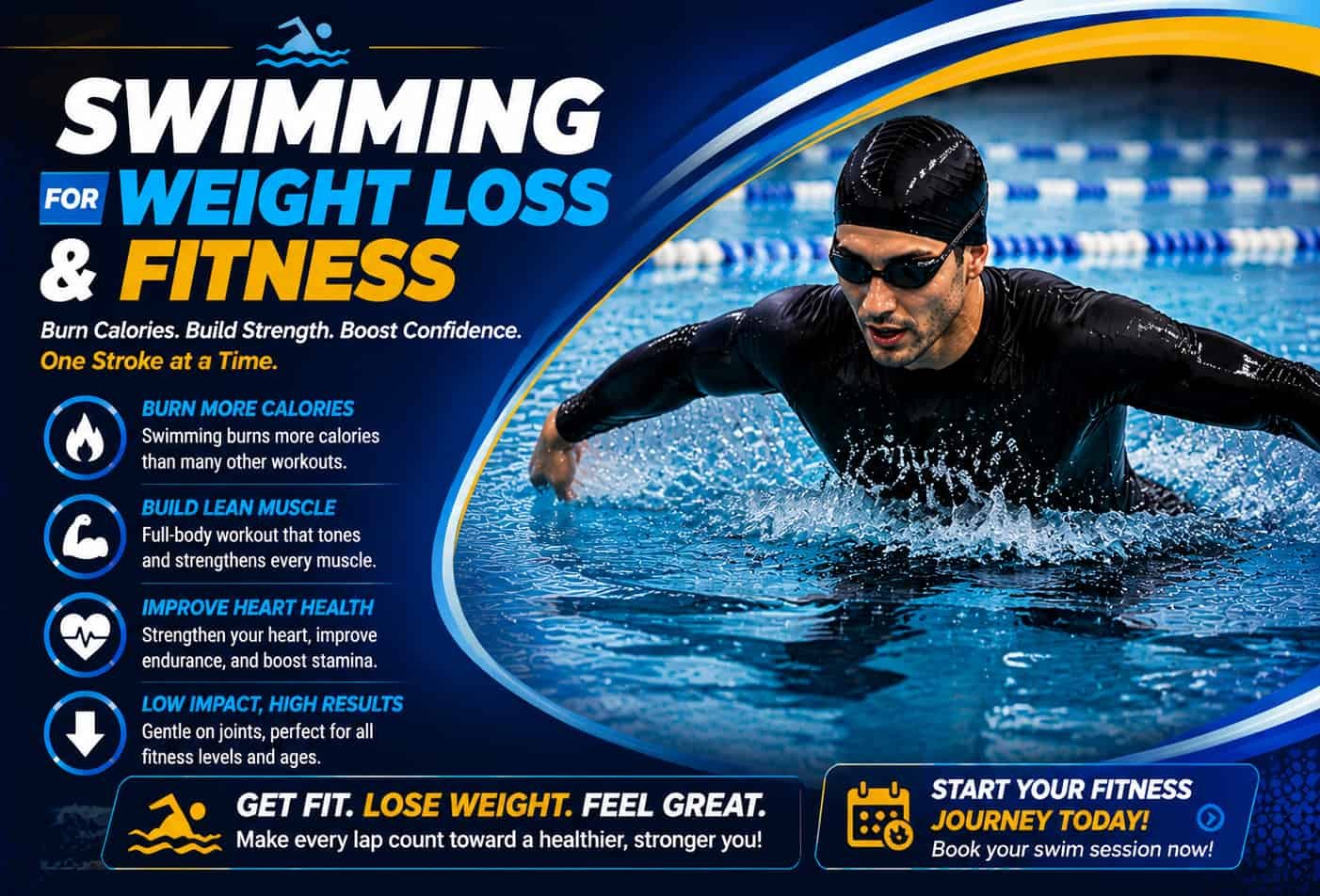
Introduction
If you have ever tried running or strict gym workouts and felt sore, frustrated, or stuck with little progress, you are not alone. That is exactly what happened to me a few years ago. I wanted to lose weight and get fit, but high impact exercises hurt my knees, and I quickly lost motivation. Then I discovered Swimming for Weight Loss and Fitness and it changed everything. Water gave me resistance without the pain, full body engagement without the strain, and workouts that actually felt enjoyable.
Here is the thing. Swimming does not just burn calories. It builds strength, endurance, and confidence. In my experience, even short 20 to 30 minute sessions can produce noticeable results if done consistently. Over time, I not only lost weight but also felt more energized, improved my posture, and reduced stress. This guide shares what works best, the mistakes to avoid, and how you can see real results with swimming.

Key Takeaways
- Burns calories efficiently and builds full body strength
- Low impact, joint friendly alternative to running or gym workouts
- Suitable for beginners, seniors, and people with injuries
- Short, structured sessions 20 to 45 minutes can produce results
- Tracking progress and combining with diet improves outcomes
How Swimming Helps with Weight Loss
Swimming burns calories fast because water makes your muscles work harder. Every stroke engages your arms, legs, and core. Even gentle kicking or floating counts.
What this really means is that swimming is both cardio and strength training. Your heart rate goes up, and your body burns energy. Over time, this helps reduce fat and improves fitness. Swimming can also boost metabolism slightly. That means you keep burning calories even after your swim.
Swimming is perfect for busy adults because you can do short sessions that still burn fat. Even 20 to 30 minutes can make a difference if you stay consistent. Before starting any workout, following proper swimming warm-up routines can help prepare your muscles and improve performance in the pool.
Benefits of Swimming

Here is why swimming is more than just weight loss:
Full Body Workout: Every stroke uses multiple muscles. Your arms, legs, and core all work.
Heart Health: Swimming strengthens your heart and lungs.
Joint Friendly: Water supports your body. It reduces stress on knees, hips, and back.
Mental Health: Swimming can reduce stress and improve mood.
Fitness for All Levels: Beginners, seniors, or people with injuries can swim safely.
If you are new to swimming, learning the best swimming strokes for beginners can help you feel more comfortable and build confidence in the water.
Swimming also builds endurance and flexibility. It can improve posture and overall mobility, which is useful for adults who sit at desks most of the day
How Much Weight You Can Lose

You might wonder how fast you can see results. That depends on your weight, intensity, and swim duration.
Here is a rough guide for 30 minutes of swimming:
| Stroke | 150 lb person | 200 lb person |
|---|---|---|
| Freestyle | 250 kcal | 330 kcal |
| Backstroke | 200 kcal | 260 kcal |
| Breaststroke | 220 kcal | 290 kcal |
| Butterfly | 350 kcal | 460 kcal |
Stroke choice matters. Faster strokes like butterfly burn more calories. But even easy strokes add up if you swim regularly.
For adults tracking weight loss, combine swim sessions with diet tracking. Use simple apps or a journal to log meals, calories, and swims.
Swimming Workouts for Weight Loss
Here are some workout ideas for different levels:
Beginner 0 to 4 weeks
- Swim 3 days a week for 20 to 30 minutes
- Use easy freestyle or backstroke. Following proven freestyle swimming tips can help you move through the water more efficiently while using less energy
- Focus on distance, not speed
- Rest 1 to 2 minutes between sets
Intermediate 1 to 3 months
- Swim 4 days a week
- Mix strokes: freestyle, breaststroke, backstroke
- Add interval training: 2 minutes fast, 1 minute slow
- Swim 30 to 45 minutes per session
Advanced 3 plus months
- Swim 5 plus days a week
- Include mixed strokes and intervals
- Add high intensity sets: 50 to 100 meters fast, 30 seconds rest
- Track laps, distance, and calories
Workouts for busy adults: shorter, high intensity sessions still work. Even 20 minute HIIT swims can burn calories efficiently.
Drill Summary Table
| Day | Workout Type | Duration | Notes |
|---|---|---|---|
| Monday | Freestyle Intervals | 30 min | 2 min fast, 1 min slow |
| Wednesday | Mixed Strokes | 35 min | Include backstroke and breaststroke |
| Friday | HIIT + Cool Down | 25 min | 5 × 50 m fast, 30 sec rest |
| Saturday | Endurance Swim | 40 min | Steady pace, all strokes |
Example Swim Intervals for Weight Loss

Here are some interval sets to add variety and burn more calories:
Set 1: 5 x 50 meters fast, 30 seconds rest
Set 2: 4 x 100 meters moderate, 15 seconds rest
Set 3: 3 x 25 meters butterfly, 45 seconds rest
Set 4: 6 x 50 meters freestyle, alternating fast and slow
Include these sets 1 to 2 times per week to challenge your body and avoid plateaus.
As your stamina improves, you can focus on how to improve swimming endurance so you can swim longer distances without feeling exhausted.
Stroke Techniques
Good technique helps you swim faster and burn more calories.

- Freestyle: Keep your body flat and streamlined. Breathe to the side
- Backstroke: Keep your head still and kick from your hips. Practicing proper backstroke techniques can help improve balance and body position in the water.
- Breaststroke: Pull with your arms and glide after each kick
- Butterfly: Move your arms together and use dolphin kick. These butterfly stroke tips can help improve timing and make the stroke more efficient.
Even small improvements in stroke can make a big difference in calorie burn and endurance.
For results driven swimmers, refining stroke efficiency increases calorie burn and reduces fatigue.
Swimming for Special Populations

Swimming is safe for many people who cannot do high impact exercises. Seniors, pregnant women, and people with joint pain or arthritis can swim with little risk of injury. Always check with your doctor if you have health concerns. You can adjust intensity, distance, and stroke type to match your ability.
Some adults and seniors also benefit from private swim lessons, which provide personalized instruction and a pace that matches their comfort level.
Tips for Better Results
- Track Your Progress: Count laps, distance, or calories. Keep a swim log.
- Eat Smart: Fuel your body before and after swimming. Protein and carbs help muscles recover.
- Avoid Common Mistakes: Don’t swim too slow all the time. Don’t ignore diet. Rest enough.
- Mix It Up: Use different strokes and intensity levels.
Consistent swimming technique improvement can help you swim more efficiently, reduce fatigue, and burn more calories during workouts.
Tracking Intensity and Progress
To maximize results, monitor how hard you are working.
Perceived exertion: Swim at a pace that feels moderately hard to hard for intervals.
Heart rate tracking: If you have a waterproof monitor, aim for 60 to 80 percent of your max heart rate during cardio sets.
Progress logs: Record distance, time, strokes, and calories burned each session. Adjust intensity weekly based on progress.
Using metrics helps adults stay motivated and see measurable results. Even simple weekly tracking boosts consistency.
Swimming and Diet
Swimming alone won’t make you lose weight if your diet is poor. Here’s how to eat right:
Before Swimming: Eat a small snack, like a banana or yogurt.
After Swimming: Have protein with some carbs, like eggs and toast, or chicken with rice.
Stay Hydrated: Even though you’re in water, you still sweat. Drink water before and after.
For adults balancing busy schedules, pre prepped snacks and meals make it easier to stick to diet goals.
Common Myths About Swimming and Weight Loss
Myth 1: Swimming alone can melt belly fat.
Truth: Swimming helps burn fat all over, but you can’t spot reduce. Overall fat loss comes with regular workouts and proper diet.
Myth 2: You can out swim a bad diet.
Truth: Calories burned in the pool can be offset by eating too much. Combine swimming with balanced meals for best results.
Myth 3: Swimming only works your upper body.
Truth: Every stroke uses your legs, core, and arms. Swimming is a full body workout.
Freequently Asked Questions
- How many calories can I burn swimming?
Calories depend on your weight, stroke, and intensity. For 30 minutes, freestyle burns 250 to 330 kcal 150 to 200 lb, while butterfly can burn 350 to 460 kcal. Using different strokes helps maximize fat loss. - Which strokes are best for losing weight?
Butterfly burns the most calories, followed by freestyle, breaststroke, and backstroke. Mixing strokes works your whole body and prevents boredom. - How often and how long should I swim?
3 to 5 sessions per week, 20 to 45 minutes per session is ideal. Beginners can start shorter and gradually increase time and intensity. - Can I lose weight swimming without dieting?
Swimming alone helps burn calories, but diet matters. Combine workouts with balanced meals, pre and post swim snacks, and stay hydrated for best results. - How do I track progress effectively?
Record distance, time, strokes, and calories burned. Use perceived exertion or a waterproof heart rate monitor to adjust intensity. Tracking weekly progress keeps motivation high and results measurable.

Final Thoughts
From personal experience, the most important factor in Swimming for Weight Loss and Fitness isn’t just the number of laps or calories burned. It is consistency and focus. I have seen beginners get discouraged when they swim randomly without a plan. Following structured workouts, tracking progress, and paying attention to your body makes all the difference. Swimming became not only my workout but a way to enjoy exercise and stay motivated over the long term.
If you commit to a balanced approach, mixing strokes, interval training, proper nutrition, and recovery, you will notice improvements quickly. What I have learned is that swimming is one of the safest, most effective, and enjoyable ways to burn fat and build fitness even for busy adults or those with joint issues. Stick with it, track your results, and you will see that Swimming for Weight Loss and Fitness is more than a workout it is a lifestyle that works when done right.

