



Introduction
Finding the best swim lessons for kids can feel overwhelming. As a parent, you worry about safety, cost, and whether your child will actually learn to swim. I have seen families struggle to choose the right program. Some kids are nervous around water. Others are full of energy but need structured guidance. The fear of drowning or not knowing if lessons are effective is real and it can make the decision stressful.
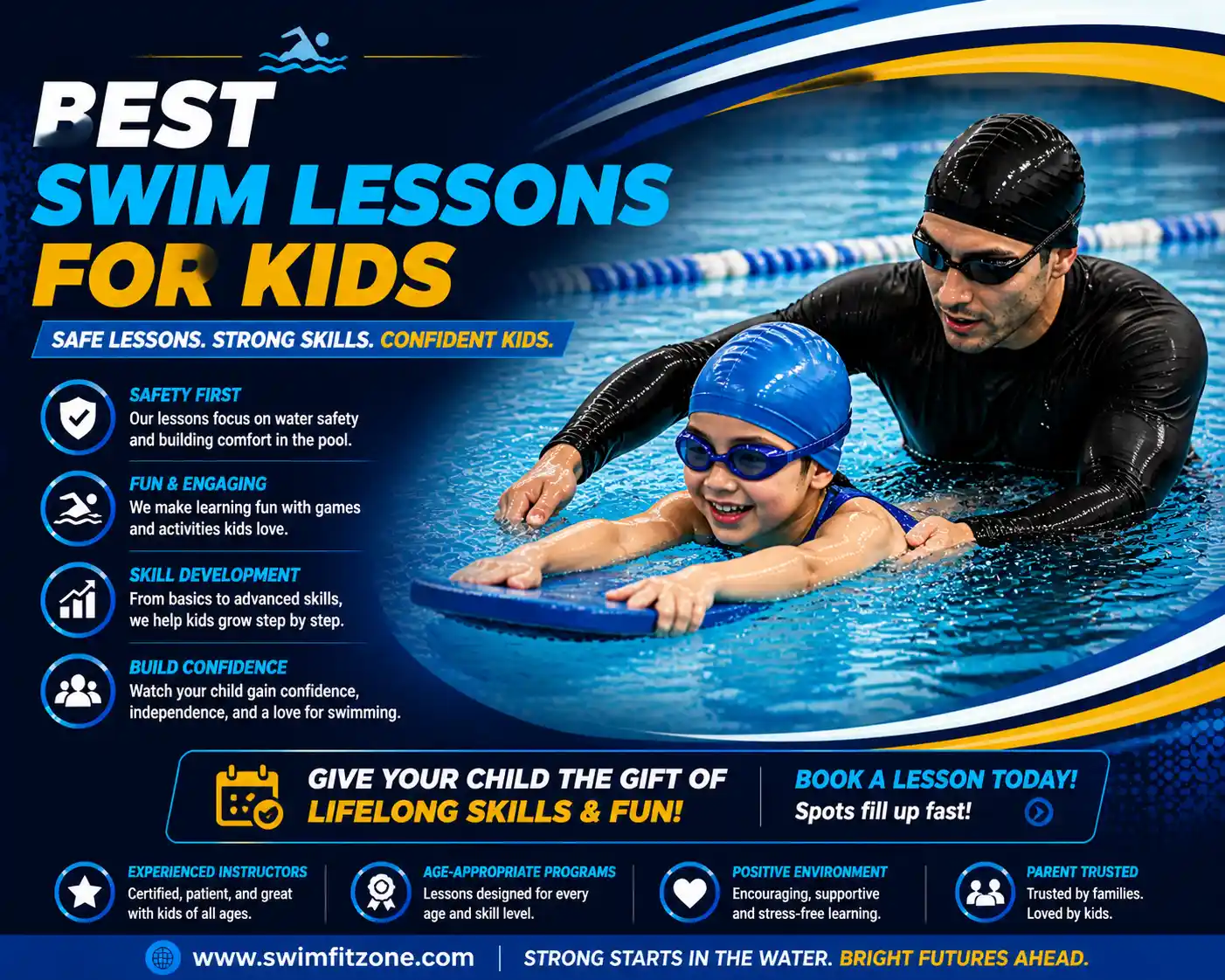
Here is what I have learned from years of watching children progress in swim programs. The right lessons give kids confidence, teach essential safety skills, and make swimming fun. You do not have to settle for just any class. By understanding what matters most, age-appropriate skills, qualified instructors, and a supportive environment, you can find the best swim lessons for kids that truly work for your family.

Why Swim Lessons Matter
Swimming is more than fun. It is a life skill. Kids who know how to swim are safer around water. Lessons teach kids how to float, stay calm, and move in the water. They also build confidence.
Kids who swim regularly are healthier. Swimming improves strength, balance, and coordination. It also helps with focus and social skills when done in a group setting. Parents are often most concerned with safety, skill development, and building confidence.
Age-Based Programs and Levels

Not all lessons are the same. Kids need different skills at different ages. Here is a simple guide:
Babies 4-12 months
Get comfortable in water
Learn to float with support
Basic blowing bubbles
Toddlers 1-3 years
Practice floating independently
Kick and paddle with arms
Learn simple water safety skills
Preschoolers 3-5 years
Swim short distances on their own
Learn basic strokes like front crawl and backstroke
Practice safe entry and exit from pools
School-Age Kids 6-12 years
Improve stroke technique and endurance
Learn turns and underwater skills
Handle unexpected situations in water
Teens 12+ years
Master strokes and breathing techniques
Swim longer distances
Prepare for competitive swimming if interested
Types of Swim Lessons
There are different formats for lessons. Choosing the right one depends on your child and schedule.
Group Lessons

Kids learn with others
Good for social skills
Usually less expensive
Private Lessons

One-on-one attention
Progress can be faster
Great for kids who are nervous
Family Swim Lessons
Parents join in the water
Good for babies and toddlers
Builds trust and safety awareness
Intensive Programs
Short-term, frequent classes
Helps kids catch up or prepare for swim teams
Focus on skill development quickly
Parents often worry about cost, convenience, and social experience. Highlighting these factors helps families decide what works best.
How to Choose the Right Swim Program
Here is what to check before signing up:
Instructor Certification: Look for trained instructors with CPR knowledge
Class Size: Smaller classes mean more attention
Lesson Frequency: Regular lessons are better than occasional ones
Facility: Warm, clean pools with good supervision
Progress Tracking: Programs that show what your child learned each week
Ask questions. Visit the pool. Observe a class. What you see matters more than what is on the website. Parents comparing programs online and reading reviews find this guidance especially helpful.
Skills and Safety Every Child Should Learn

No matter the program, kids should know these:
How to float and tread water
Enter and exit the pool safely
Basic strokes like front crawl, backstroke, and breaststroke
What to do if they fall in accidentally
Practice some of these at home in safe environments. Simple drills help reinforce lessons.
Water Competency vs Swimming Skills
Swimming is more than moving through water. Water competency means your child can respond safely in different situations. This includes floating, treading, entering and exiting the pool safely, and staying calm if they fall in. Swimming skills like strokes and breathing techniques are part of it, but water competency is what keeps kids safe.
Expert Recommendations
Starting Age: The American Academy of Pediatrics says lessons can begin as early as age 1. Parent-assisted classes are recommended for babies and toddlers.
Key Skills to Learn: Kids should practice floating, treading water, swimming forward, turning in water, and exiting safely.
Supervision: Lessons do not remove the need for adult supervision around any water source. Always watch children closely.
Lesson Frequency: Experts suggest two lessons per week for steady skill improvement.
Skill Benchmarks by Age
| Age Group | Key Skills |
|---|---|
| 1-2 years | Water comfort, blowing bubbles, assisted floating |
| 3-4 years | Independent floating, basic kicking, safe entry and exit |
| 5-6 years | Basic strokes (front crawl/backstroke), treading, short swimming distances |
| 7-12 years | Improved stroke technique, longer distances, underwater skills, emergency response |
| 12+ years | Mastery of strokes, endurance swimming, preparation for competitive swimming |
Red Cross Lesson Levels
| Level | Focus |
|---|---|
| 1 | Water comfort, basic movement |
| 2 | Floating and gliding, basic strokes |
| 3 | Stroke introduction, coordinated movements |
| 4 | Stroke improvement and endurance |
| 5 | Stroke refinement and survival skills |
| 6 | Skill proficiency and independent swimming |
Tips for Nervous or Reluctant Kids
Some children fear water. Here is what works:
Start slow with games and gentle introductions
Celebrate small achievements
Stay calm and patient
Let kids watch other kids swim first
Confidence grows gradually. Avoid forcing them. Positive experiences make a big difference.
Cost Expectations
Lessons vary in price. Here is a rough idea:
Group lessons: $15-$50 per session
Private lessons: $40-$100 per session
Intensive or specialty programs may cost more.
Investing in lessons is investing in safety and skills.
Key Takeaways for Parents
- Start lessons as early as age 1 with parent-assisted classes
- Focus on water competency, not just strokes
- Look for qualified instructors and small class sizes
- Twice-weekly lessons give steady progress
- Observe classes and ask questions before enrolling
Drill Summary Table
| Age Group | Key Drill / Skill |
|---|---|
| 1–2 years | Water comfort, blowing bubbles, assisted floating |
| 3–4 years | Independent floating, basic kicking, safe entry and exit |
| 5–6 years | Basic strokes, treading water, short swims |
| 7–12 years | Stroke technique, endurance, underwater skills, emergency response |
| 12+ years | Mastery of strokes, endurance swimming, competitive prep |

Top 5 Questions Parents Ask About Swim Lessons
1. When should my child start swim lessons?
Parent-assisted classes can start at age 1. Independent lessons work best from age 3.
2. How often should my child attend lessons?
Twice a week is ideal for steady progress.
3. What type of lesson is best for my child?
It depends on their age and needs. Group lessons are social and affordable. Private lessons allow fast progress. Family lessons build trust for babies and toddlers. Intensive lessons give rapid skill gain.
4. What skills should my child learn at each stage?
Babies and toddlers focus on comfort and assisted floating. Preschoolers learn basic strokes. School-age kids improve strokes, endurance, and emergency response. Teens focus on stroke mastery and preparation for competitive swimming.
5. Are swim lessons safe and do they prevent drowning?
Lessons reduce risk but do not replace supervision. Water competency is the goal, not just swimming.
Final Thoughts

From personal experience guiding families and observing lessons, the difference between a child who thrives and one who struggles often comes down to the program and approach. The best swim lessons for kids are not just about strokes. They teach comfort in the water, survival skills, and confidence that lasts a lifetime. I have seen shy toddlers become confident swimmers within months when guided properly.
Trust your instincts as a parent, ask questions, and watch how instructors interact with children. Lessons that emphasize safety, skill progression, and enjoyment will not only teach your child to swim but give you peace of mind. Choosing the right swim program is an investment in your child’s safety, health, and confidence, and it pays off every time they enter the water.

