



Introduction
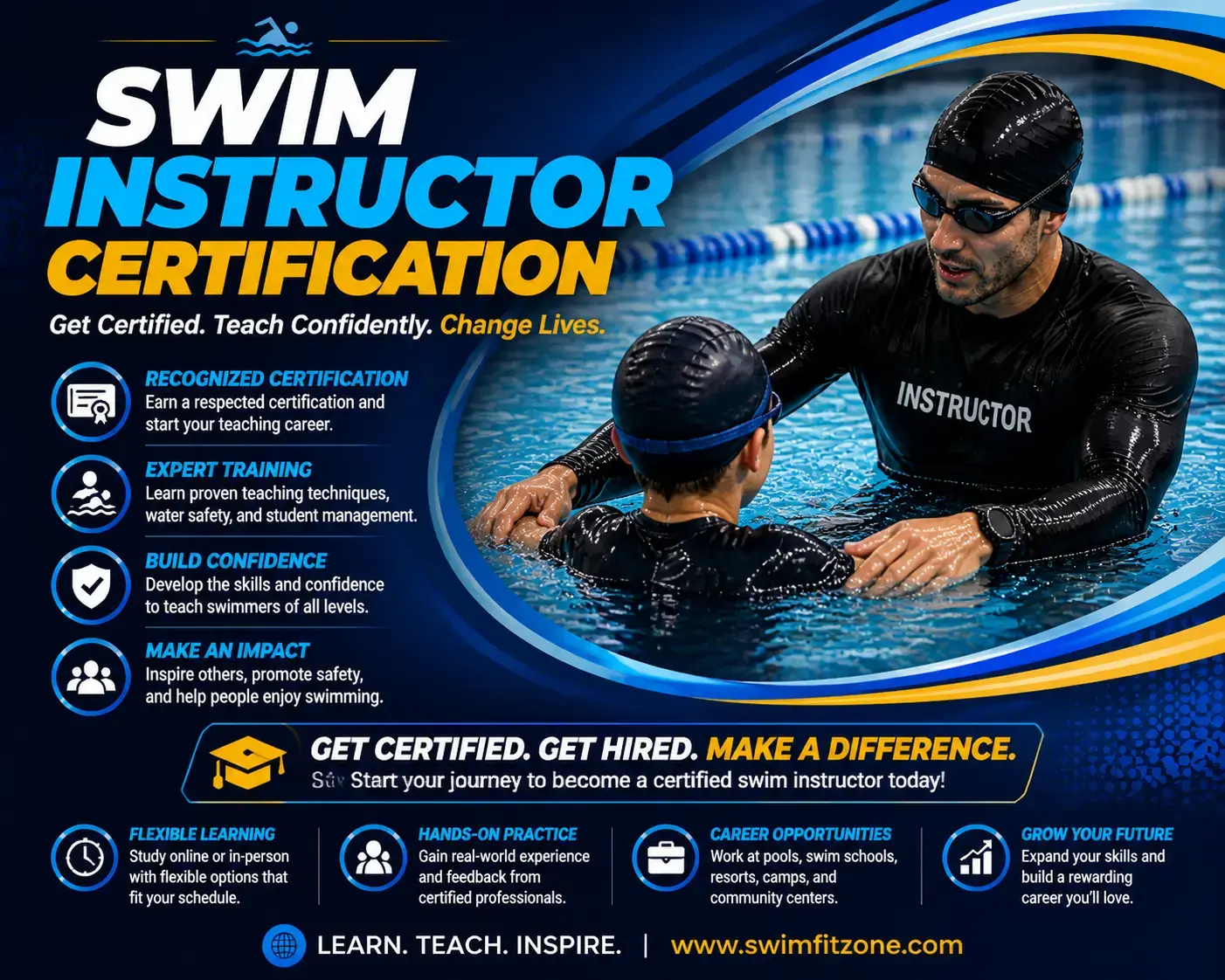
Getting a Swim Instructor Certification can feel overwhelming at first. You might be unsure which program to choose, worried about the cost, or wondering if you have the skills to meet the requirements. I’ve been through this myself, standing in the pool unsure if I could pass the Red Cross Water Safety Instructor exam. But once I understood what each program offered and prepared step by step, it all became clear.
Here’s the thing, this certification is not just about a piece of paper. It’s about knowing how to keep students safe, building trust with parents and employers, and gaining the confidence to teach swimming effectively. By the end of this guide, you will know exactly which programs fit your goals, what prerequisites you need, and how to start teaching with real confidence.

What is Swim Instructor Certification?
A swim instructor certification proves you can teach swimming safely. It shows employers and parents that you know how to handle kids, adults, and emergencies in the water through proper water safety practices.
There are different types of certifications. Some focus on teaching children. Others focus on adults. Some programs combine both.
Getting certified is more than a paper. It is about gaining skills, credibility, and confidence to teach safely and effectively.
Top Swim Instructor Certification Programs in the USA
Red Cross Certification

The American Red Cross offers two main programs:
Basic Swim Instructor BSI focuses on teaching beginners and kids. Many certified instructors start by teaching students who have little or no swimming experience, making beginner instruction an essential teaching skill.
Water Safety Instructor WSI covers a wider range of skills, including water safety, stroke improvement, and lesson planning.
What you need to know:
- Minimum age 15
- Online and in-person training
- Skills taught: water safety, CPR, stroke technique, lesson planning
- Certification is valid for 2 years and must be renewed
For readers who want to review official course details, prerequisites, and instructor training requirements, the American Red Cross provides complete information about its Water Safety Instructor certification program.
Red Cross Skill Prerequisites
Basic Swim Instructor BSI Skills Required
- Swim 25 yards of front crawl, back crawl, and breaststroke
- Back float for 1 minute
Water Safety Instructor WSI Skills Required
- Swim 25 yards of all major strokes, including butterfly
- Tread water for 2 minutes
- Demonstrate rescue skills and water safety knowledge
US Swim School Association CFSI

The Fundamental Swim Instructor CFSI program is for people who want to work at swim schools. If you want to learn more about the curriculum, testing process, and instructor development pathway, you can review the official Certified Fundamental Swim Instructor program requirements.
Required Courses
- Fundamental Swim Instructor
- Creating Next Level Baby Teachers
- Play with Purpose Online Course
Other Requirements
- CPR and First Aid certification often not included in course fees
- Background check may be required
Highlights
- Online courses plus in-person testing
- Focused on teaching kids and beginners
- Step-by-step path to certification
U.S. Masters ALTS Instructor

The Adult Learn-to-Swim ALTS program focuses on adults who want to learn or improve swimming skills.
Key points
- Must be a USMS member
- Focused on adult learners
- Training covers water safety, stroke teaching, and lesson planning
Water Competency Requirements
- Float or tread water for 1–2 minutes
- Swim 25 yards continuously
- Exit the pool safely from deep water
Private Training Providers
Some companies, like The Aquatic Connection, offer Red Cross courses through local instructors.
What they cover
- Online modules plus in-person sessions
- Options for Basic Swim Instructor and Water Safety Instructor
- Helps you prepare for official certification
Eligibility and Requirements
To become certified you need:
- Age usually 15 or older
- Swimming skills must meet Red Cross, USSSA, or USMS course-specific requirements
- CPR and First Aid certification often required before the course
- Background check some programs require this
Meeting these requirements makes the certification process smoother.
Course Structure
Here is what you can expect:
- Online learning covers theory, safety rules, and lesson planning
- In-water sessions practice teaching strokes and handling students
- Exams include written tests and practical evaluation
- Duration 2 to 6 weeks depending on the program
Costs and Time
Costs vary by program:
- Red Cross 150 to 250 dollars
- USSSA CFSI 100 to 200 dollars depending on membership
- USMS ALTS varies, often includes membership fees
Courses take a few weeks. Online modules can speed up the process.
Step-by-Step Path to Certification
- Choose the program based on your goals kids, adults, or both
- Check eligibility age, swimming skills, CPR
- Register online or with a local provider
- Complete online modules
- Attend in-person water sessions, where you will practice teaching techniques, demonstrate swimming skills, and complete skill-based practice drills.
- Pass written and practical exams
- Receive your certification and start teaching
Certification Expiration and Renewal
Red Cross
- Valid for 2 years
- Must teach at least one course in each 2-year period
- Complete a recertification assessment to maintain certification
USSSA and USMS
- Typically 2 to 3 years expiration
- Renewal may require refresher courses and updated CPR
Career Opportunities
Once certified you can teach in
- Community pools
- Private swim schools
- Gyms and fitness centers
- Summer camps
Many instructors also offer private coaching sessions for swimmers who need personalized attention.
Salary range 12 to 25 dollars per hour depending on location and experience.
Instructors who work with competitive swimmers may earn additional opportunities through race preparation and advanced training programs.
Teaching Scope by Certification
Red Cross BSI and WSI
- Levels 1 to 6 swimming lessons for children
- Water safety courses for youth and teens
These lessons often begin with basic skills that help new swimmers become comfortable and confident in the water.
USSSA CFSI
- Infant and child swimming programs
- Beginner to intermediate lessons
USMS ALTS
- Adult learn-to-swim programs
- Stroke technique and water safety for adult learners
How to Find Training
- Red Cross use their online locator to find local WSI or BSI classes
- USSSA search local swim schools offering CFSI courses
- USMS ALTS only available to USMS members, check local chapters
- Private providers many offer Red Cross courses online plus in-person sessions
Key Takeaways
- Choose a certification that matches your teaching audience kids or adults
- Check swimming and CPR prerequisites before enrolling
- Consider cost, duration, and location when choosing a program
- Maintain certification with renewals and refresher courses
- Hands-on practice in water is as important as online theory

Frequently Asked Questions
Which swim instructor certification should I choose?
Depends on who you want to teach. Red Cross BSI and WSI are great for kids and teens. USSSA CFSI is ideal for swim schools. USMS ALTS focuses on adults. Private providers usually deliver Red Cross courses locally.
What are the age and skill requirements?
Most programs require you to be at least 15 to 18 years old. You need basic swimming skills like swimming multiple strokes and treading water. USMS ALTS requires adult swimming competency.
How long does certification take and how much does it cost?
Courses typically take 2 to 6 weeks. Red Cross costs 150 to 250 dollars. USSSA costs 100 to 200 dollars. USMS ALTS depends on membership fees.
What jobs can I get after certification?
You can teach at community pools, private swim schools, gyms, summer camps, or private lessons. Red Cross and USSSA are widely recognized by employers.
How do I maintain or renew my certification?
Red Cross certifications last 2 years and require teaching at least one course and completing a recertification assessment. USSSA and USMS certifications expire in 2 to 3 years and may need refresher courses and updated CPR.
Final Thoughts
From my experience working with swim schools and teaching beginners and adults, a Swim Instructor Certification is the foundation of a successful teaching career. The skills you learn CPR, stroke technique, rescue methods do not just make you a better instructor, they make you a trusted leader in the water. Choosing the right program early can save time and open career opportunities.
What I have learned is this the right certification empowers you to teach safely, adapt to different learners, and grow as a professional. Every hour in training, every skill mastered, translates into safer pools and confident swimmers. Getting certified is not just a step, it is the start of your journey as a swim instructor who truly makes a difference.

