



Introduction
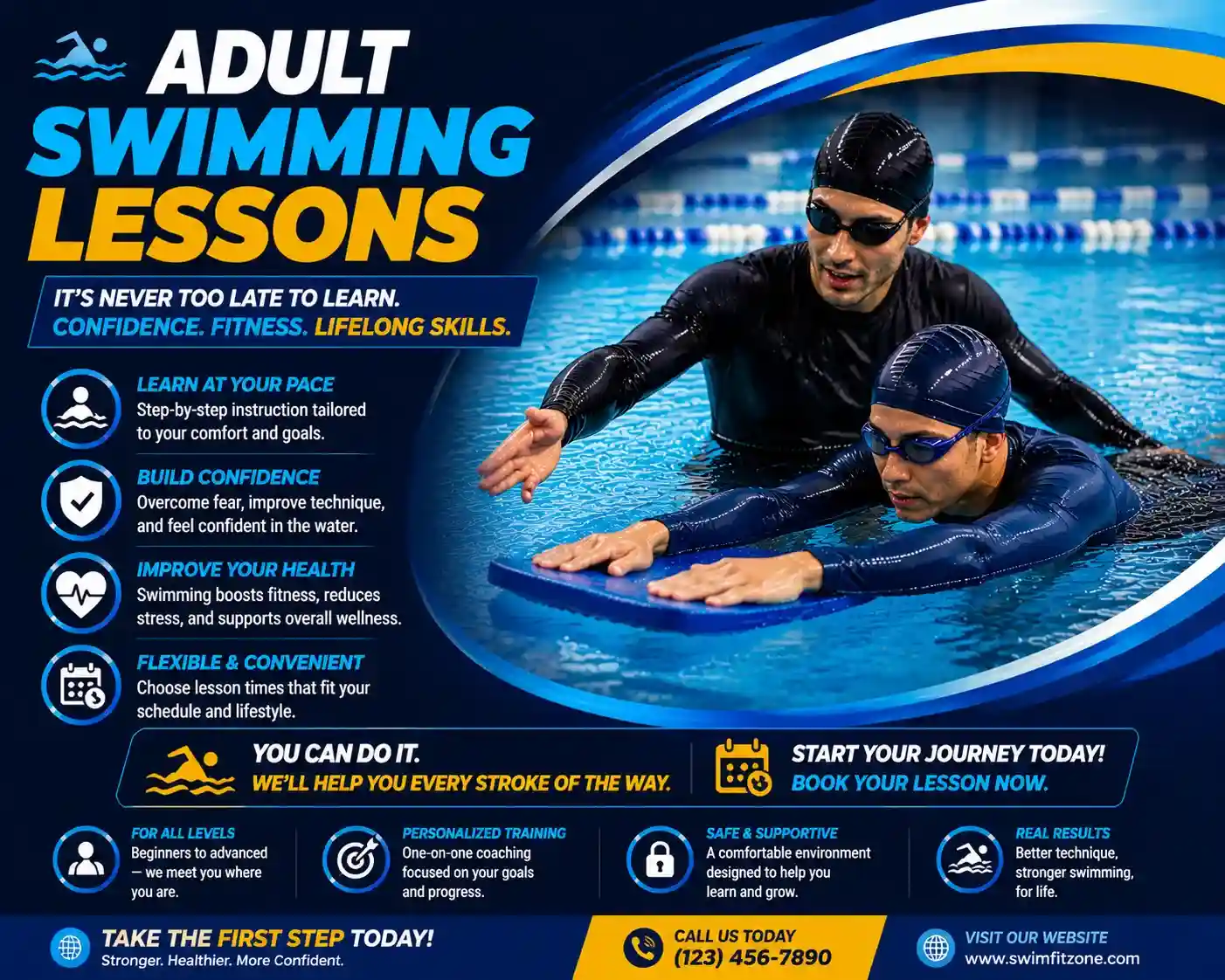
Learning to swim as an adult can feel intimidating. Many adults come to lessons nervous, unsure if they’ll ever float confidently or keep up in a group class. Some fear deep water, others worry about embarrassment, and many simply don’t know where to start. That is exactly why Adult Swimming Lessons exist to guide you step by step, help you overcome fear, and build real water confidence.
From my experience teaching adults of all ages, the ones who start hesitant often make the fastest progress when given a structured plan and personal support. These lessons don’t just teach strokes they focus on safety, breathing, floating, and treading water so you feel in control in any pool or open water setting. Knowing what to expect and practicing the right skills can turn anxiety into achievement faster than most adults imagine.

Why Adult Swimming Lessons Matter
Swimming is not just for kids. Adults face real risks in water if they don’t know how to swim. Lessons teach safety skills and build confidence. You will feel more comfortable in pools, lakes, and beaches.
Swimming also improves your fitness. It works muscles, strengthens your heart, and is easy on your joints. Learning a new skill as an adult gives you a big confidence boost. Swimming lessons also help adults overcome fear of water and embarrassment about learning as an adult. These lessons provide a supportive environment and step-by-step guidance.
Who Can Take Adult Swimming Lessons
Anyone can learn. Beginners with no experience, adults who want to improve strokes, or people who want fitness benefits all fit. You do not need to be in shape or young. The key is commitment and patience.
Adults looking for swimming lessons often include people who want personal safety and water confidence, fitness enthusiasts seeking low-impact exercise, those training for triathlons or open-water swimming, and adults who never learned as a child and want a new skill.
Some adults may be nervous or feel embarrassed. That is normal. Instructors are used to helping adults feel comfortable in water. You are not alone.
Types of Adult Swim Programs

Adult swimming programs vary. Here is a quick look:
Beginner Classes focus on water safety, floating, and basic strokes.
Stroke Clinics and Masters Classes improve freestyle, backstroke, or breaststroke.
Private Lessons offer one-on-one attention, great if you want faster progress or feel nervous in groups.
Group Lessons let you learn with others, less expensive and social.
Specialized Classes include aqua fitness, low-impact workouts, or training for triathlons.
Skill Progress by Level

Beginner
Enter and exit water safely
Floating on back and front
Basic gliding and kicking
Breathing techniques
Intermediate
Freestyle and backstroke for longer distances
Proper breathing rhythm
Coordination of arms and legs
Basic endurance building
Advanced
Stroke refinement including freestyle, backstroke, and breaststroke
Treading water for longer periods
Self-rescue techniques
Endurance and efficiency
What You Will Learn in Lessons
Lessons usually follow a step-by-step plan. Most adult programs cover:
- Water Comfort floating, breathing, and moving safely
- Basic Strokes freestyle and backstroke for short distances
- Stroke Improvement better technique, longer distances, efficient breathing
- Treading Water stay afloat in deep water
- Safety Skills self-rescue, entering and exiting water safely
You will progress at your own pace. Most adults take 6-15 lessons to feel comfortable swimming basic strokes. Some may need more to become confident in multiple strokes.
Common Swimming Strokes
Freestyle: fastest stroke, face in water, alternating arm strokes, flutter kick
Backstroke: face up, alternating arm strokes, flutter kick
Breaststroke: arms move in a circular motion, frog kick, good for beginners
Elementary Backstroke: simple, slow backstroke used for safety and confidence
Common Fears and How to Handle Them
Adults often fear deep water, embarrassment, or failing in front of others. Here is what works:
- Start Small use shallow pools at first
- Private Lessons help reduce anxiety
- Practice Breathing learn to exhale underwater
- Positive Mindset focus on progress, not perfection
Addressing these fears directly is crucial. Many adults hesitate because they feel it is too late to learn. Lesson plans for adults usually include gradual water exposure and confidence-building exercises.
Survival Skills for Adults

- Treading water to stay afloat in deep water
- Floating on back and front to rest
- Rolling over from front to back safely
- Self-rescue techniques holding onto pool edge, swimming to shallow water
These skills are essential for personal safety and are emphasized in most adult swimming programs.
How to Choose Between Private and Group Lessons
Private Lessons provide personalized attention, faster learning, and flexible scheduling. They are great for nervous beginners or those with specific goals.
Group Lessons offer a social environment, lower cost, and encouragement from peers.
Think about your goals, comfort level, and budget. Some people even mix both types to get the best results.
Practice Drills Between Lessons

- Floating and gliding in shallow water
- Breathing exercises inhale above water, exhale underwater
- Flutter kick practice using a kickboard
- Arm movement drills for freestyle and backstroke
- Pool edge drills push off wall, glide, and return
Recommended Gear
- Goggles for clear vision
- Swim cap to keep hair out of face
- Fins for kick practice
- Kickboard to focus on legs
- Pull buoy to practice arm strokes
Using the right gear can make learning easier and more comfortable.
Cost and Time Commitment
Adult swimming lessons vary in cost. Private lessons are usually 40-70 per session. Group lessons are often 20-50. Most programs recommend 1-2 sessions per week.
Progress depends on frequency. A steady pace is better than cramming lessons. Quality matters more than speed.
Key Takeaways
- Start with shallow water and build confidence gradually
- Choose lesson type that matches comfort: private or group
- Practice breathing, floating, and kicks between lessons
- Gear like goggles, fins, and kickboards can help learning
- Most adults take 6–15 lessons for basic strokes
- Focus on safety, stroke technique, and consistency over speed
Drill Summary Table
| Level | Skills Covered | Typical Lessons Needed | Notes |
|---|---|---|---|
| Beginner | Entering water, floating, gliding, basic strokes | 6–8 | Focus on confidence and water comfort |
| Intermediate | Freestyle/backstroke, breathing, coordination | 6–10 | Build endurance and stroke efficiency |
| Advanced | Stroke refinement, treading water, self-rescue | 10–15+ | Prepare for longer swims and open water |
Frequently Asked Questions
How long will it take me to learn to swim as an adult?
Most adults need 6-15 lessons depending on skill level. Beginners often take 6-8 lessons to feel comfortable, while advanced skills may take 10-15+ sessions.
Should I take private or group lessons?
Private lessons give personal attention and are ideal for nervous beginners or those with specific goals. Group lessons are social, less expensive, and great for motivation.
What skills will I learn at each level?
Beginner water comfort, floating, gliding, basic strokes.
Intermediate freestyle/backstroke, breathing rhythm, coordination.
Advanced stroke refinement, treading water, self-rescue techniques.
How can I practice between lessons?
Floating, gliding, kicking drills, arm movements, and breathing exercises in shallow water reinforce skills learned in class.
What gear do I need for adult swimming lessons?
Swimsuit and goggles at minimum. Optional gear includes swim caps, fins, kickboards, and pull buoys.
Final Thoughts

Over the years, I have helped many adults overcome fear and become confident swimmers through Adult Swimming Lessons. Someone who could not float or put their face in water in the first class can, within weeks, swim freestyle laps and enjoy open water without fear. Consistency, guided instruction, and realistic goals are key to success.
Adult swimming is not just a skill it is safety, fitness, and confidence combined. With the right lessons and practice, anyone can overcome anxiety, improve strokes, and enjoy the water fully. Every small improvement counts, and the journey is rewarding at any age.

