



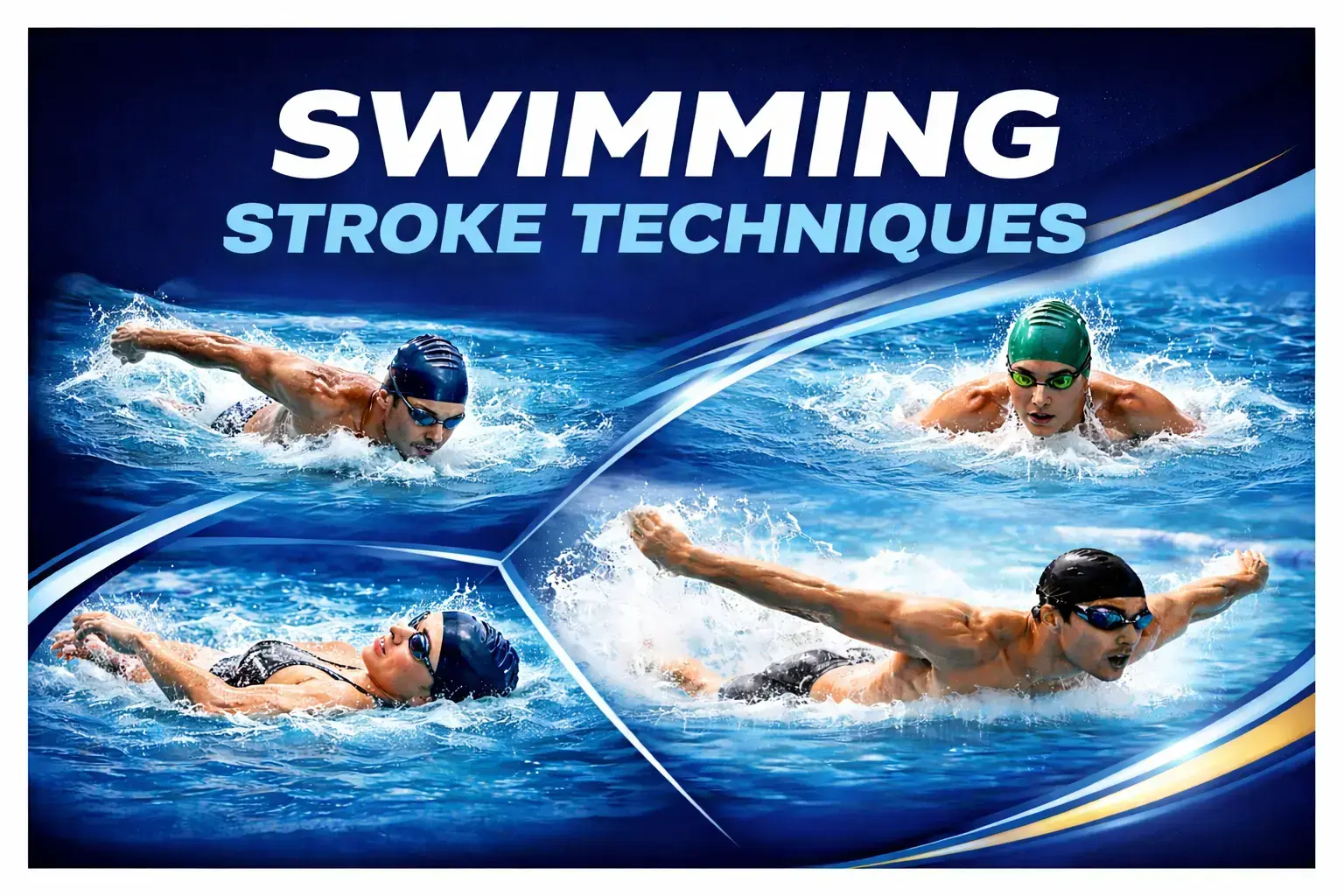
Swimming can also be a frustrating experience, even when you enjoy it. Perhaps you find that you are getting tired easily, splashing water, or having difficulty breathing. I am not alone in this experience. I remember spending hours in the water trying to master my freestyle technique when I was a young adult.
Swimming is a skill that can be learned and perfected with experience, instruction, and learning from experienced coaches and trainers. I have learned that even small adjustments in technique can greatly impact a person’s swimming skills. In this article, I am going to give you all that I know about techniques involved in a swimming stroke.
Freestyle (Front Crawl)

Freestyle is the most used swim stroke. You kick from the hips. Your arms pull the water back. Turn your head to the side to breathe.
Key points
- Keep your body flat.
- Kick small and fast.
- Reach forward with each arm.
Flutter Kick

The flutter kick is used in freestyle and backstroke. Your legs move up and down in small, fast kicks. It helps push your body forward.
Key points
- Kick from the hips, not the knees.
- Keep legs straight but relaxed.
- Small and fast kicks work best.
Backstroke

Backstroke is on your back. You kick your legs like freestyle. Your arms rotate up and over your head.
Key points
- Look straight up and relax your neck.
- Keep your hips high.
- Stay steady and smooth.
- Use a flutter kick for propulsion.
Breaststroke

Breaststroke moves slow but steady. Your arms push out and then pull in. Your legs kick in a frog motion.
Key points
- Glide after each kick.
- Keep your head forward.
- Use even breaths.
Butterfly

Butterfly is the hardest stroke for many swimmers. Both arms move together. Your legs make a wave motion.
Key points
- Use a dolphin kick.
- Bring arms out wide.
- Breathe forward.
You can explore the variety of strokes in more detail at Big Blue Swim School, which explains differences between each stroke and their proper execution
Elementary Backstroke
Elementary backstroke is calm and slow. It is good for beginners. You pull your arms out, then down, then in.
Key points
- Keep a gentle kick.
- Move arms and legs in step.
- This stroke is relaxed.
Sidestroke
Sidestroke is good for resting. You swim on one side. One arm pulls while the other guides.
Key points
- Use a scissors kick.
- Keep your head above water.
- Often used in rescue or life-saving.
Trudgen Technique
Trudgen is like freestyle and sidestroke mixed. You bring one arm out of the water. Your kick is strong and wide.
Key points
- Lead with one arm.
- Kick in long strokes.
- Good for beginners moving up.
Streamline Position

Streamline helps when you push off the wall. Keep your arms long over your head. Legs stay tight and straight.
Key points
- Point fingers forward.
- Tighten your body.
- Hold this until you slow down.
Bilateral Breathing
Bilateral breathing is breathing on both sides. You breathe every third stroke in freestyle. This helps balance your body.
Key points
- Switch sides each time.
- Breathe smooth and calm.
- This builds endurance.
Breathing and Stroke Rhythm
Breathing should match your arm and leg movements. This helps you stay balanced and swim smoothly.
Key points
- Breathe every few strokes, not randomly.
- Exhale underwater, inhale above water.
- Keep your head low when breathing to reduce drag.
- Align breathing with your arm pulls for steady rhythm.
Flip Turns

Flip turns help you change direction fast. Swimmers tuck their chin and flip under water. Then they push off in streamline.
Key points
- Keep legs tight.
- Turn quick and smooth.
- Push off straight.
- Mainly used in freestyle and backstroke.
Open Turns for Breaststroke and Butterfly
Some strokes need open turns instead of flip turns. This is common in breaststroke and butterfly.
Key points
- Touch the wall with both hands first.
- Turn quickly but keep your body straight.
- Push off in a streamlined position.
Open Water Techniques
Swimming outside a pool can feel different. Water moves more. You must sight where you swim.
Key points
- Lift head to see forward.
- Breathe on both sides.
- Stay relaxed.
- Choose strokes based on energy use and distance.
Survival Skills

Knowing safety moves keeps you safe in water. These are useful for beginners and open water swimming.
Key points
- Back float: lie on your back and relax.
- Wall exit: push off safely from the pool edge.
- Sculling: move your hands to stay balanced in deep water.
- Keep calm and conserve energy.
Treading Water

Treading water keeps you upright. You kick and use small arm motions.
Key points
- Use a steady kick.
- Keep hands moving small.
- Stay balanced.
- Eggbeater kick is best for long periods of support.
Underwater Dolphin Kicking
Underwater dolphin kicking is fast after dives. Your legs move together like a wave.
Key points
- Use your hips to drive motion.
- Keep feet close.
- Kick fast and smooth.
Dolphin Kick Rules
Dolphin kick is used underwater in freestyle and butterfly. It is fast but has limits in competition.
Key points
- Kick like a wave from hips to feet.
- Only go about 15 meters underwater after start or turn.
- Keep legs together and motion smooth.
There are many fundamental techniques every swimmer should master, as outlined by HVSWIM, which include body position, breathing rhythm, and stroke mechanics
Stroke Drills and Tools
Drills help you improve each stroke. Tools like kickboards, fins, and paddles make drills more effective.
Key points
- Freestyle catch-up drill: improve arm timing.
- Breaststroke kick drill: strengthen frog kick.
- Backstroke rotation drill: balance body and kick.
- Use fins for speed, paddles for arm strength.
Stroke Comparison
| Stroke | Speed | Energy | Difficulty | Best For | Common Mistakes | Recommended Drill |
|---|---|---|---|---|---|---|
| Freestyle | Fastest | Medium | Moderate | Fitness, Racing | Dropping hips | Catch-up drill |
| Backstroke | Medium | Medium | Moderate | Technique practice | Poor rotation | Rotation drill |
| Breaststroke | Slow | Low | Easy | Beginners | Timing errors | Kick drill |
| Butterfly | Fast | High | Hard | Competition | Arms out of sync | Single-arm drill |
| Sidestroke | Slow | Low | Easy | Rest, Rescue | Scissors kick wrong | Scissor kick drill |
| Elementary Backstroke | Slow | Very Low | Easy | Beginners | Arms not in sync | Glide drill |

To see detailed illustrations and step-by-step guidance on stroke execution, check out British Swim School, which provides practical tips for all skill levels
Weekly Drill Schedule
| Day | Focus | Drill |
|---|---|---|
| Monday | Freestyle | Catch-up + Flutter Kick |
| Tuesday | Backstroke | Rotation Drill + Streamline |
| Wednesday | Breaststroke | Kick Drill + Glide |
| Thursday | Butterfly | Single-arm + Dolphin Kick |
| Friday | Mixed | Open Water Sighting + Treading |
| Saturday | Full Strokes | Combination Swim + Flip Turns |
| Sunday | Rest/Recovery | Light swim or stretching |
Key Takeaways
- Correct body position and arm technique improve speed and reduce fatigue.
- Proper breathing rhythm keeps you balanced and prevents early exhaustion.
- Drills like flutter kick, catch-up, and dolphin kick accelerate learning.
- Open turns and flip turns save time in competitive swimming.
- Safety skills like treading water, back float, and sculling are essential for all swimmers.
Tips for Improving Your Strokes
- Practice drills every day.
- Focus on slow and correct moves.
- Watch your body line in the water.
- Ask a trainer to check your form.
Common Mistakes to Avoid
- Head too high in the water.
- Kicking only from the knees.
- Breathing too late or too early.
- Rushing turns or starts.
Q&A Section: Swimming Stroke Techniques
Q1: What are the most important swimming stroke techniques for beginners?
Beginners should focus on freestyle, backstroke, and breaststroke. Proper body position, arm movements, and breathing are key. Practicing flutter kicks and glide drills helps improve efficiency.
Q2: How can I improve my swimming stroke speed?
To increase speed, focus on streamline position, efficient kicks, and strong arm pull. Incorporate drills like catch-up, dolphin kick, and rotation exercises. Consistent practice and breathing rhythm also make a big difference.
Q3: Which swimming stroke burns the most energy?
The butterfly stroke uses the most energy due to simultaneous arm movement and dolphin kick. Freestyle is faster but less taxing if done with proper technique. Knowing energy use helps plan longer swims or workouts.
Q4: How can I avoid common mistakes in swimming strokes?
Common mistakes include dropping hips in freestyle, poor arm timing in backstroke, and incorrect frog kick in breaststroke. Watching your form, using drills, and seeking feedback from a coach can help correct these issues.
Q5: Are there survival techniques included in swimming stroke training?
Yes, essential survival techniques like treading water, back float, sculling, and safe pool exits are part of stroke training. These skills keep you safe in deep water and open water swimming while reinforcing proper stroke form.
Final Thoughts
While it is true that swimming requires the coordination and movement of your limbs, there is more to it than that. With all the practice, coaching, and experimentation I have been doing over the years, I have learned that there are many little things that can greatly improve your swimming performance. These little things include mastering your flutter kick, your breathing, and even your turns.
Throughout my experience, I have coached swimmers ranging from those who cannot even float on their own to those who are trying to shave precious seconds off their race times. All the swimming strokes and techniques presented here are based on my experience and knowledge. With proper practice and adherence to these swimming strokes and techniques, I assure you that your swimming experience will be greatly improved and will feel effortless and enjoyable.

