



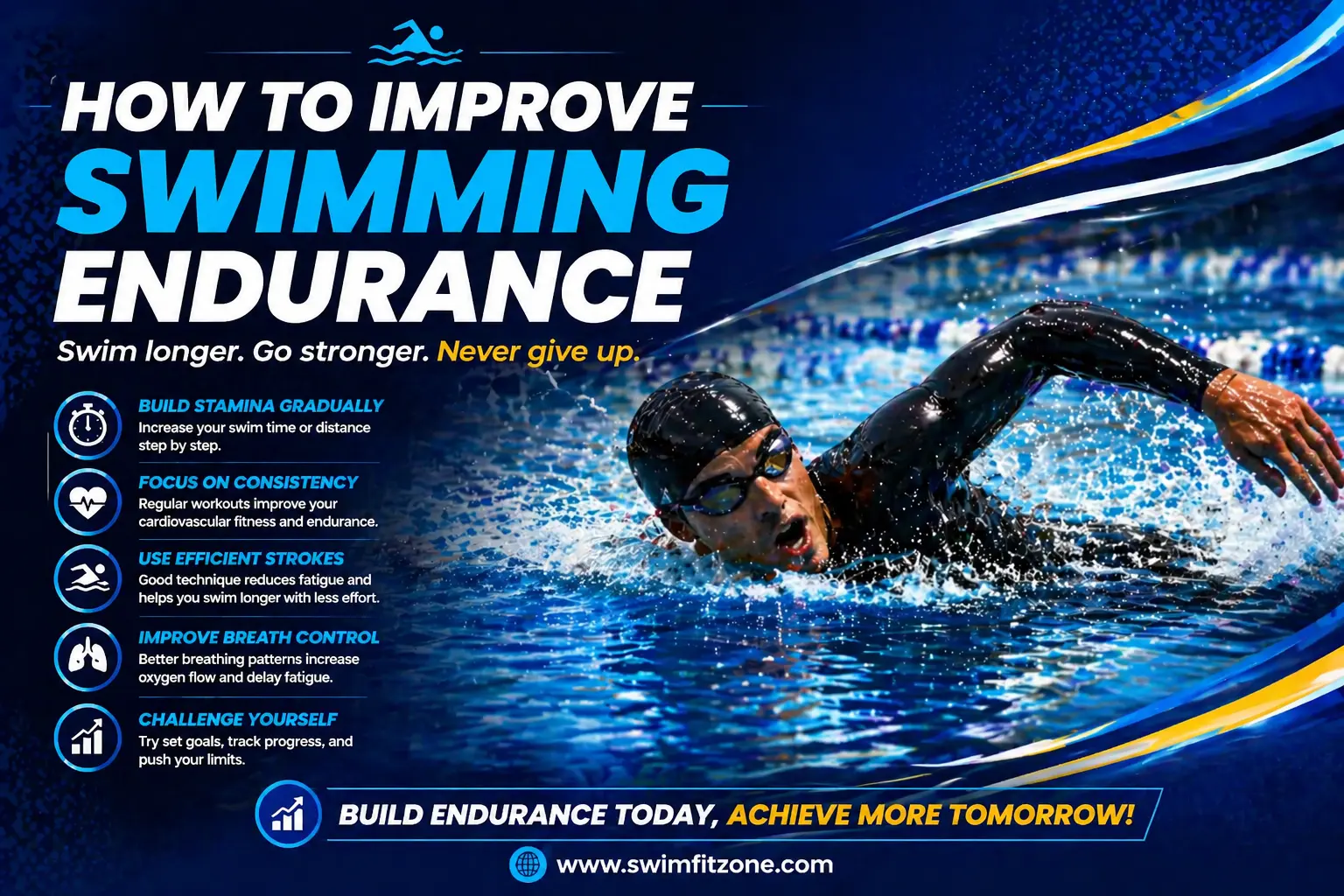
Introduction
Have you ever felt completely drained halfway through your swim even though you trained regularly? You are not alone. Many swimmers struggle with fatigue, poor pacing, or hitting a plateau in the pool. I have been there myself. Long sessions felt impossible and I could not figure out why my stamina was not improving. That frustration is exactly why learning how to improve swimming endurance matters more than just logging hours in the water.
Over years of swimming and coaching, I have learned that it is not just about swimming more. It is about the right combination of technique, breathing, pacing, workouts, and recovery. By focusing on all these areas, anyone from beginners to experienced swimmers can see real improvement. In this guide, I will share practical steps that helped me swim farther, feel stronger, and move through the water more efficiently than ever before.

Key Takeaways
- Focus on technique first because efficient strokes save energy.
- Build endurance gradually and increase distance by about ten percent weekly.
- Mix interval workouts, distance sets, and different strokes.
- Practice breathing drills to improve lung efficiency.
- Include dryland strength training to support swimming muscles.
- Prioritize recovery and rest days to avoid burnout.
- Track progress with logs or apps to stay motivated.
What is Swimming Endurance?
Swimming endurance is your ability to swim for a long time without getting too tired. It is about building your heart, lungs, and muscles to last through longer sessions. The stronger your endurance, the better you swim, the faster you recover, and the more fun it becomes.
Measure Your Current Endurance
Before improving, know your starting point. Try this simple test:
- Swim a continuous 200 meters at a steady pace
- Note how tired you feel
- Record your time
Use this test every few weeks to track progress. Seeing improvement keeps you motivated and helps set realistic goals.
Warm-Up and Technique
Endurance starts with good technique.
- Warm up properly by doing 5 to 10 minutes of easy swimming or drills. Following structured swimming warm-up routines can help prepare your muscles and improve workout performance.
- Focus on your body position, keeping your head low and body flat.
- Perfect your stroke with small, smooth movements to save energy.
- Practice breathing by exhaling underwater and inhaling quickly every 3 or 5 strokes. These skills are often taught in detailed swim stroke lessons for beginners and intermediate swimmers.
Better technique uses less energy so you can swim longer with the same effort.

Breathing and Pacing
Many swimmers tire quickly because they breathe wrong or go too fast. Here is what helps:
- Breathe evenly using both sides when possible
- Start slow and increase speed gradually
- Try drills that vary your breathing every 3 or 5 strokes
Pacing this way keeps your heart and muscles from burning out too soon.
Training Methods
Consistency is key. Swim at least three to four times a week and mix these workouts:
Interval Training
- Swim 50 to 100 meters at a faster pace, then rest for 20 to 30 seconds
- Repeat eight to twelve times
- This builds speed and stamina
Distance Swimming
- Swim longer sets at a steady pace
- Start with 200 to 400 meters, then increase to 800 to 1500 meters
Pyramid, Ladder, Fartlek, and Negative Split Workouts
- Pyramid: Swim 50, 100, 150, 100, and 50 meters
- Ladder: Gradually increase each set by 50 meters
- Fartlek: Alternate fast and slow distances at random
- Negative Split: Swim the second half faster than the first
These methods challenge your body in different ways and help you build endurance faster than just swimming the same distance each session. Adding a few swimming stroke drills to your weekly training schedule can help improve efficiency and make long-distance swimming feel easier.
Weekly Training Progression
To improve endurance, build your distance gradually. Here is an example:
Beginner (Weeks 1 to 4)
- Swim three times a week
- Swim 200 to 400 meters per session
- Add about ten percent distance each week
Intermediate (Weeks 5 to 8)
- Swim four times a week
- Swim 400 to 800 meters per session
- Add ten percent distance each week
Advanced (Weeks 9 and beyond)
- Swim four to five times a week
- Swim 800 to 1500 meters per session
- Include intervals and long steady swims
Gradual progression prevents burnout and reduces the risk of injury.
Breathing Drill Examples
Practicing breathing can improve lung efficiency and stamina. Try these drills:
- Every 3, 5, 7 Strokes Drill: Swim 25 meters breathing every 3 strokes, then every 5, then every 7. Repeat four to six times
- Hypoxic Drill: Swim 50 meters, exhaling underwater and inhaling quickly. Take fewer breaths than usual, for example, every 5 strokes
- Bilateral Breathing Drill: Alternate sides every 3 strokes to balance your stroke and improve oxygen flow

Drill Summary Table
| Week | Breaths per 25 m | Notes |
|---|---|---|
| 1 | Every 3 strokes | Focus on smooth breathing |
| 2 | Every 4 strokes | Slightly longer breath hold |
| 3 | Every 5 strokes | Build lung tolerance gradually |
| 4+ | Mix 3, 5, 7 strokes | Alternate for variety and strength |
Stroke Variety for Endurance
Swimming multiple strokes builds different muscles and reduces fatigue:
- Backstroke strengthens your back and core while encouraging better body alignment in the water.
- Breaststroke improves your chest and leg muscles.
- The butterfly stroke increases upper body power and helps build strength for advanced swimmers.
Include one to two sessions per week with strokes other than freestyle. Practicing proper freestyle swimming techniques can also improve endurance because freestyle is the most efficient stroke for long distances.

Dryland and Cross-Training
Swimming alone is not enough. Strength and cardio training support your endurance:
- Core: planks, leg raises, sit-ups
- Shoulders and back: push-ups, pull-ups, resistance bands
- Cardio: cycling, running, or rowing
Do these exercises two to three times a week to support your swimming without adding fatigue in the pool.

Equipment and Environment
Some tools make endurance training easier:
- Kickboard strengthens legs
- Pull buoy focuses on arms and upper body
- Fins improve your kick technique
- Snorkel lets you focus on stroke and body position
Swim in different pools or in open water. Currents and waves create a natural challenge and help improve endurance.
Recovery and Injury Prevention
Endurance grows during rest, not just swimming:
- Cool down after each session with five to ten minutes of easy swimming
- Stretch your shoulders, back, and legs after each session
- Take rest days to avoid overuse injuries
Skipping recovery can slow progress and cause pain.
Motivation and Goal Setting
Set clear and realistic goals:
- Short-term: swim an extra 50 meters each week
- Long-term: swim 1500 meters without stopping
Track your progress in a notebook or app. Seeing improvements keeps you consistent and motivated. As your endurance grows, you can also focus on improving swimming technique to become more efficient in the water.
FAQs
1. How long to see improvement?
If you train three to four times a week, you will notice gains in four to six weeks.
2. Should I swim slow or fast for endurance?
Use both. Slow swims build stamina and fast swims improve efficiency and strength.
3. How often should I swim?
Three to five times per week works best for most swimmers.
4. Can swimming endurance improve if I only swim a few times a week?
Yes. Even two to three focused sessions per week can improve endurance if you follow structured workouts and focus on technique.
5. How does diet affect swimming endurance?
Eating balanced meals with carbohydrates, protein, and proper hydration helps you swim longer and recover faster.
Final Thoughts
From my personal experience, improving swimming endurance is not a quick fix. It requires consistent practice, attention to technique, and understanding your body’s limits. The strategies in this guide, from weekly progression to breathing drills and stroke variety, are methods I have successfully used with swimmers of all levels to increase stamina and swim longer distances confidently. These endurance principles also form the foundation of effective training for swimming competitions, where swimmers must maintain speed and efficiency over longer workouts.
The key is combining practice with smart recovery and clear goals. Track your progress, make adjustments when needed, and do not skip rest. I have seen swimmers transform from struggling with a single lap to completing long sessions without exhaustion. Follow these strategies, and you will notice improvement in both endurance and enjoyment in the water.

