



Introduction
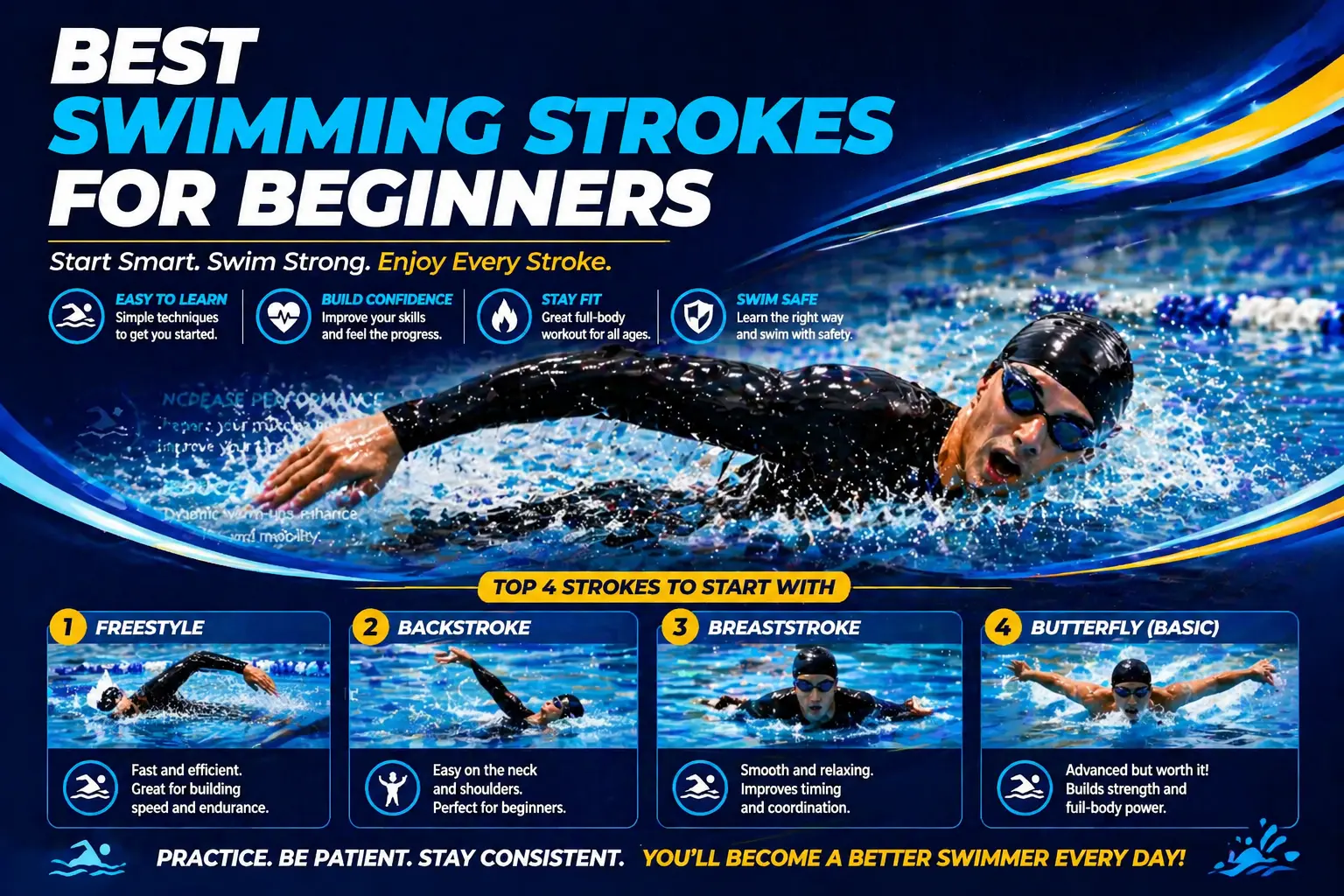
Learning to swim can feel intimidating, especially if you’ve never been confident in the water. Many beginners struggle with floating, breathing, or even knowing which stroke to start with. That’s why understanding the best swimming strokes for beginners can make a huge difference. Picking the right stroke first builds confidence and keeps the experience safe and enjoyable.
From my years of coaching beginner swimmers, I’ve noticed that small adjustments and the right guidance can turn fear into progress in just a few sessions. I’ve worked with kids who were terrified of water and adults who hadn’t swum in years. Using strokes like elementary backstroke and breaststroke first helps them gain control and trust in the water. In this guide, I’ll share what I’ve learned and provide step-by-step advice that really works for beginners.

Key Takeaways
- Start with the easiest strokes: elementary backstroke, breaststroke, or backstroke.
- Focus on floating, kicking, and breathing before combining arms and legs.
- Practice step-by-step drills consistently.
- Take small steps and build confidence before attempting harder strokes.
- Celebrate small wins to stay motivated and safe.
Getting Started in the Water
Before learning strokes, you need to get comfortable. Focus on:
- Entering and Exiting Safely: Step slowly into the water, holding the pool edge if needed.
- Floating: Lie on your back or front and relax. Don’t tense your muscles.
- Treading Water : Move your arms and legs to stay afloat. Practice in shallow water first.
- Breathing: Inhale above water and exhale underwater. Keep a steady rhythm.
Confidence Tips: Take small breaks if anxious, practice with a friend, and start in shallow water until you feel safe. This approach can also help swimmers dealing with fear of water.
Best Strokes for Beginners
Elementary Backstroke

Elementary backstroke is very easy and safe for beginners and shares some basic movements used in backstroke techniques. You float on your back and keep your head above water. The arm and leg movements are simple.
Tips:
- Move arms in a wide circular motion.
- Kick with a gentle frog-like motion.
- Breathe naturally.
Drills:
- Float on your back while doing gentle arm circles.
- Kick with legs only.
- Combine arms and legs slowly, focusing on rhythm.
Breaststroke

Breaststroke is beginner-friendly. Your head stays above water, so breathing is easy. The arms and legs move in a simple, circular pattern.
Tips:
- Push water forward with your hands.
- Pull legs in a frog-like kick.
- Breathe each stroke cycle.
Drills:
- Kick with a board while arms stay still.
- Practice arms only, keeping legs still.
Backstroke

Backstroke is easy and relaxing. You float on your back and can breathe naturally.
Tips:
- Keep your head relaxed.
- Kick steadily from your hips.
- Move arms in a circular motion.
Drills:
- Back float for 30 seconds, then add arm strokes.
- Kick while holding the pool wall.
Freestyle (Front Crawl)

Freestyle is faster but harder for beginners, but learning proper freestyle swimming tips can make breathing and coordination easier. Breathing requires turning your head to the side.
Tips:
- Alternate arms in a long, straight motion.
- Kick steadily from your hips.
- Breathe every 2-3 strokes.
Drills:
- Side breathing practice on a kickboard.
- One-arm freestyle while the other stays at your side.
Butterfly (Advanced)
Butterfly is not recommended for beginners because it requires timing and coordination that are usually learned after mastering basic butterfly stroke tips. It needs strong coordination and timing. Focus on it only after you master other strokes.
Why Some Strokes Are Easier for Beginners
- Elementary Backstroke: Very gentle, helps you float and feel safe.
- Breaststroke: Arms and legs move in a simple pattern. Breathing is easy since your head stays above water.
- Backstroke: You can always breathe because your face is up. Good for beginners who fear water.
- Freestyle: Slightly harder because you need to turn your head to breathe, but fast and efficient once learned.
Breathing Patterns for Each Stroke
- Elementary Backstroke: Breathe naturally.
- Breaststroke: Inhale during each stroke, exhale underwater.
- Backstroke: Breathe normally, face stays above water.
- Freestyle: Turn your head to the side to breathe, exhale underwater, inhale quickly.
Step-by-Step Learning Plan
Week 1: Floating, treading, and breathing drills.
Week 2: Elementary backstroke, breaststroke, and backstroke basics.
Week 3: Start freestyle practice and combine arms with kicks using simple swimming stroke drills to improve coordination.
Week 4: Swim short laps and focus on rhythm and breathing.
Extra Tip: Celebrate small wins like floating for longer or completing a few meters. This builds confidence faster.
Common Beginner Mistakes
- Lifting your head too high in freestyle.
- Legs sinking in backstroke.
- Breathing too fast or holding your breath.
Fixes:
- Keep your head in line with your spine and continue working on your swimming technique improvement goals during practice.
- Kick from the hips, not knees.
- Practice slow, steady breathing.
Additional Basic Drills
- Floating with Kicks: Float on your front or back, gently kick to stay balanced. Similar exercises are often taught in swim stroke lessons for beginners.
- Kickboard Kicks: Hold a board, kick steadily, count each kick.
- Breathing Rhythm Drill: Practice exhaling underwater and inhaling above water, even on land first.
- Arm Motion Drill: Move arms in the stroke motion while standing or in shallow water.
Drill Summary Table
| Drill | Stroke | Goal |
|---|---|---|
| Kickboard kicks | Breaststroke / Freestyle | Leg strength and rhythm |
| Arm circles | Any stroke | Arm coordination |
| Floating & treading | All strokes | Water confidence |
| Side breathing drill | Freestyle | Breathing control |

Age and Goal-Based Tips
- Kids: Start with elementary backstroke, backstroke, or breaststroke.
- Adults: Freestyle or breaststroke works best for fitness and safety.
- Water Safety Goal: Focus on floating, treading water, and breaststroke.
- Fitness Goal: Add freestyle for speed and stamina.
Frequently Asked Questions
1. What is the easiest swimming stroke for a beginner?
Elementary backstroke and breaststroke are easiest. They allow comfortable breathing and floating.
2. How should I start learning strokes step by step?
Begin with floating, treading, and breathing drills. Then practice kicking and arms separately before combining. Follow a weekly plan starting with easy strokes.
3. How long should I practice each day?
Even 15–30 minutes daily is enough. Consistency matters more than long sessions.
4. How can I avoid common beginner mistakes?
Watch your head and body position. Don’t lift your head too high in freestyle or let legs sink in backstroke. Focus on rhythm and steady breathing.
5. Do I need a coach or instructor to learn swimming?
Not always, but guidance speeds learning and ensures safety. Even simple supervision helps beginners progress faster.
Final Thoughts
When I look back at my experience teaching beginners, the common thread is confidence. Those who start with the right strokes, focus on floating and breathing, and practice consistently, see faster improvement and enjoy swimming more. Using the best swimming strokes for beginners as a roadmap not only teaches technique but also builds comfort in the water. I’ve had students go from panic to swimming short laps confidently in just a few weeks by following this approach.
The key is patience and practice. No one learns every stroke perfectly on day one, and that’s okay. Focus on one stroke at a time, build a routine, and celebrate small wins. Many swimmers eventually use these skills when training for swimming competitions. With the right guidance, drills, and progression, beginners can experience swimming as a fun and rewarding activity, not a source of stress. Trust the process, start with strokes designed for ease, and you’ll see improvement sooner than you think.

