



Introduction
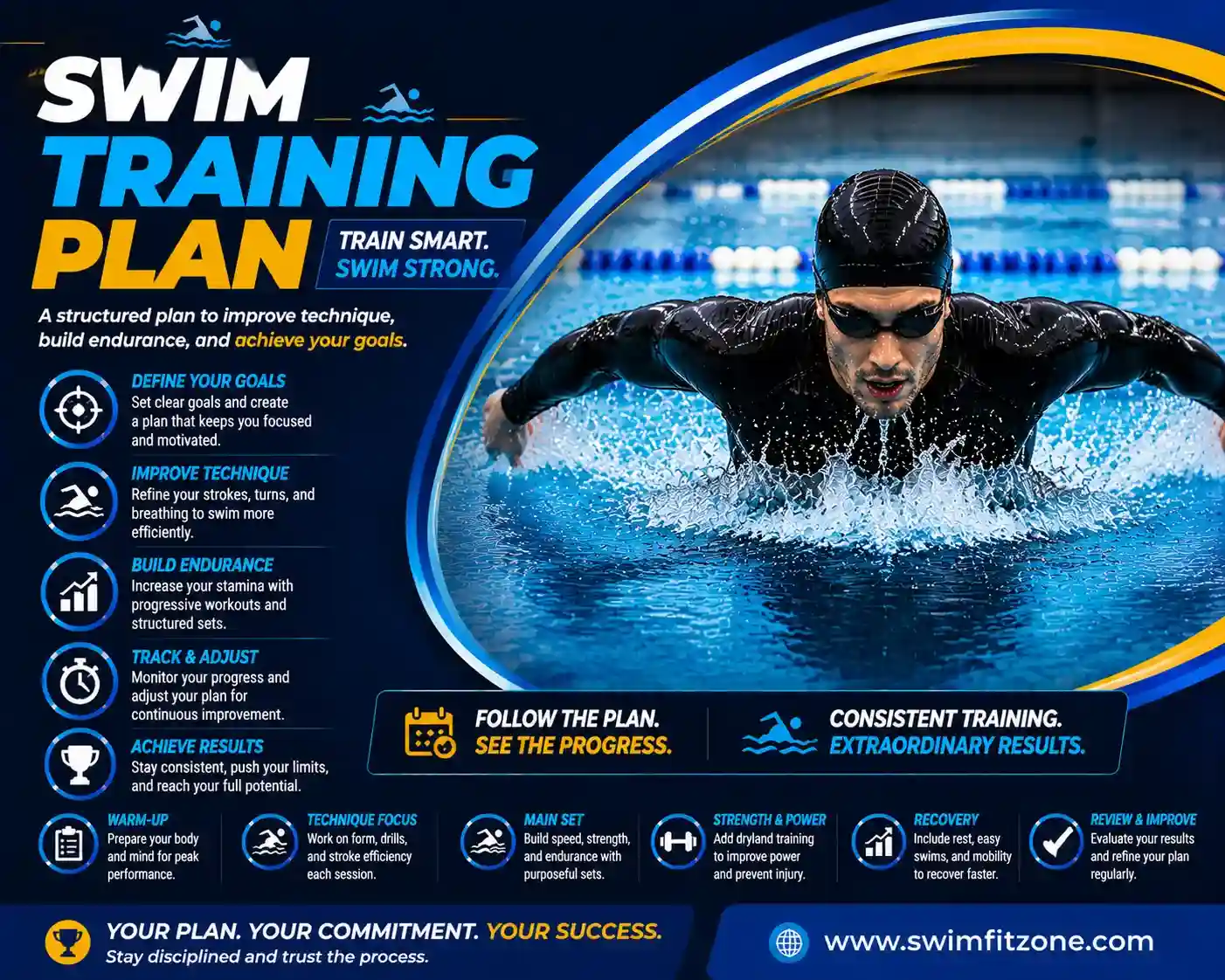
A good swim training plan gives you a clear schedule for improving endurance, technique, fitness, or race performance. Whether you are a beginner, fitness swimmer, or competitive swimmer, the right swimming training routine can help you know what to swim, how often to train, and when to recover.
I have trained hundreds of swimmers over the years, from absolute beginners to triathletes. I have seen swimmers struggle for months with inconsistent training or ineffective workouts. By following structured swim plans that balance technique, endurance, and recovery I have watched them make real progress quickly. This guide combines those experiences into a Swim Training Plan you can follow, track, and adapt to your own goals.

Key Takeaways
- Start with your current swim level and match the plan
- Include warm-up, main set, drills, and cooldown in every session
- Track distance, pace, and stroke count for measurable improvement
- Add dryland exercises and recovery for faster progress
- Progress gradually over weeks to avoid burnout or injury
Who This Guide is For
Not every swimmer needs the same plan. Here is a simple breakdown:
| Level | Goal | Focus |
|---|---|---|
| Beginners / Fitness | Swim confidently, build stamina | Short sessions, simple drills, steady progress |
| Intermediate / Club | Improve speed and efficiency | Structured workouts, pacing, stroke improvement |
| Race / Triathlon | Prepare for competitions | Goal-based sessions, open water skills, pacing strategy |
Which Swim Training Plan Is Right for You?
The best swim training plan depends on your current ability and your main goal. A beginner may need shorter sessions focused on technique and comfort, while an experienced swimmer may need more structured endurance and speed work.
If your goal is general fitness, a simple swimming fitness plan can help you build endurance without requiring the training volume of a competitive swimmer. If you are preparing for a race, your swimming training program should include race pace, speed, endurance, and recovery.
Choose the plan that matches your current level rather than trying to follow an advanced swimmers workout plan from the start.
How Swim Training Plans Work
A swim plan usually has four parts:
Warm-Up: Easy swimming to get your body ready. Following proper Swimming Warm-Up Routines before every workout helps prepare your muscles and improve performance.
Main Set: The main part of your workout: endurance, speed, or intervals.
Drills: Practice strokes, kicks, and techniques.
Cooldown: Slow swimming to recover.
What this really means is focusing only on distance does not work. Good Swimming Stroke Techniques help swimmers move efficiently through the water, making every session count.
How to Read a Swim Workout
Rest periods depend on the workout. Easy swimming may need only 15 to 30 seconds of rest, while hard or sprint sets may need more recovery. If your technique starts to fall apart, take extra rest before continuing.
Swim workouts often use numbers such as 4×50 or 6×100. The first number tells you how many repeats to complete, while the second tells you the distance of each repeat. For example, 4×50 means swimming 50 yards or meters four times.
What Does a Complete Swim Workout Include?
A complete swim workout should have a clear purpose. A beginner session may focus on technique and easy endurance, while an experienced swimmer may use intervals, race pace, or speed work.
A typical session includes:
- Warm-up: Easy swimming to prepare for the workout.
- Drills: Technique work that focuses on a specific part of the stroke.
- Main set: The main training block for endurance, speed, or race preparation.
- Cooldown: Easy swimming at the end of the session.
For example, a 1,000-yard workout could include 200 yards of easy swimming, 200 yards of drills, 500 yards of the main set, and 100 yards of easy swimming.
Understanding Swim Workout Intensity
Not every swim should be done at the same pace. A good swim training plan uses different intensity levels for different goals.
| Intensity | What it feels like | Main purpose |
|---|---|---|
| Easy | Comfortable and controlled | Warm-up, cooldown, recovery |
| Moderate | Steady effort that you can maintain | Fitness and endurance |
| Hard | Strong effort with more recovery needed | Speed and harder intervals |
| Race Pace | Similar effort to your target event | Race preparation |
Most weekly plans should combine different intensities instead of making every workout hard.
Sample Weekly Plans

Here are simple weekly plans for different levels. Adjust them based on your time and ability.
Beginners 3 to 4 sessions per week
Goal: Build swimming confidence, improve technique, and gradually increase endurance. Depending on your current ability, you may swim short distances with rest between repeats rather than trying to swim 500 to 1500 yards without stopping.
New swimmers often progress faster when they first learn the Best Swimming Strokes for Beginners and focus on proper form before increasing distance.
Session length: Most beginner sessions can take about 25 to 45 minutes, depending on swimming speed and rest periods.
Intensity: Keep most swimming easy to moderate. The goal is to build consistency and maintain good technique rather than swim every repeat as fast as possible.
| Day | Focus | Example |
|---|---|---|
| Mon | Technique and Endurance | 200 warm-up, 4×25m drills, 4×50m easy swim, 100 cooldown |
| Wed | Endurance | 200 warm-up, 6×50m swim, 4×25m kick, 100 cooldown |
| Fri | Mixed | 200 warm-up, 2×50m drills, 4×75m swim, 50 kick, 100 cooldown |
| Sat Optional | Recovery | 200 easy swim, 50 kick, 50 drills |
How to progress: When these sessions become comfortable, add a small amount of swimming to the main set or reduce rest slightly. Change one part of the workout at a time.
Tip: Increase distance or intensity gradually rather than following a fixed percentage every week. Track your total distance and how you feel after each session. If your technique gets worse or recovery becomes harder, keep the same workload or reduce it.
Intermediate 4 to 5 sessions per week
Goal: Improve swimming pace, endurance, and stroke efficiency.
Session length: Most intermediate sessions can take about 40 to 60 minutes.
Intensity: Combine moderate endurance swimming with selected speed and threshold work. Hard sessions should be balanced with easier swimming or recovery.
Including regular Swimming Stroke Drills can help improve efficiency and correct technique mistakes before they become habits.
| Day | Focus | Example |
|---|---|---|
| Mon | Endurance | 300 warm-up, 4×100m swim, 4×50m kick, 200 cooldown |
| Wed | Speed | 300 warm-up, 8×25m fast, 4×50m technique, 200 cooldown |
| Fri | Threshold | 300 warm-up, 6×75m race pace, 4×50m pull, 200 cooldown |
| Sat | Mixed/Recovery | 200 warm-up, 4×50m drills, 200 easy swim |
Tip: Record your pace and stroke count after key workouts. As your fitness improves, you can gradually adjust rest periods or increase the number of repeats.
Race-Focused and Triathlon Swim Training
Goal: Build endurance, speed, pacing, and race-specific fitness for competitive swimming or triathlon events.
Athletes preparing for events should follow proven Training for Swimming Competitions methods to improve pacing and race performance.
| Day | Focus | Example |
|---|---|---|
| Mon | Endurance | 400 warm-up, 8×100m swim, 4×50m kick, 200 cooldown |
| Tue | Technique | 300 warm-up, 6×50m drill, IM sets, 200 cooldown |
| Wed | Speed | 400 warm-up, 10×25m sprint, 4×50m pull, 200 cooldown |
| Thu | Threshold | 300 warm-up, 6×100m race pace, 200 cooldown |
| Fri | Mixed | 300 warm-up, 4×50m drills, 4×100m swim, 200 cooldown |
| Sat | Open Water Practice | 800 to 1200m sighting, pacing, drafting practice |
Tip: Track pace per 100m. Set weekly targets and practice sighting for open water.
A race-focused swimming training program should change as your event gets closer. Early training can focus more on building endurance and technique, while later sessions can include more race-pace swimming, speed work, and recovery.
For competitive swimmers, the exact training mix should also reflect the race distance and stroke. A sprint swimmer may need more short, high-intensity repeats, while a distance swimmer may spend more time on aerobic endurance and pacing. Triathletes should also include open-water skills and practice swimming at a controlled pace when fatigued.
Long-Distance Swim Training
Long-distance swimming requires swimmers to maintain a steady effort while managing fatigue. Start with a distance you can complete with good technique, then gradually increase the amount of swimming over several weeks.
Use mostly controlled aerobic swimming for longer sessions rather than trying to swim every repeat at maximum effort. Include short breaks when needed, especially as the distance increases.
If you are preparing for an open-water event, add sighting, pacing, turns around buoys, and practice with the equipment you expect to use during the event.
How to Track Your Progress
- To get results you need to measure progress.
- Distance Track yards or meters per session and week.
- Pace Use a stopwatch or pool watch.
- For weekly goals set small targets such as swimming slightly farther, improving your 100m pace, reducing unnecessary rest, or maintaining better technique during longer sets.
- Stroke Count Helps measure efficiency. Fewer strokes often mean better form.
Compare similar workouts over time rather than judging progress from one session. For example, you may notice that the same 100-yard repeats feel easier, your rest periods become shorter, or you maintain better technique at the same pace.
Consistent work on Swimming Technique Improvement can help reduce stroke count while maintaining speed.
How to Know Your Swim Training Is Working
Progress does not always mean swimming faster. You may also notice that you can swim farther without stopping, recover faster between repeats, maintain better technique when tired, or complete the same workout with less effort.
Keep a simple training log with your distance, pace, stroke count, and notes about how the workout felt. These small changes can show that your swimming fitness training is working even before your race times improve.
For a more reliable comparison, check your progress every few weeks rather than after every workout.
A Simple Swimming Improvement Plan
A simple swimming improvement plan can focus on one training goal at a time.
Weeks 1 to 2: Focus on technique, body position, breathing, and consistent training.
Weeks 3 to 4: Increase the amount of steady swimming and add controlled interval work.
Weeks 5 to 6: Add more pace work while keeping your technique under control.
After Week 6: Review your distance, pace, stroke count, and recovery. Use these results to decide whether you should increase the workload or continue with the same level.
You do not need to increase distance and intensity at the same time. Make small changes so you can see how your body responds to the training.
Targets:
- swimming improvement plan
- swimming improvement program
- swimming progression plan
- swimming training routine
Swim Drills to Include
Drills improve form and efficiency by giving you time to focus on one part of your stroke. Include them regularly, but choose drills that match the purpose of your workout rather than doing the same drills every session.
Many swimmers use drills to Improve Swimming Endurance because better technique helps conserve energy during longer swims.

Drill Summary Table
| Drill Type | Example | Purpose |
|---|---|---|
| Freestyle | Catch-up drill, fingertip drag, high elbow | Improve stroke mechanics and efficiency |
| Kick Sets | Flutter kick with board, vertical kick | Strengthen legs and improve propulsion |
| Pull Sets | Pull buoy to isolate arms | Focus on upper body strength and arm technique |
| IM / Stroke Variety | Alternate strokes: freestyle, backstroke, breaststroke, butterfly | Balance strength and technique for all strokes |
These drills make you faster and reduce the chance of injury.
Dryland and Strength Exercises
Adding dryland exercises helps swimmers improve power and reduce injury. Combining pool workouts with Swimming Exercises for Strength can help build stronger muscles for swimming performance. You do not need fancy equipment.

- Beginner
- Plank 3×30 seconds
- Bodyweight squats 3×15
- Arm circles 3×20
- Intermediate
- Push-ups 3×12
- Medicine ball throws 3×10
- Lunges 3×12 each leg
- Race/Triathlon
- Pull-ups 3×8
- Core twists 3×20
- Resistance band swim motions 3×15
Do these 2 to 3 times per week. Focus on controlled movement and proper form.
Dryland work should support your swimming training rather than leave you too tired to complete your pool sessions with good technique.
Recovery and Nutrition Tips
- Recovery is just as important as swimming. Skipping rest slows progress.
- Rest Days Take at least one full day off per week.
- Stretching Stretch arms, shoulders, back, and legs after each session.
- Hydration Drink water before, during, and after swims.
- Nutrition: Eat balanced meals that provide carbohydrates, protein, fruits, vegetables, and other nutrients your body needs. Your food choices should also match your overall training load.
Recovery should match your training load. If you have several hard swim sessions in one week, include easier swimming or a rest day between them. Persistent fatigue, declining technique, or difficulty completing normal workouts are signs that your workload may need to be reduced.
Recovery also plays an important role in any long-term Swimming for Fitness program because your body needs time to adapt to training.
Open Water Swimming Tips

- Open water swimming is different from the pool. Keep these in mind.
- Sighting Lift your head every 6 to 8 strokes to see your path.
- Temperature: Wetsuit use depends on water temperature, event rules, exposure time, the type of wetsuit, and the swimmer. Check local conditions and event requirements before choosing one.
- Navigation Follow buoys or landmarks to swim straight.
- Drafting Swim behind or beside another swimmer to save energy.
- Start open water sessions gradually and practice safety.
6-Week Swim Training Progression for Beginners
| Week | Total Distance per Session | Main Set Distance |
|---|---|---|
| 1 | 500 yards | 4×50 yards |
| 2 | 600 yards | 4×75 yards |
| 3 | 700 yards | 5×75 yards |
| 4 | 900 yards | 6×75 yards |
| 5 | 1200 yards | 6×100 yards |
| 6 | 1500 yards | 8×100 yards |

What If You Miss a Swim Workout?
Missing one workout does not mean you need to double the next one. Continue with your next planned session and return to your normal schedule. If you have missed several sessions, start with a lighter workout and build back gradually.
Trying to make up all your missed swimming at once can leave you tired and make it harder to maintain good technique.
Common Mistakes to Avoid
- Training too hard too soon
- Ignoring technique and focusing only on distance
- Skipping warm-ups or cooldowns
- Not tracking progress
- Overlooking rest and recovery
Tips for Success
- Swim consistently, even short sessions count.
- Adjust intensity based on how your body feels.
- Combine swimming with dryland exercises for strength.
- Increase distance or intensity gradually.
- Log every session to see improvement.
Frequently Asked Questions
What is a good swim training plan for beginners?
A beginner swim training plan should combine easy swimming, basic drills, rest periods, and gradual increases in distance. Start with a workload you can complete while maintaining good technique instead of trying to match an advanced swimmer’s workout.
How do I make a swim workout plan?
Start by choosing your goal, swimming level, available training days, and preferred pool distance. Build each session around a warm-up, drills, main set, and cooldown. Add appropriate rest periods and progress gradually as your fitness improves.
How do I build endurance for swimming?
Build endurance by swimming consistently and gradually increasing the amount of controlled swimming you can complete. Combine easy aerobic sets with technique drills and occasional faster intervals. Keep your technique under control as the distance increases.
How often should I train for swimming?
Beginners can usually start with 2 to 3 swim sessions per week. Fitness swimmers may train 3 to 4 days, while intermediate and competitive swimmers may train 4 to 6 days depending on their goals, workout intensity, and recovery.
Final Thoughts
Creating and sticking to a Swim Training Plan has changed the way I approach swimming personally. I have seen how planning workouts, tracking pace, and focusing on technique turns frustration into measurable progress. Even a few weeks of consistent practice can build confidence, endurance, and efficiency in the water.
What I have learned from coaching others is that progress comes from structure and adaptability. Your plan should challenge you but respect recovery. By combining technique drills, weekly progression, and mindful tracking, you can achieve results that feel rewarding and sustainable. Stick to the plan, trust the process, and swimming will become not just exercise, but a skill you truly master.

