



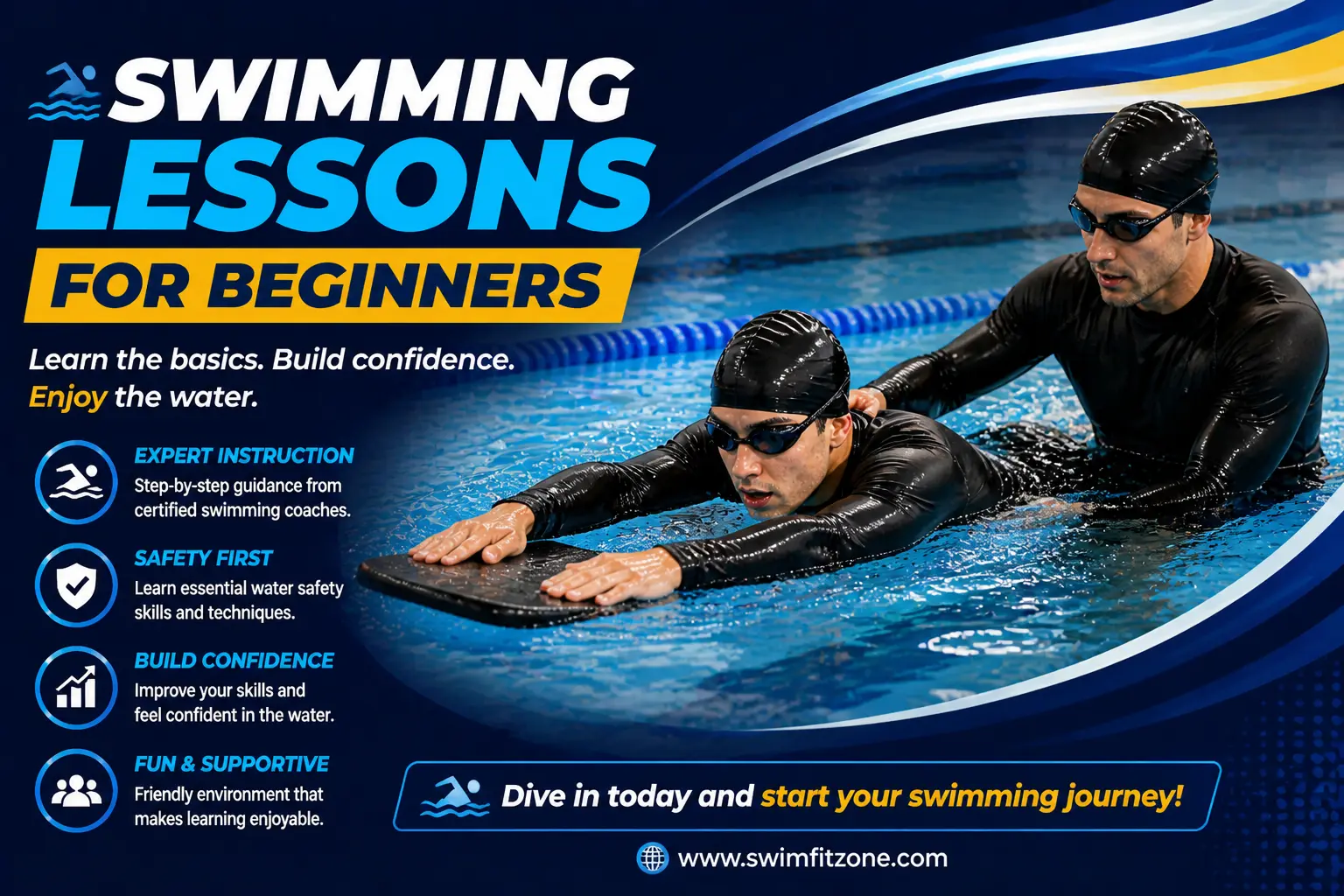
Introduction
Starting to swim can feel overwhelming. I remember my first time in the pool as a complete beginner. I was tense, afraid of swallowing water, and unsure which strokes to try first. Many beginners face the same struggles: fear, uncertainty, and slow progress. That is why swimming lessons for beginners are essential. The right guidance builds confidence and teaches safe, effective techniques.
What really helped me was step-by-step instruction, focusing on simple drills and safe strokes. Over the years, I have worked with children, adults, and teens. I have seen how proper lessons turn anxiety into confidence and make swimming feel natural and enjoyable.

Why Swimming Lessons Matter
Swimming lessons do more than teach strokes. They build confidence, reduce risk, and improve fitness. For children, lessons create early safety habits. Adults overcome fear and learn proper techniques. Teens catch up with peers and gain skills for sports and fitness.
Types of Swimming Lessons
Not all lessons are the same. Choosing the right one makes a big difference.
- Private lessons: One-on-one with a coach. Faster progress, personalized feedback.
- Group lessons: Learn with others. Social, cheaper, and motivating.
- Semi-private lessons: Small group. Some personal attention.
- Community programs: Structured, affordable lessons at local pools or YMCA.
Choosing a Qualified Instructor or Swim School
Picking the right instructor is key. Look for coaches with certification from recognized organizations like USMS or YMCA. Check class sizes, safety procedures, and instructor experience. A small group or one-on-one lesson ensures personal attention and safer learning.
Skill Progression for Beginners
Beginners should follow a step-by-step plan:
- Water comfort : Face in water, blow bubbles, float.
- Kicking and leg work : Front kick, back kick, flutter kick.
- Breathing and coordination : Combine arms and legs, learn rhythmic breathing.
- Short swim : Swim 5 to 10 meters with breaks.
- Stroke practice : Start with freestyle, then backstroke. Breaststroke comes later.
- Confidence building : Tread water, practice turns, move in deeper water.
Tip for adults: Practice slowly and correctly. Avoid creating bad habits while learning on your own.
Age Specific Recommendations for Children
Start lessons at age 3 or older. Very young children 6 months to 2 years can do parent-assisted water familiarization but not structured lessons. Early lessons focus on comfort in water, blowing bubbles, and basic floating before strokes. Parent encouragement is key to keeping children calm and confident.
Gear You Need

Beginners do not need much, but the right gear helps:
- Goggles to protect eyes and see underwater
- Swim cap to keep hair out of the face
- Towel to dry off quickly
- Kickboard to practice kicking and balance
- Pool noodle to support floating confidence
- Snorkel optional for breathing practice and stroke coordination
Dryland Preparation for Adults
Adults can improve faster with simple exercises outside the pool:
- Arm and shoulder stretches
- Core exercises like planks
- Leg strengthening and squats
- Basic cardio like walking or jogging
This builds strength, flexibility, and endurance for swimming.

Cost of Lessons in the USA
Lesson prices vary depending on location and format:
- Private lessons 30 to 60 dollars per session
- Group lessons 15 to 40 dollars per session
- Community programs 10 to 25 dollars per session
Most beginners do 1 to 2 lessons per week for 4 to 8 weeks to see progress.
Common Fears and How to Handle Them
Fear is normal. Many beginners feel nervous in water. Here is how to stay calm:
- Start in shallow water
- Take small steps, like putting face in water gradually
- Practice floating and kicking before swimming full lengths
- Use a friend or instructor for support
Avoiding Bad Habits When Practicing Alone
Practice can help, but doing it incorrectly can create bad habits. Focus on:
- Correct breathing and stroke technique
- Proper kicking and body position
- Using simple aids like kickboards rather than overcomplicating with advanced equipment
Practice Between Lessons
You do not have to wait for lessons to practice. Simple drills work:
- Blow bubbles in water
- Front and back floats for 10 to 30 seconds
- Kick along the wall or with a kickboard
- Short swims in shallow areas to combine arms and legs
Regular practice builds confidence faster.
Video and Visual Learning
Watching beginner-friendly demo videos can help. Look for tutorials on front float, basic kicks, and freestyle drills. Visual examples make it easier to replicate proper form and speed up learning.
Drill Summary Table
| Stage | Skills to Learn | Notes |
|---|---|---|
| Week 1 | Water comfort, blowing bubbles, front/back float | Focus on fear reduction |
| Week 2 | Kicking drills, wall push-offs | Use kickboard or noodle for support |
| Week 3 | Arm movements, basic freestyle | Combine arms and legs gradually |
| Week 4 | Short swims 5 to 10 meters, backstroke | Take breaks as needed |
| Week 5 | Treading water, turns | Confidence-building skills |
| Week 6 | Longer swims, freestyle improvement | Monitor form and breathing |

Key Takeaways
- Start with simple strokes like freestyle and backstroke
- Focus on safety and water confidence first
- Practice regularly even between lessons
- Choose a certified instructor or small-group lessons
- Use gear like goggles and kickboards to support learning
FAQs for Beginners
Q1: At what age can kids start lessons
Most kids start structured lessons at age 3 or older. Younger children 6 months to 2 years can do parent-assisted water familiarization but not full lessons.
Q2: Which swimming strokes should beginners start with
Focus on freestyle and backstroke first. These strokes are easier and build confidence. Breaststroke and butterfly come later.
Q3: How often should I practice to see progress
1 to 2 lessons per week combined with short practice sessions at home or in the pool helps reinforce skills.
Q4: What equipment is essential for beginners
Goggles, swim cap, and towel are must-haves. Kickboards and pool noodles help with floating and kicking. Snorkels are optional.
Q5: How long does it take to swim confidently as a beginner
Most beginners can swim short distances 5 to 10 meters confidently in 4 to 6 weeks with regular lessons and consistent practice.
Final Thoughts
From my personal experience, the key to successful swimming lessons for beginners is patience and proper guidance. Learning basic strokes, floating, and breathing techniques first sets a strong foundation. I have seen children and adults make faster progress when they focus on fundamentals, combining practice with guidance from qualified instructors.
The most important things are consistency, confidence, and safety. Practicing regularly, using beginner-friendly tools, and celebrating small wins ensures a rewarding learning experience. With structured lessons and the right mindset, anyone can go from nervous splashes to confident swimming in just a few weeks.

