



Introduction
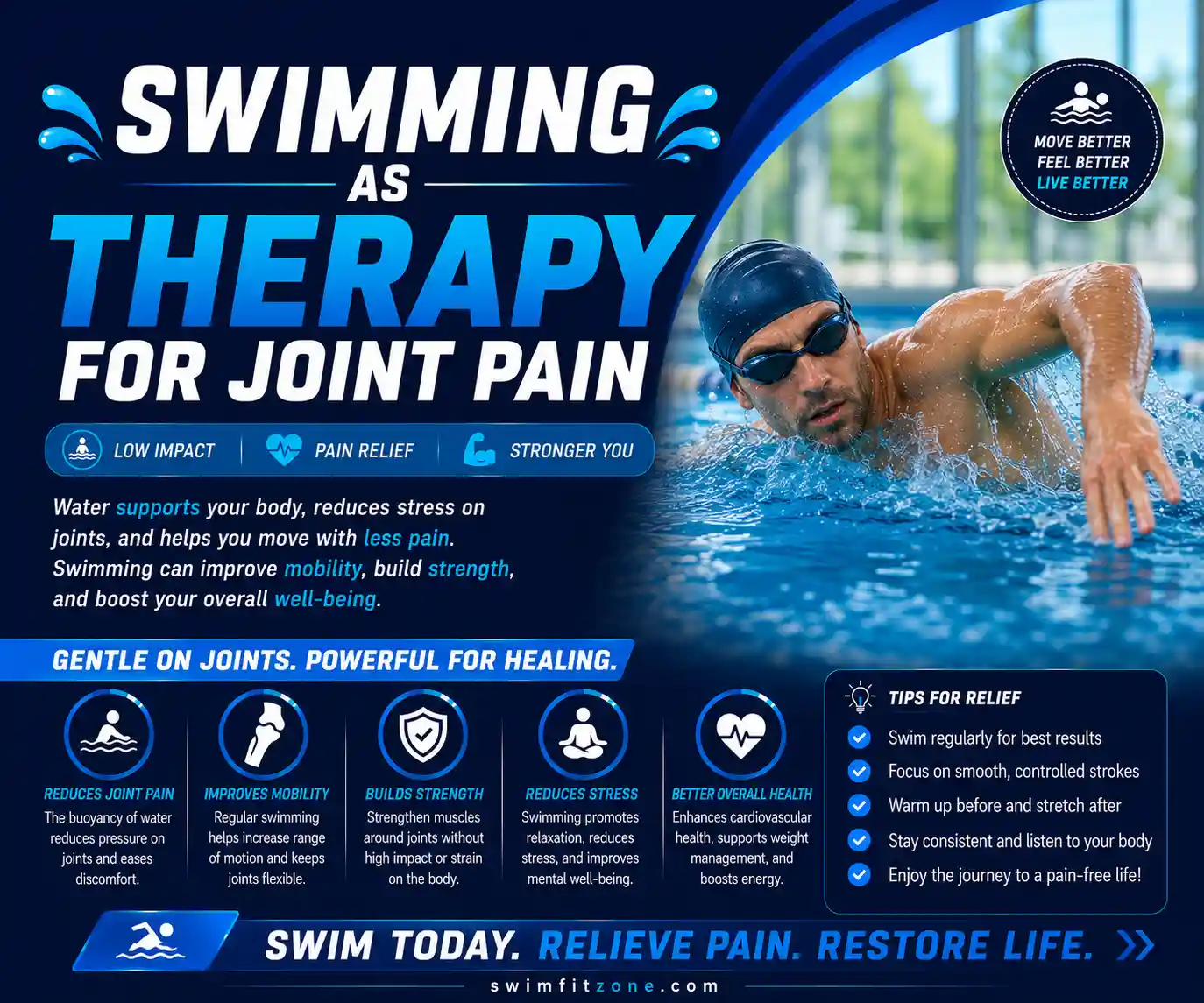
Joint pain can make simple activities like walking, climbing stairs, or exercising feel difficult. Many people stop being active because they worry movement will make their pain worse. Over time, this can lead to weaker muscles and stiffer joints. Swimming as therapy for joint pain offers a gentle way to stay active because the water supports your body and reduces stress on your joints while you move.
As a swimming coach, I have seen many beginners arrive at the pool with the same concern about making their pain worse. The key is to start with short, easy sessions and focus on proper technique instead of speed. In this guide, you will learn how swimming may help with joint pain, which strokes are safest, how to begin with confidence, and simple habits that can support your joint health over time.
Key Takeaways
| Joint Problem | Recommended Stroke | Use With Caution |
|---|---|---|
| Knee Pain | Freestyle, Backstroke | Breaststroke |
| Hip Pain | Freestyle, Backstroke | Butterfly |
| Shoulder Pain | Easy Freestyle, Backstroke | Butterfly |
| Lower Back Pain | Backstroke | Butterfly |
| General Joint Stiffness | Freestyle, Backstroke | Fast Butterfly |

What Is Swimming as Therapy for Joint Pain?
Swimming as therapy for joint pain means using swimming or other water based movement to help improve mobility, strengthen muscles, and manage joint discomfort. Unlike high impact activities, swimming allows you to move with less pressure on your joints because the water supports much of your body weight.
Many people think they need to avoid exercise when their joints hurt. In reality, gentle movement is often an important part of staying active. Swimming gives your body a chance to move without placing the same stress on your knees, hips, ankles, and back that you may feel during running or jumping.
It is also helpful to know that swimming and aquatic therapy are different. Swimming is a form of exercise that you can do on your own, while aquatic therapy is a treatment program led by a trained physical therapist for rehabilitation or recovery.
Whether your goal is to reduce stiffness, improve flexibility, or simply stay active, swimming can be a practical option when done with proper technique and realistic expectations.
Why Water Can Be Easier on Your Joints
The biggest reason swimming feels different is the water itself. It changes how your body moves and supports you in ways that land based exercise cannot.

Buoyancy
Water helps support your body weight. This reduces the force placed on weight bearing joints such as the knees, hips, and ankles. Many people notice that movements feel smoother and more comfortable once they are in the pool.
Hydrostatic Pressure
Water gently presses against your body from every direction. This pressure may improve circulation and can help some people feel more stable while moving in the pool.
Water Resistance
Every movement in the water works against gentle resistance. This helps strengthen muscles without using heavy weights. Strong muscles provide better support for your joints during daily activities.
Warm Water
If you have access to a warm pool, you may find it more comfortable than a cooler pool. Warm water can help relax tight muscles and make stiff joints easier to move before and during exercise.
Benefits of Swimming for Joint Pain
Swimming offers more than pain relief. It supports your overall health while placing less stress on your joints than many other forms of exercise.
May Help Reduce Joint Pain
Gentle movement in the water may reduce stiffness and help many people move with greater comfort. Results are different for everyone, but regular activity often supports healthier joints.
Builds Muscle Strength
Muscles help stabilize your joints. Swimming strengthens the arms, legs, shoulders, back, and core, giving your joints better support during everyday movement.
Improves Flexibility
Swimming encourages your body to move through a wide range of motion. Over time, this may improve flexibility and make everyday tasks easier.
Supports Heart Health
Swimming is also an excellent cardiovascular exercise. Better heart and lung fitness can increase your energy and make daily activities feel less tiring.
Helps With Weight Management
Extra body weight places additional pressure on the knees and hips. Swimming burns calories while remaining gentle on your joints, making it a suitable exercise for many adults.
Improves Balance and Coordination
Moving through the water challenges your body in different ways. Regular swimming may improve balance and coordination, which are important as you get older.
Reduces Stress
Living with ongoing joint pain can affect your mood and confidence. Many swimmers find that spending time in the water helps them relax while giving them a sense of achievement after each session.
While swimming may help manage joint pain and support overall well being, it is not a replacement for medical treatment. The Arthritis Foundation also recommends water based exercise as a joint friendly way for many people with arthritis to stay active.
Which Joint Conditions Can Benefit?
Swimming may be suitable for several types of joint problems. Your results depend on the cause of your pain, your swimming technique, and how often you exercise.
Knee Pain
Swimming is often a comfortable choice for people with knee pain because the water reduces pressure on the joint. Freestyle and backstroke are usually better options than breaststroke, since the breaststroke kick may place extra stress on the knees for some people.
Hip Pain
The hips support much of your body weight during daily activities. Swimming reduces that load while allowing the muscles around the hips to become stronger. Gentle swimming may also improve flexibility and movement.
Shoulder Pain
Proper technique is important if you have shoulder pain. Slow freestyle and backstroke are often easier to tolerate than more demanding strokes. If your shoulder pain becomes worse while swimming, stop and seek medical advice before continuing.
Lower Back Pain
Many people with mild lower back pain find swimming more comfortable than high impact exercise. Backstroke can help maintain a more natural body position, while easy freestyle encourages controlled movement through the water.
Osteoarthritis
People with osteoarthritis often experience stiffness and discomfort that make daily activities difficult. Swimming allows them to stay active while reducing pressure on affected joints. Combined with guidance from a healthcare professional, regular swimming may improve mobility and quality of life.
Rheumatoid Arthritis
Some people with rheumatoid arthritis benefit from gentle swimming during periods when their symptoms are well managed. During a flare up, rest or medical guidance may be more appropriate than exercise.
Ankle Pain
Swimming may also help people with mild ankle pain because the water reduces pressure on the joint during movement. Gentle kicking can improve mobility while strengthening the muscles around the ankle. If kicking causes discomfort, reduce your effort or use a pull buoy until your ankle feels more comfortable.
The next step is choosing the right swimming stroke. Each stroke places different demands on your body, and selecting the right one can help you stay comfortable while building strength safely.
Best Swimming Strokes for Different Joint Problems

Choosing the right swimming stroke can make your workouts safer and more comfortable. If one stroke causes pain, switch to another instead of trying to push through it.
Freestyle
Freestyle is a good starting point for many people with joint pain. It provides a full body workout while keeping movements smooth and controlled. Keep your kick relaxed and avoid rushing your strokes.
Backstroke
Backstroke is often one of the most comfortable strokes for people with lower back, hip, or general joint discomfort. It also allows you to breathe naturally because your face stays above the water.
Breaststroke
Breaststroke works well for some swimmers, but its kick may place extra stress on the knees. If you have knee pain or arthritis, pay close attention to how your body feels. If discomfort increases, switch to freestyle or backstroke.
Butterfly
Butterfly requires strong shoulders, good technique, and powerful body movement. It is usually not the best choice for beginners or people with ongoing joint pain.
| Joint Problem | Recommended Stroke | Use With Caution |
|---|---|---|
| Knee Pain | Freestyle, Backstroke | Breaststroke |
| Hip Pain | Freestyle, Backstroke | Butterfly |
| Shoulder Pain | Easy Freestyle, Backstroke | Butterfly |
| Lower Back Pain | Backstroke | Butterfly |
| General Joint Stiffness | Freestyle, Backstroke | Fast Butterfly |
Swimming Versus Aquatic Therapy
Although both take place in the water, they serve different purposes.
Swimming is an exercise that helps improve fitness, muscle strength, and mobility. Once you learn proper technique, you can enjoy it on your own as part of your regular fitness routine.
Aquatic therapy is a rehabilitation program led by a physical therapist. It is often recommended after surgery, an injury, or for people with severe movement limitations. If you are recovering from an injury or surgery, learning how aquatic therapy differs from regular swimming can help you choose the option that best fits your needs.
If your joint pain is mild and you want a low impact way to stay active, swimming may be enough. However, if you have recently had surgery or your pain makes everyday movement difficult, ask your healthcare provider whether aquatic therapy is a better place to begin.
Swimming Versus Other Low Impact Exercises
Swimming is not the only joint friendly exercise, but it is one of the few that works almost every major muscle group while reducing pressure on the joints.
Walking is simple and supports heart health, but your knees and hips still carry your body weight.
Cycling places less stress on the joints than running and helps strengthen the legs.
Water aerobics is another excellent option for beginners who want guided movement in the pool.
Many people enjoy combining swimming with walking or light strength training. This creates a balanced routine while giving different muscle groups a chance to work throughout the week.
Four Week Beginner Swimming Plan

Starting slowly is one of the best ways to avoid soreness and build confidence.
Week 1
- Swim two times.
- Spend 10 to 15 minutes in the pool.
- Focus on feeling comfortable in the water.
Week 2
- Swim three times.
- Increase your sessions to 15 to 20 minutes.
- Practice smooth breathing and relaxed strokes.
Week 3
- Swim three times.
- Stay in the pool for 20 to 25 minutes.
- Build endurance without increasing your speed.
Week 4
- Swim three to four times.
- Increase your swimming time to 25 to 30 minutes.
- Focus on consistency instead of distance.
As your confidence grows, you can slowly increase your swimming time and build your endurance without placing extra stress on your joints.
After each session, think about how your joints feel. Mild muscle soreness is normal, but sharp or worsening joint pain is a sign to stop and recover.
Pool Temperature and Why It Matters
Pool temperature can affect how comfortable your joints feel.
Warm water often helps relax muscles and may reduce stiffness before exercise. This is why many therapy pools are warmer than standard swimming pools. Many healthcare professionals also recommend warm water exercise for people with stiff or painful joints because it may improve comfort during movement.
Cooler pools may feel refreshing, but some people with arthritis or chronic joint pain find them less comfortable. If your local pool offers both warm and standard pool sessions, try each one and see which feels best for your body.
Warm Up Before Swimming
- A good warm up prepares your muscles and joints for movement.
- Spend about five minutes doing gentle exercises before entering the pool.
- You can try shoulder circles, arm swings, hip circles, ankle rolls, and a short walk around the pool.
- If your joints feel stiff in the morning, spend a little more time warming up before your first lap.
- Once you enter the water, swim one or two easy laps before increasing your effort.
Cool Down After Swimming
- A cool down helps your body recover after exercise.
- Finish your workout with one or two slow laps.
- Stretch your shoulders, hips, back, and legs.
- Drink water after your session and give your body time to recover before your next workout.
Helpful Swimming Equipment
The right equipment can make swimming more comfortable, especially when you are just starting.
- A pull buoy supports your legs and allows you to focus on your upper body.
- A kickboard helps you practice controlled leg movements.
- Swim noodles provide extra support during water exercises.
- Comfortable goggles improve visibility without lifting your head repeatedly.
- Water shoes provide better grip when walking around wet pool areas.
- If you feel nervous in the water, flotation equipment can help build confidence while you improve your skills.
Common Mistakes That Can Make Joint Pain Worse
Swimming is gentle, but a few common mistakes can lead to discomfort.
- Swimming too fast during your first few sessions often causes unnecessary fatigue.
- Poor technique can place extra stress on your shoulders, neck, or back.
- Skipping your warm up leaves your muscles less prepared for exercise.
- Choosing the wrong stroke may increase pressure on certain joints.
- Ignoring sharp pain can turn a small problem into a bigger one.
- Trying to do too much too soon often leads to soreness that could have been avoided.
- Listen to your body and increase your swimming time gradually.
When You Should Avoid Swimming
Swimming is safe for many people, but there are situations where you should wait or speak with a healthcare professional first.
- Avoid swimming if you have an open wound, a skin infection, a fever, severe joint swelling, or recent surgery without medical clearance.
- You should also stop swimming if you experience sudden joint pain, chest pain, dizziness, or difficulty breathing during your workout.
Swimming works best as part of an overall healthy lifestyle. It can support joint health, but it should not replace treatment recommended by your healthcare provider.

Final Thoughts
Swimming as therapy for joint pain can help many people stay active without placing the same stress on their joints as high impact exercise. You do not need long or intense workouts to benefit. Starting with short sessions, choosing the right stroke, and staying consistent often leads to better long term results than trying to progress too quickly.
From my experience coaching swimmers, the biggest improvement usually comes from patience rather than speed. If you are completely new to swimming, learning a few basic skills first can make every session feel more comfortable and enjoyable. I have seen beginners gain confidence simply by focusing on smooth technique and listening to their bodies instead of chasing distance or fast lap times. If you build your routine one session at a time and seek medical advice when needed, swimming can become a safe and enjoyable part of your long term joint care plan.

