



Introduction
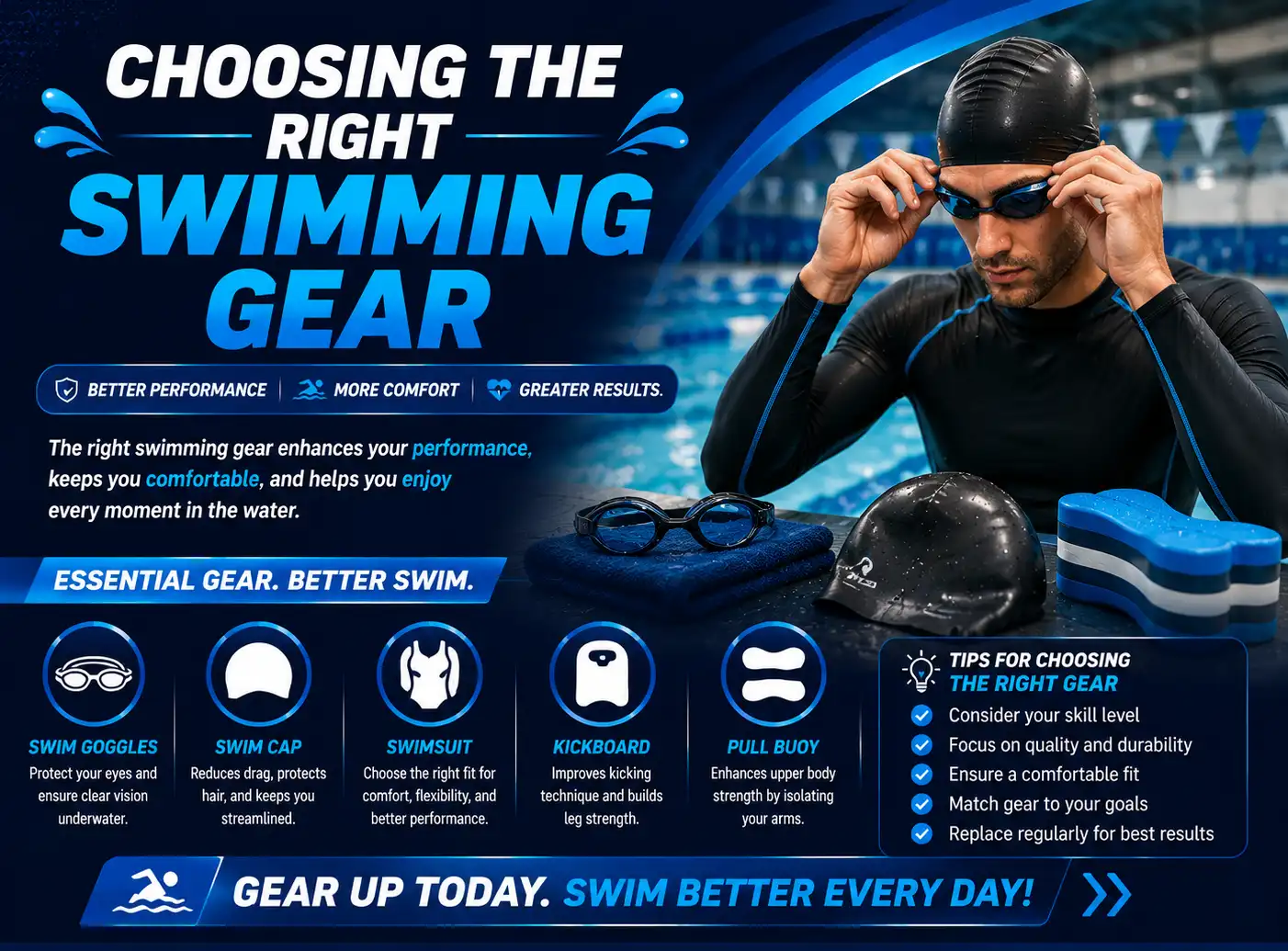
Swimming is fun, healthy, and challenging. Using the right gear makes it safer and more enjoyable. But picking the right gear can feel confusing with so many options. I have been there, standing in the sports store aisle, staring at dozens of suits, goggles, and training tools, unsure of what to pick. Some gear feels comfortable but does not last while others are pricey but not right for my swimming goals. What this really means is that beginners, competitive swimmers, and even open water enthusiasts face the same challenge: knowing what gear is essential, what fits properly, and what will help them improve without wasting money.

Over the years, I have tested countless swimsuits, goggles, caps, and training aids. From frustrating experiences with leaking goggles to discovering the perfect fins that improved my kick strength, I have learned what works and what does not. This guide on Choosing the Right Swimming Gear combines real experience with research from top swim experts so you can make informed choices that fit your skill level, swimming environment, and personal goals.
Swimwear: The First Step
Your swimsuit affects comfort and performance.

Beginners
- Choose a snug but comfortable fit.
- One-piece suits for girls.
- Jammers or briefs for boys.
Competitive swimmers
- Racing suits reduce drag and fit tighter.
- Training suits are slightly looser but still firm.
Open water swimmers
- Wetsuits provide warmth and buoyancy for lakes, rivers, or oceans.
Our Best Wetsuits for Open Water Swimming guide explains how to choose the right thickness, fit, and material.
Tips
- Polyester lasts longer in chlorinated pools.
- Lycra stretches more but wears faster.
- Make sure the suit covers properly without restricting movement.
Swimwear Sizing Tips
- Measure chest, waist, and hips and compare with the brand’s sizing chart.
- Suits should feel snug but not restrictive.
- For kids, allow slight growth space but avoid loose fit.
Goggles: Clear Vision Matters

- Fit: Use the suction test. Place goggles on eyes without straps. If they stick, they fit.
- Lens types: Clear for indoor pools, tinted or mirrored for outdoor swimming. Polarized lenses help in open water.
When choosing goggles, look for a comfortable seal, adjustable straps, and lenses suited to your swimming environment.
- Comfort: Avoid tight straps that leave marks; choose adjustable straps for a secure fit.
- Maintenance: Rinse after each swim to prevent fogging and damage. Use anti-fog sprays if needed.
If you want more advice on choosing the right lens type, preventing leaks, and caring for your goggles, read our Swimming Goggles guide.
Swim Caps: Protect and Streamline

- Materials: Silicone caps last longer, latex is cheaper, Lycra is easy to put on but not hydrodynamic.
- Types: Racing caps fit tightly; training caps are looser.
- Extra tips:
- Protect hair from chlorine and sun damage.
- Neoprene caps keep you warm in cold open water.
- Bright colors help lifeguards, coaches, and parents spot swimmers.
Training Equipment: Improve Your Technique
Fins: Short fins help speed and technique, long fins build leg strength.
If you are unsure which type to buy, our Swim Fins for Training guide explains the differences between short and long fins.
Kickboards: Focus on leg movement and kicking drills.
Kickboards work best when combined with structured Swimming Stroke Drills that improve kicking technique and body position.
Pull buoys: Isolate arms to work on stroke technique.
Paddles: Strengthen arms and improve strokes.
Snorkels: Keep head steady during drills. Good for beginners.
Resistance bands and gloves: Build strength and simulate water resistance.

Practical Gear Use Examples
- Fins: improve ankle flexibility and leg strength.
- Kickboards: Focus on leg kicks.
- Pull buoys: Isolate arms for technique drills.
- Snorkels: Maintain head position for breathing and stroke practice.
Additional Accessories
- Earplugs and nose clips: Prevent infections and keep water out.
- Towels and swim bags: Keep gear organized and dry.
- Water bottles: Stay hydrated during long sessions.
- Sun protection: Use sunscreen or UV-protective swimwear outdoors.
If you like tracking distance, pace, and calories, consider using Waterproof Fitness Trackers for Swimming during your workouts.
Swim Bag Tips
- Choose bags with separate wet and dry compartments.
- Padded straps make carrying easier.
- Ensure space for goggles, fins, towels, and water bottles.
- Bright colors help identify your bag quickly.
Pool Deck Shoes and Water Shoes
- Protect feet from slippery pool surfaces.
- Prevent infections like athlete’s foot.
- Useful for children, beginners, and open water swimmers.
Choosing Gear by Skill Level
Beginners: Suit, cap, goggles, optional kickboard.
If you are buying your first equipment, our Best Swimming Gear for Beginners guide can help you choose the right essentials.
Intermediate swimmers: Add fins, paddles, pull buoys, snorkels.
Competitive swimmers: Racing suits, mirrored goggles, advanced training gear.
Pairing the right equipment with a proper training routine can improve race performance. Learn more in our Training for Swimming Competitions guide.
Open water swimmers: Wetsuits, polarized goggles, thermal caps, sun protection.
Parents buying for children: Focus on proper fit, durability, comfort, and safety.

Budget Tips
- Starter kit: Basic suit, goggles, cap, kickboard.
- Mid-range: Higher-quality suit, adjustable fins, pull buoy, paddles.
- Premium: Racing suits, specialty goggles, advanced training gear.
Gear Maintenance
- Rinse goggles and suits with clean water after swimming.
- Air-dry suits and caps; avoid direct sunlight.
- Check goggles for cracks or worn straps. Replace when needed.
- Store fins and paddles flat to prevent warping.
- Rinse wetsuits in fresh water, air-dry inside out, store on wide hanger.
Gear Replacement Guide
- Goggles: Replace when anti-fog wears off or straps break.
- Swimsuits: Replace when fabric stretches, thins, or loses support.
- Caps: Replace when torn or stretched out.
- Fins, paddles, kickboards: Replace if cracked, warped, or damaged.
Safety and Comfort Tips
- Always wear a cap and goggles in public pools.
- Use earplugs and nose clips if prone to infections.
- Protect skin in outdoor swimming with sunscreen.
- Stay hydrated during training.
- Adjust gear based on water temperature and environment.
- Bright cap colors help with visibility.
For more ways to stay safe in and around the water, read our complete Swimming Safety Tips guide.
Quick Takeaways for Choosing Swimming Gear
- Essentials: Swimwear, goggles, cap
- Training aids: Fins, kickboard, pull buoy
- Optional: Earplugs, nose clips, towels, water bottle
- Fit matters more than brand
- Replace gear when worn or damaged
- Bright caps improve safety in open water

Drill Summary Table
Swimming Gear Guide by Skill Level
- Beginner: Yes
- Intermediate: Yes
- Competitive: Yes (race suit)
- Open Water: Yes (wetsuit optional)
- Beginner: Yes
- Intermediate: Yes
- Competitive: Yes (mirrored/tinted)
- Open Water: Yes (polarized)
- Beginner: Yes
- Intermediate: Yes
- Competitive: Yes
- Open Water: Yes (bright/neoprene)
- Beginner: Optional
- Intermediate: Yes
- Competitive: Yes
- Open Water: Optional
- Beginner: Optional
- Intermediate: Yes
- Competitive: Yes
- Open Water: Optional
- Beginner: Optional
- Intermediate: Yes
- Competitive: Yes
- Open Water: Optional
- Beginner: No
- Intermediate: Optional
- Competitive: Yes
- Open Water: No
- Beginner: No
- Intermediate: Optional
- Competitive: Yes
- Open Water: No
- Beginner: Optional
- Intermediate: Optional
- Competitive: Optional
- Open Water: Optional
Final Thoughts
Choosing the right swimming gear is more than picking popular items. From my personal experience, a poorly fitting suit or uncomfortable goggles can ruin a session while the right gear makes swimming feel effortless and fun. Focusing on fit, function, and your specific swimming goals improves performance and protects your body.
Over years of swimming and coaching, I have found that small adjustments like picking the right cap material, testing goggles for a perfect seal, or choosing fins suited to your skill level make a noticeable difference. This guide on Choosing the Right Swimming Gear is built on experience, research, and tested recommendations to help you choose gear that lasts, supports your swimming, and makes every swim session better.

