



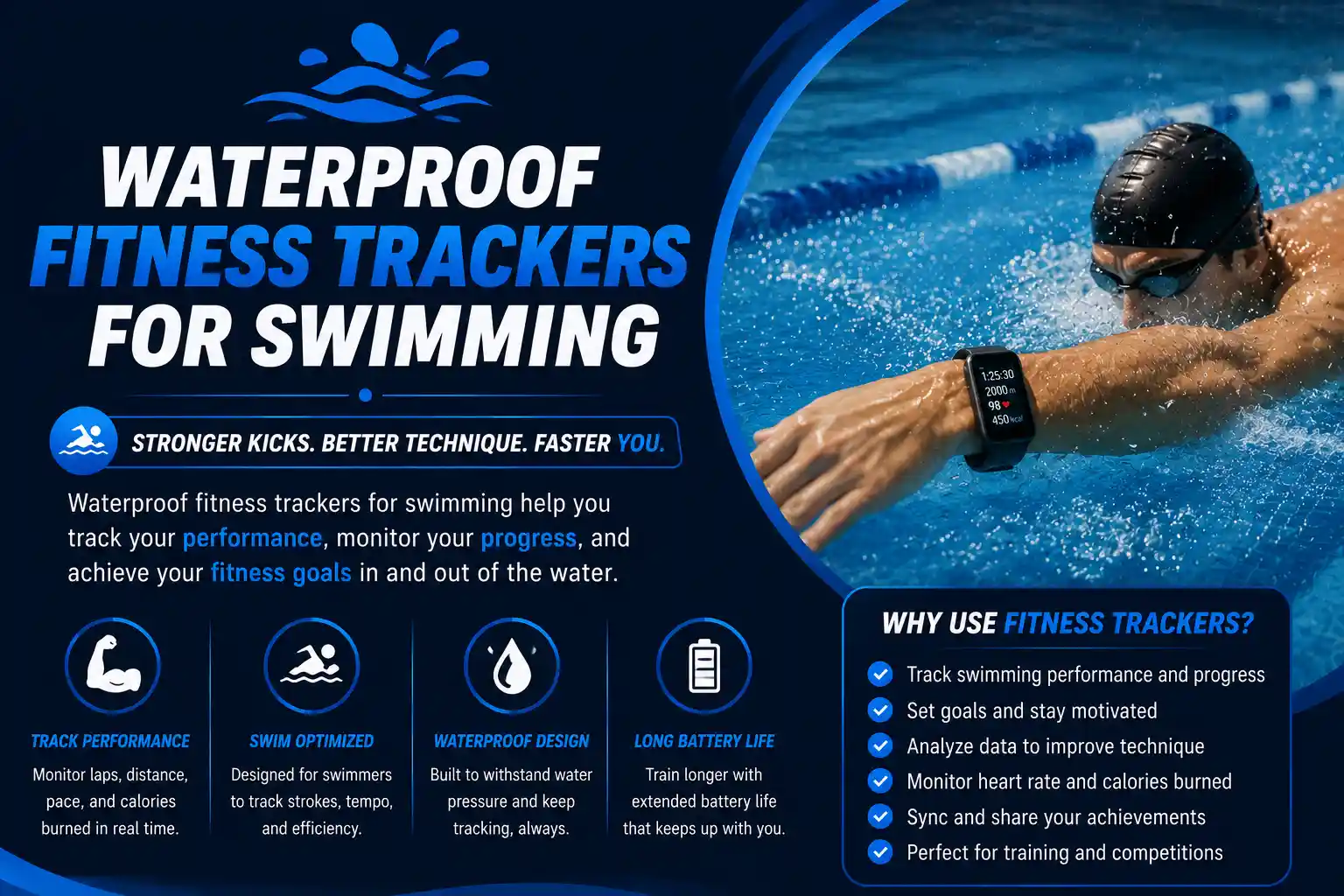
Introduction
Finding the right Waterproof Fitness Trackers for Swimming is harder than most people think. Many swimmers buy a tracker that claims to be waterproof, only to notice problems after a few pool sessions. Some watches stop counting laps correctly. Some lose heart rate tracking underwater. Others slowly fail because of chlorinated pools and daily swim workouts. I have seen swimmers get frustrated after spending good money on trackers that looked great online but struggled during real lap swimming. That is why choosing a swim tracker based only on marketing or price can lead to disappointment later.

After comparing swim trackers, testing swim features, and studying how swimmers actually use these devices, one thing becomes clear. The best waterproof fitness tracker for swimming is not always the most expensive one. Good swim trackers need accurate lap tracking, strong water resistance, comfortable straps, and reliable battery life during pool and open water sessions. In this guide, I will break down what truly matters, which features swimmers actually need, and which trackers perform best during real swim workouts.
What Makes a Fitness Tracker Good for Swimming?
A good swim tracker does more than survive water.
It should track your workouts correctly and stay comfortable during long swim sessions.
1. Water Resistance Rating
For swimming, you should look for at least 5ATM water resistance.
A tracker with 5ATM can usually handle:
• Pool swimming
• Lap swimming
• Shower use
• Rain
Water resistance also weakens over time.
Small scratches, drops, heat exposure, and age can slowly damage waterproof seals.
Saltwater and chlorinated pools can speed up this wear.
That is why even premium swim trackers need proper care.
2. Accurate Lap Counting
Lap tracking is one of the most important features for swimmers.
Good swim trackers use motion sensors to detect:
• Turns
• Strokes
• Distance
• Pace
Cheap trackers often count extra laps or miss turns.
This becomes frustrating fast.
3. Underwater Heart Rate Tracking
Many swimmers want heart rate tracking in the pool.
Optical heart rate sensors become less accurate underwater.
Water changes how the sensor reads blood flow through your skin.
A tight fit helps improve accuracy.
4. Open Water GPS
Pool swimmers may not need GPS.
Open water swimmers do.
If you swim in lakes or oceans, GPS helps track:
• Distance
• Route
• Speed
• Pace
Without GPS, open water tracking becomes unreliable.
5. Battery Expectations for Swim Tracking
Battery life changes a lot during swim workouts.
GPS tracking uses more power than normal fitness tracking.
Battery life becomes much more important during longer training sessions. If your goal is swimming farther without getting tired, our guide on how to improve swimming endurance shares practical training methods that pair well with long-lasting swim trackers.
| Device | Typical Swim Battery Life |
|---|---|
| Apple Watch Ultra 2 | Around 1 to 2 days with regular use |
| Garmin Swim 2 | Several days |
| COROS Pace 3 | Multiple days with swim training |
Frequent open water GPS sessions usually drain batteries faster.
6. Comfort During Swimming
Loose straps can ruin swim tracking.
A tracker should feel secure without being too tight.
Heavy watches can also feel annoying during long sessions.
Waterproof vs Water Resistant
This part confuses many buyers. That means certain movements can confuse the sensors.

They are water resistant.
1. IP68 Rating
Many cheap trackers use IP68 ratings.
IP68 usually protects against:
• Dust
• Rain
• Short water exposure
But IP68 does not always mean safe for swimming.
Pool pressure and arm movement create stronger water pressure than standing still underwater.
2. 5ATM Rating
A 5ATM rating is much better for swimmers.
It is usually safe for:
• Lap swimming
• Pool workouts
• Shallow water activities
3. 10ATM Rating
10ATM devices offer stronger water protection.
These are better for:
• Open water swimming
• Long swim sessions
• Heavy training
4. Why Some Waterproof Trackers Still Fail
Even good trackers can fail over time.
Common reasons include:
• Chlorine damage
• Saltwater corrosion
• Cracked seals after drops
• Hot showers after swimming
• Button wear
• Screen damage
Pool Swimming vs Open Water Swimming
Pool swimming and open water swimming need different features.
| Feature | Pool Swimming | Open Water Swimming |
|---|---|---|
| GPS | Optional | Important |
| Lap Counting | Important | Less important |
| Stroke Tracking | Important | Medium |
| Route Mapping | Not needed | Needed |
| Battery Usage | Lower | Higher |

Besides using GPS, wearing one of the best wetsuits for open water swimming can improve comfort, warmth, and confidence during longer outdoor swims.
If you mostly swim laps indoors, focus on lap accuracy and comfort.
If you swim outdoors, GPS and battery life matter more.
Swim Metrics Explained in Simple Words
Many swim trackers include advanced data.
But most people do not understand what the numbers mean.
1. SWOLF Score
SWOLF combines swim time and stroke count.
A lower SWOLF score usually means better swim efficiency.
2. Stroke Count
This tracks how many arm strokes you take.
Fewer strokes can mean better technique.
3. Pace Per 100 Meters
This shows how fast you swim.
Swimmers use it to track improvement over time.
4. Stroke Detection
Good trackers can identify:
• Freestyle
• Breaststroke
• Butterfly
• Backstroke
Cheap devices often struggle with this.
A tracker can only recognize strokes correctly if your technique is consistent. If you are still working on your form, our guide on Swimming Stroke Techniques explains how each stroke should be performed for better efficiency and more reliable swim tracking.
5. Auto Rest Detection
This feature notices when you stop at the wall between laps.
It helps improve workout accuracy.
Best Waterproof Fitness Trackers for Swimming

1. Garmin Swim 2
Best Overall for Lap Swimming
Garmin Swim 2 is built mainly for swimming.
That makes it one of the most accurate options for pool workouts.
It tracks:
• Laps
• Distance
• Stroke type
• SWOLF
• Heart rate
It also supports open water GPS tracking.
Garmin Swim 2 includes wrist based heart rate tracking, though underwater heart rate readings may vary during intense swim sessions.
Pros
• Excellent lap accuracy
• Strong swim metrics
• Lightweight design
• Good battery life
• Open water support
Cons
• Basic smartwatch features
• Small display
Who Should Buy It
• Lap swimmers
• Serious swim training users
• Fitness swimmers
2. Apple Watch Ultra 2
Best Waterproof Smartwatch for Swimming
Apple Watch Ultra 2 combines swim tracking with smartwatch features.
It works well for:
• Swimming
• Running
• Gym workouts
• Daily use
Apple Watch Ultra 2 offers stronger battery life and better durability than standard Apple Watch models.
Pros
• Great app ecosystem
• Strong GPS tracking
• Comfortable interface
• Advanced health tracking
• Excellent build quality
Cons
• Expensive
• Battery drains faster than Garmin
Who Should Buy It
• iPhone users
• Multi sport athletes
• Daily smartwatch users
3. Fitbit Charge 6
Best Waterproof Fitness Tracker for Beginners
Fitbit Charge 6 is simple and easy to use.
That makes it great for casual swimmers.
It tracks:
• Calories
• Swim workouts
• Heart rate
• Sleep
• Daily activity
The app is beginner friendly.
Pros
• Easy setup
• Affordable price
• Good health tracking
• Comfortable band
Cons
• Smaller screen
• Limited advanced swim metrics
Who Should Buy It
• Beginners
• Weight loss users
• Casual swimmers
Many people buy a swim tracker to monitor calories and workout progress. If that is your goal, read our guide on swimming for weight loss to learn how to get better results from your pool sessions.
4. COROS Pace 3
Best Waterproof Fitness Tracker for Triathlon Training
COROS Pace 3 focuses heavily on performance.
This tracker is a good match for swimmers following structured workouts. Our guide on swimming training for athletes includes training ideas that help you make better use of advanced tracking features.
It offers:
• Long battery life
• Open water GPS
• Multi sport support
• Detailed workout tracking
Pros
• Excellent battery life
• Accurate GPS
• Lightweight feel
• Strong training tools
Cons
• Fewer apps than Apple Watch
• Learning curve for beginners
Who Should Buy It
• Triathletes
• Open water swimmers
• Endurance athletes
5. FORM Smart Swim Goggles
Best Hands Free Swim Tracker
FORM Smart Swim Goggles are different from regular watches.
The display sits inside the goggles.
You can see live swim data while swimming.
That includes:
• Pace
• Distance
• Time
• Stroke rate
Designed for pool and open water swimming.
Pros
• Real time swim feedback
• Great for training
• Comfortable in water
• Strong swim accuracy
Cons
• Expensive
• Focused mainly on swimming
Who Should Buy It
• Competitive swimmers
• Swim coaching
• Performance training
Performance data becomes even more valuable when preparing for races. Our guide on training for swimming competitions explains how swimmers use pace, stroke rate, and workout tracking during race preparation.
Why Swim Trackers Sometimes Count Laps Wrong

Many swimmers think their tracker is broken when lap counts look wrong. But the real problem is often how swim trackers detect movement. Most trackers use wrist motion and turns to count laps. That means certain movements can confuse the sensors.
1. Poor Turns
Slow or uneven turns make it harder for the tracker to detect a completed lap.
2. Stopping Mid Lane
Pausing before the wall can confuse distance tracking.
3. Kickboard Drills
This is a common problem.
When swimmers hold a kickboard, wrist movement becomes limited.
Some trackers may stop counting laps correctly.
Kickboard drills are only one part of swim practice. Many swimmers also include fins in their workouts to improve kick strength and body position. Learn how swim fins for training can support your swimming technique.
4. Mixed Strokes
Rapid stroke changes can affect stroke recognition.
Cheap trackers struggle with this more often.
5. Loose Watch Fit
A loose strap reduces sensor accuracy.
The tracker should feel secure during lap swimming.
Drill Summary Table
| Swimming Situation | Possible Tracking Problem |
|---|---|
| Kickboard drills | Missed lap counts |
| Slow turns | Incorrect lap detection |
| Loose strap | Weak heart rate tracking |
| Mixed strokes | Stroke recognition errors |
| Long GPS sessions | Fast battery drain |
Cheap Waterproof Trackers: What You Risk
Cheap trackers may look similar to premium devices.
But there are big differences in swim performance.
Low quality devices often struggle with:
• Accurate lap counting
• Open water GPS
• Long term durability
• Underwater heart rate tracking
• Chlorine resistance
Some cheap devices also use weak waterproof seals.
Over time, chlorinated pools and heat can damage the tracker.
That is why buying the cheapest option is not always the best decision.
Common Problems Swimmers Face With Fitness Trackers
1. Inaccurate Lap Counts
Poor turns confuse motion sensors.
Loose straps can also reduce accuracy.
Swimming drills with kickboards may not track properly either.
2. Touchscreens Struggling Underwater
Water can trigger accidental screen touches.
That is why many swim watches use physical buttons.
3. Battery Drain During GPS Workouts
Open water GPS tracking uses more battery.
Long sessions can drain some watches quickly.
4. Chlorine Damage
Pool chemicals slowly weaken seals and straps.
Cheap trackers usually fail faster.
5. Fogging or Moisture Inside the Screen
This can happen after drops or long term wear.
Once water enters the device, damage spreads quickly.
Before Buying a Swim Tracker
Make sure your tracker has:
• At least 5ATM water resistance
• Comfortable fit for lap swimming
• Reliable lap counting
• Good battery life
• Chlorine resistance
• GPS if you swim outdoors
Before starting any swim workout, spend a few minutes on a proper swimming warm-up routine. Warming up helps prepare your muscles and gives you more consistent performance data throughout your session.
Quick Takeaways
- 5ATM is the minimum rating swimmers should look for
- Garmin Swim 2 is best for serious lap swimming
- Fitbit Charge 6 works well for beginners
- Open water swimmers need strong GPS tracking
- Cheap trackers often fail in chlorinated pools
- Loose straps reduce lap count accuracy
How We Tested These Swim Trackers
A good review should explain testing.

Here is what matters during swim testing:
1. Lap Accuracy
Testing included:
• Indoor lap swimming
• Freestyle workouts
• Breaststroke sessions
• Mixed swim routines
• Different pool lengths
The goal was to see how well each tracker handled real swim workouts.
2. Comfort During Swimming
Loose or heavy watches feel annoying in water.
Comfort matters more than many buyers think.
3. GPS Performance
For open water swimming, GPS accuracy was important.
Weak GPS can ruin distance tracking.
4. Battery Performance
We looked at battery drain during:
• Pool sessions
• GPS swim workouts
• Daily use
5. Water Durability
Devices were checked for:
• Pool use
• Chlorine exposure
• Long swim sessions
How to Make Your Swim Tracker Last Longer
Even strong swim trackers need care.
1. Rinse After Pool Use
Chlorine slowly damages seals and bands.
Rinse your tracker with clean water after swimming.
2. Avoid Hot Showers
Heat can weaken waterproof seals.
Remove your tracker before hot showers or saunas.
3. Dry the Charging Area
Wet charging ports can cause corrosion.
Always dry the device fully before charging.
4. Check the Strap Regularly
Loose straps reduce tracking accuracy.
Replace worn bands early.
5. Avoid Hard Drops
Even small cracks can let water inside.
Protect the watch from impacts.
Final Thoughts
After comparing different Waterproof Fitness Trackers for Swimming, one thing became clear from both research and real swim experience: reliable performance matters more than extra smartwatch features. Accurate lap tracking, dependable GPS, a secure fit, and strong battery life make a much bigger difference during regular training than a long list of apps. I have also found that a good tracker works best when paired with the right equipment. Choosing quality goggles, fins, and other essentials can improve both comfort and performance, so it is worth reading our guide on choosing the right swimming gear before upgrading your swim kit.
The right tracker depends on your swimming goals. Casual swimmers may only need accurate lap counting and comfort, while competitive and open water swimmers often benefit from detailed metrics, longer battery life, and reliable GPS. Instead of buying the most popular model, choose one that matches your training style and helps you stay consistent every time you get in the water.

