



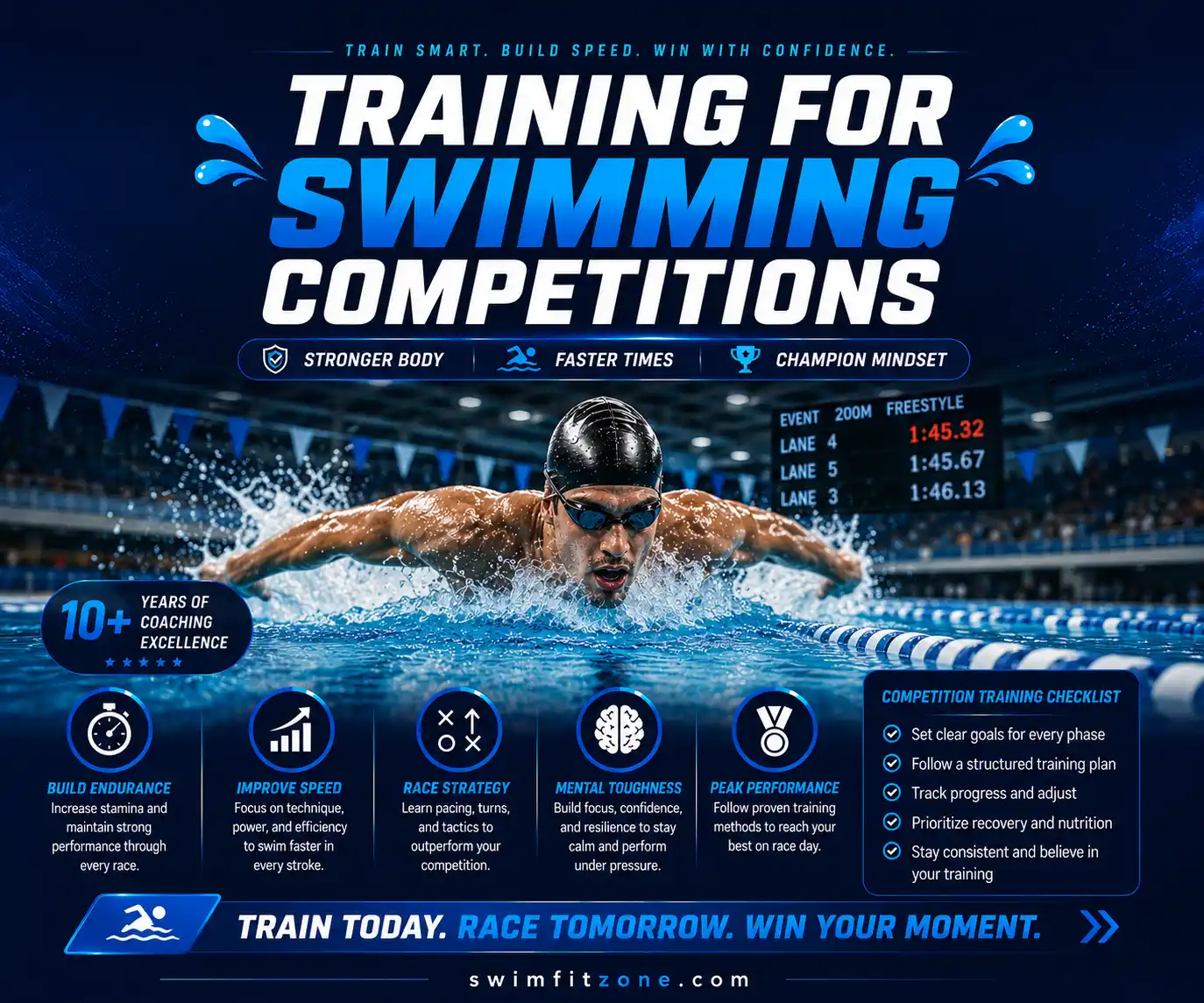
Training for Swimming Competitions can feel frustrating when you spend hours in the pool but still struggle to improve your race times. Many swimmers deal with poor endurance, inconsistent performance, weak finishes, or race day nerves. Others are unsure how often they should train, which workouts matter most, or how to prepare for an upcoming swim meet.

As a swimming coach with years of experience, I have worked with swimmers preparing for school meets, club competitions, and local races. One thing I have learned is that swimming more laps does not always lead to better results. The swimmers who improve the most usually follow a structured plan that combines technique work, speed training, endurance development, strength exercises, recovery, and race preparation. Following a well-designed swim training plan can help swimmers stay consistent and make steady progress throughout the season. This guide will show you how to approach Training for Swimming Competitions step by step.
Why Competition Training Is Different From Regular Swimming

Swimming for fitness and swimming for competition require different approaches.
Competitive swimmers train with specific goals such as:
- Improving race times
- Increasing endurance
- Building speed
- Developing strength
- Improving technique
- Preparing for competition day
Every workout should have a purpose. Many of these principles are also recommended in professional swimmer training techniques resources used by competitive swimmers to improve performance and prepare for races.
Understanding Your Training Needs
Before creating a training plan, ask yourself:
- What event am I training for?
- How much time do I have before the competition?
- What are my strengths?
- What areas need improvement?
Your answers will help shape your training program.
Strength, Speed, and Power: The Key Elements
Strength
Strength helps swimmers maintain proper technique throughout a race and reduces fatigue.
Speed
Speed training helps swimmers move through the water faster and improve race performance.
Power
Power is important for starts, turns, and strong finishes.
How Far in Advance Should You Start Training for a Swimming Competition?
12 Weeks Before Competition
Focus on:
- Building aerobic endurance
- Improving technique
- Creating consistent habits
This phase is the perfect time to work on building a strong aerobic base and learn how to improve swimming endurance before moving into race-specific training
8 Weeks Before Competition
Focus on:
- Speed training
- Race pace sets
- Event-specific workouts
4 Weeks Before Competition
Focus on:
- Race simulations
- Starts and turns
- Pacing strategies
1 to 2 Weeks Before Competition
Begin tapering by:
- Reducing training volume
- Maintaining intensity
- Prioritizing recovery
Focus on Swimming Fundamental Techniques
Good technique allows swimmers to move through the water efficiently and conserve energy. Learning proper swimming stroke techniques can help swimmers become more efficient and improve performance across all events

Body Position
To reduce drag:
- Keep your body level
- Engage your core
- Keep your hips near the surface
- Look down instead of forward
Stroke Mechanics
Focus on:
- Proper hand entry
- Strong catch phase
- Effective pull
- Smooth recovery
Regular swimming stroke drills can help reinforce these movements and correct technical mistakes before they become habits.
Drill Summary
| Drill | Purpose |
|---|---|
| Catch Up Drill | Improve freestyle timing |
| Fingertip Drag Drill | Improve recovery technique |
| Single Arm Drill | Improve stroke mechanics |
| Kickboard Drill | Build kicking strength |
The Ultimate Competitive Swimming Workouts
Different workouts target different areas of performance. Reviewing different types of competitive swim workouts can help swimmers build endurance, improve speed, and develop race-specific fitness throughout the season.
Technique Development Workouts
Technique sessions help swimmers improve efficiency and reduce wasted energy. Many swimmers also benefit from dedicated swim stroke lessons that focus on correcting weaknesses and improving stroke efficiency
Example:
- 200m easy swim
- 4 × 50m kick
- 6 × 50m drill work
- 4 × 100m technique focus
- 200m cool down
Speed and Sprint Workouts
Sprint workouts improve race speed.
Example:
- 300m warm up
- 8 × 25m sprint
- 6 × 50m race pace
- 4 × 25m maximum effort
- 200m recovery swim
Distance Workouts
Distance workouts build endurance.
Example:
- 400m warm up
- 5 × 200m steady pace
- 4 × 100m moderate effort
- 300m cool down
Kick-Enhancing Workouts
Strong kicks improve propulsion and body position.
Examples:
- Flutter kick sets
- Dolphin kick sets
- Fast kick intervals
Race Pace Training
Race pace training teaches swimmers how their target competition speed feels.

Benefits include:
- Better pacing
- Improved confidence
- More consistent performance
Race pace training should be included regularly during competition preparation.
Training for Different Swimming Events
Different events require different training strategies.
Training for Sprint Events
Sprint swimmers should focus on:
- Explosive starts
- Fast turns
- Power development
- Short high-intensity intervals
Examples include 50m and 100m events.
For freestyle sprint events, applying proven freestyle swimming tips can help improve speed, efficiency, and race performance
Training for Middle-Distance Events
Middle-distance swimmers need a balance of speed and endurance.
Focus on:
- Race pace intervals
- Aerobic conditioning
- Technique refinement
Examples include 200m and 400m events.
Training for Distance Events
Distance swimmers should focus on:
- Aerobic endurance
- Efficient technique
- Pacing control
Examples include 800m and 1500m events.
Dryland Training
Dryland training helps swimmers build strength outside the pool. Many coaches recommend combining pool workouts with swimming exercises for strength to improve power and stability.

Benefits include:
- Better starts
- Stronger turns
- Improved stability
- Reduced injury risk
Recommended exercises:
- Squats
- Lunges
- Push-ups
- Pull-ups
- Planks
- Mountain climbers
Aim for two to three dryland sessions each week.
Sample Weekly Swimming Competition Training Plan
| Day | Focus |
| Monday | Endurance Training |
| Tuesday | Speed Training |
| Wednesday | Technique and Recovery |
| Thursday | Race Pace Training |
| Friday | Dryland Training |
| Saturday | Long Swim Session |
| Sunday | Rest and Recovery |
This schedule includes many elements commonly found in effective swimming workout routines used by competitive swimmers.
Nutrition for Swimming Competitions
Training places high demands on the body. Proper nutrition supports performance and recovery.

Focus on:
- Lean protein
- Whole grains
- Fruits
- Vegetables
- Healthy fats
- Adequate hydration
What to Eat Before a Swim Meet
Good choices include:
- Oatmeal with fruit
- Yogurt and bananas
- Whole grain toast
- Rice with lean protein
What to Eat Between Events
Good snack options include:
- Bananas
- Yogurt
- Granola bars
- Pretzels
Choose foods that provide energy without causing discomfort.
Mental Preparation for Swimming Competitions

Mental preparation is just as important as physical training. Swimmers who struggle with race-day nerves can benefit from strategies for overcoming swimming anxiety before competition.
Visualization
Before competition, picture yourself:
- Diving off the blocks
- Swimming with strong technique
- Making smooth turns
- Finishing confidently
Goal Setting
Set goals that are specific and realistic.
Examples:
- Improve a personal best time
- Maintain technique throughout the race
- Execute a race strategy successfully
First Swimming Competition Tips
If you are competing for the first time:
- Arrive early
- Know your event schedule
- Warm up properly
- Stay hydrated
- Follow your race plan
Focus on gaining experience rather than comparing yourself to other swimmers.
Tapering Before a Swimming Competition
Tapering allows your body to recover before race day.
Most swimmers taper one to three weeks before an important competition. During this period, many swimmers continue using effective swimming warm-up routines while reducing overall training volume.
During a taper:
- Reduce training volume
- Maintain speed work
- Prioritize sleep
- Focus on recovery
Avoid making major changes to your routine during this period.
Common Mistakes to Avoid
Overtraining
Training too hard without enough recovery can reduce performance.
Ignoring Technique
Poor technique wastes energy and limits improvement.
Skipping Recovery
Recovery is a critical part of training.
Poor Race Preparation
Waiting until the last minute often increases stress.
Neglecting Strength Training
Strength training supports speed, power, and efficiency.
Signs You May Be Overtraining
Watch for:
- Constant fatigue
- Poor sleep
- Reduced performance
- Lack of motivation
- Ongoing muscle soreness
If these signs appear, prioritize recovery and reduce training intensity.
Key Takeaways
- Start preparing 8 to 12 weeks before a competition.
- Focus on technique, speed, endurance, and recovery.
- Use race pace training to prepare for your event.
- Include dryland exercises to build strength.
- Prioritize nutrition, hydration, and sleep.
- Follow a taper plan before important competitions.
- Stay consistent and trust the training process.
Final Thoughts
Training for Swimming Competitions requires consistency, patience, and a structured plan. Focus on improving technique, building endurance, developing speed, and recovering properly. Small improvements made during training often create big results on race day.
During my 10 years of coaching swimmers, I have seen athletes achieve personal bests and gain confidence through structured training. The swimmers who improve the most are rarely the ones looking for shortcuts. They are the ones who stay consistent, trust the process, and continue learning from every practice and competition.

