



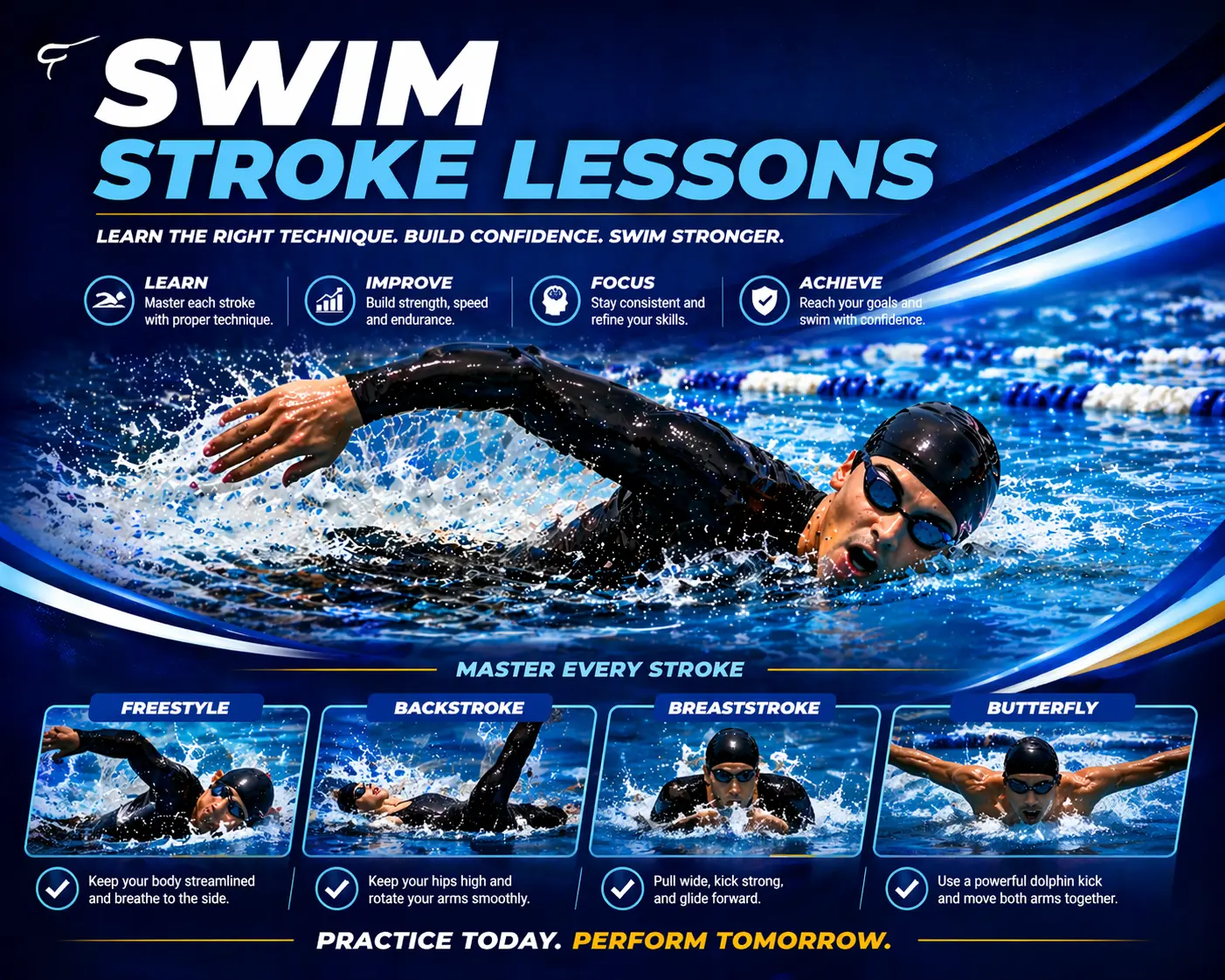
Swimming can be intimidating at first. Many beginners feel nervous about putting their face in the water, losing balance, or not knowing which stroke to start with. I have seen learners, both kids and adults, struggle with these exact issues. That’s why Swim Stroke Lessons are so important, they guide you safely through every step, from floating and breathing to mastering each stroke.
Through my experience teaching and practicing swimming, I have helped people overcome fear, build confidence, and swim efficiently. Lessons aren’t just about technique, they give structure, progression, and measurable results. Whether you are a parent helping a child learn or an adult aiming to swim for fitness, understanding Swim Stroke Lessons can change how you approach learning and make the process less stressful and more rewarding.

What Are Swim Stroke Lessons?
Swim stroke lessons are structured classes or guides. They show you how to learn strokes step by step. Lessons focus on:
- Water safety
- Body position
- Arm and leg movements
- Breathing techniques
- Progressing from beginner to advanced
- Confidence-building in water
Lessons help learners of all ages gain skills safely and effectively while building a strong foundation in Swimming Stroke Techniques.
Water Safety and Confidence Building

Before learning strokes, beginners need to feel safe:
- Floating and Buoyancy: Practice back and front floating.
- Treading Water: Learn to stay in one place safely using hands and legs.
- Breathing Comfortably: Practice blowing bubbles and controlled inhaling/exhaling.
- Pool Entry and Exit: Step-in or slide-in techniques.
Confidence in water is the foundation for all strokes.
Lesson Structure: Step by Step
Beginner Lessons
- Learn to float and kick
- Simple drills to build comfort
- Short practice sessions
- Introduce freestyle first, then backstroke, which are often considered among the Best Swimming Strokes for Beginners.
Intermediate Lessons
- Combine arms and legs for full strokes
- Learn breaststroke and butterfly basics
- Swim longer distances
- Improve breathing timing and coordination
Advanced Lessons
- Increase speed and efficiency
- Focus on endurance and stroke refinement
- Include flip turns, streamline, and advanced drills
- Prepare for competitive swimming or triathlons
The Four Main Strokes
Freestyle (Front Crawl)
Freestyle is the fastest stroke, and applying proven Freestyle Swimming Tips can help swimmers become more efficient.

Key Points:
- Keep your body straight and flat
- Move arms in a circular motion
- Kick legs continuously
- Turn head to breathe every few strokes
Common Mistakes:
- Head too high above water
- Legs sinking
- Poor breathing timing
Drills:
- Side kicking drill
- Catch-up drill
Backstroke
Swim on your back while focusing on proper Backstroke Techniques to maintain balance and efficiency.

Key Points:
- Keep body flat, hips up
- Move arms in a circular backward motion
- Kick legs continuously
- Keep head relaxed
Common Mistakes:
- Hips sinking
- Arms out of sync
Drills:
- Single-arm backstroke drill
- Flutter kick with kickboard
Breaststroke
Efficient and steady.

Key Points:
- Arms move in a half-circle
- Legs perform frog kick
- Lift head to breathe
Common Mistakes:
- Pulling arms too wide
- Poor timing between arms and legs
Drills:
- Pull-buoy drill
- Glide and kick drill
Butterfly
Strong and fast stroke.

Key Points:
- Move both arms together
- Dolphin kick with both legs
- Breathe every 1–3 strokes
Common Mistakes:
- Arms not synchronized
- Lifting head too much
Drills:
- One-arm butterfly drill
- Dolphin kick with board
Drill Plan by Skill Level
- Beginner Drills: Side kicking, kickboard flutter, short freestyle
- Intermediate Drills: Catch-up drill, one-arm strokes, bilateral breathing practice
- Advanced Drills: Flip turns, dolphin kick, stroke rate and distance training
Regular Swimming Stroke Drills help learners of all ages and skill levels improve efficiently.
Tracking Progress
- Keep a journal of distance, stroke count, and time
- Set small weekly goals for each stroke
- Review drills and identify mistakes to support ongoing Swimming Technique Improvement.
- Track improvement for confidence and motivation
Tips to Improve Faster
- Practice 2-3 times per week
- Focus on one stroke at a time
- Watch videos or diagrams for guidance
- Track progress and set goals
- Be patient and consistent, and follow practical Swim Lesson Tips for Beginners to make steady progress.
Key Takeaways
- Start with water safety and confidence before learning strokes.
- Follow a structured lesson progression: beginner → intermediate → advanced.
- Focus on one stroke at a time and use drills for skill improvement.
- Track your progress to measure improvement and build confidence.
- Consistency and patience are essential for mastering swimming.
| Level | Skills Focus | Drills | Goal |
|---|---|---|---|
| Beginner | Floating, kicking, freestyle basics | Side kicking, kickboard flutter | Comfort in water |
| Intermediate | Full strokes, breaststroke and butterfly basics | Catch-up drill, one-arm stroke | Swim longer distances efficiently |
| Advanced | Endurance, speed, flip turns | Dolphin kick, flip turn practice | Stroke refinement and efficiency |
| Competitive/Sports | Race preparation, advanced techniques | Interval training, stroke rate focus | Speed, performance, and racing readiness |
Frequently Asked Questions (FAQ)
Which stroke should I learn first?
Freestyle is easiest and fastest.
How long will it take to swim laps?
Most beginners can swim laps after 4–8 weeks of regular practice.
Can adults learn swimming strokes effectively?
Yes. Adults can learn with patience and practice.
Do I need a coach?
Coaches help correct mistakes faster. Self-learning with drills and videos also works.
Are lessons different for kids and adults?
Yes. Kids need more confidence-building drills, while adults focus more on technique and endurance.
Final Thoughts
Learning to swim is more than memorizing strokes, it’s about gaining confidence, developing skills gradually, and enjoying the process. From personal experience teaching swimming, I have seen learners transform from hesitant beginners into confident swimmers who enjoy the water.
Swim Stroke Lessons provide a structured path. They address common pain points like fear, poor technique, and slow progress. Step-by-step guidance, drills, and tracking methods help learners gain skills efficiently.
The key is starting with confidence, building gradually, and celebrating small wins along the way. Lessons don’t just teach swimming, they teach you how to feel safe, capable, and confident in the water for life.

