



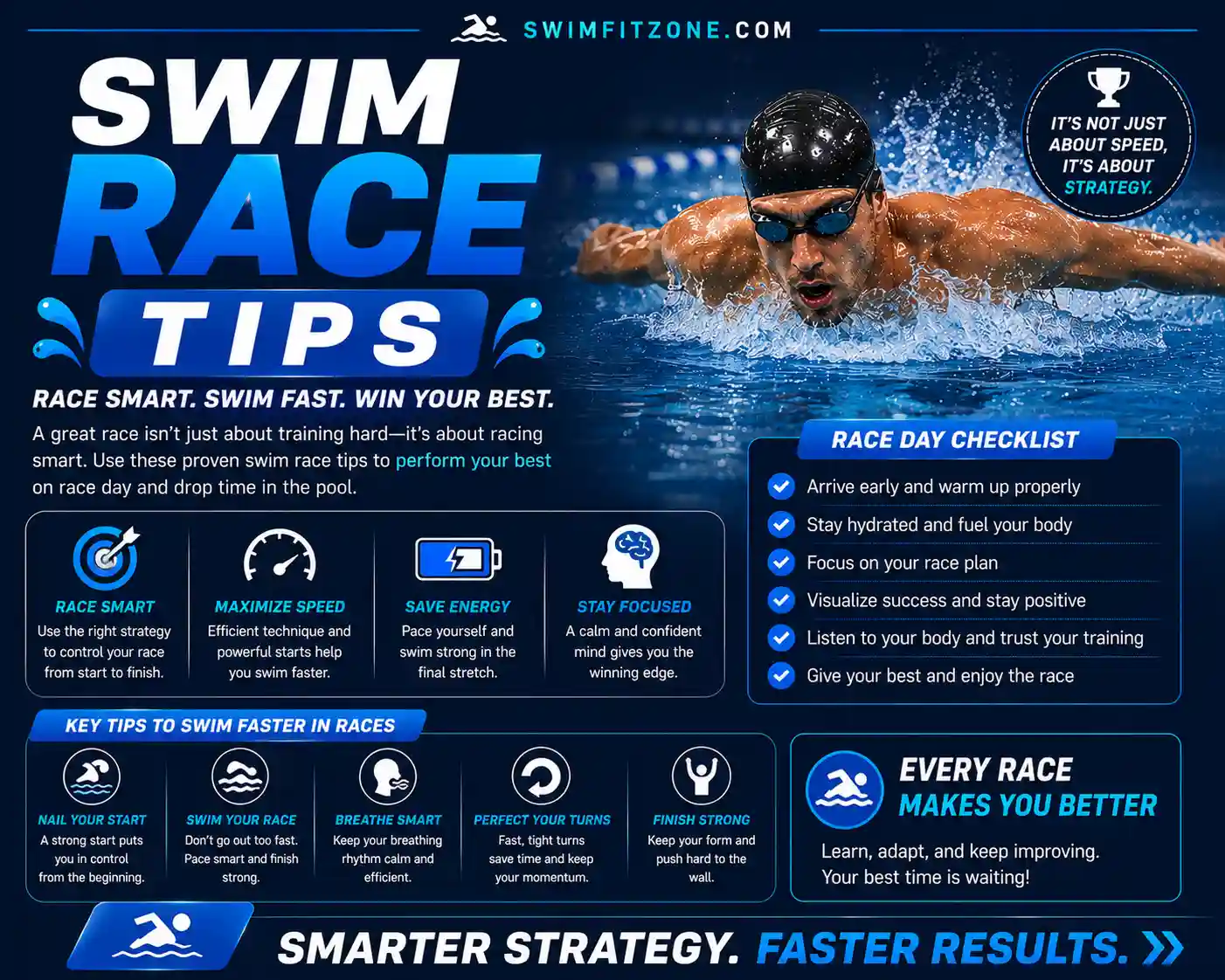
Looking for the best swim race tips before your next competition? Many swimmers train hard for weeks but still leave the pool feeling disappointed. The problem is often not speed or fitness. It is simple race day mistakes like skipping a proper warm up, starting too fast, forgetting important gear, or letting nerves take over. If you have ever felt that you could have swum better, you are not alone.
From what I have seen around swim training and competitions, swimmers usually perform their best when they keep things simple. They arrive prepared, trust their training, and focus on their own race instead of worrying about everyone else. The good news is that these habits can be learned. This guide shares practical swim race tips that can help you feel more confident and ready for your next swim meet.
Key Takeaways
- Prepare your swim bag and race plan the night before.
- Eat familiar foods and drink enough water.
- Complete a proper warm up before every race.
- Adjust your pacing based on your race distance.
- Focus on your own race instead of other swimmers.
- Recover well if you have more than one event.

Why Race Day Preparation Matters
Many swimmers think racing well depends only on how hard they trained. Building a solid foundation through training for swimming competitions also helps you arrive on race day feeling prepared and confident. Training is important, but your preparation on race day matters just as much.
A good routine helps you stay calm, saves energy, and keeps your mind focused. When you already know what to eat, when to arrive, and how to warm up, you spend less time worrying and more time getting ready to swim your best.
Prepare the Night Before
A successful race starts before you even arrive at the pool.
Pack your swim bag the evening before your meet. This simple habit helps you avoid rushing in the morning and lowers your stress.
Make sure you have:
- Racing swimsuit
- Swim cap
- Goggles
- Backup goggles
- Towel
- Water bottle
- Healthy snacks
- Flip flops
- Extra clothes
Also check your event schedule so you know when warm ups and races begin.
Try to get a full night’s sleep. Even if you feel excited, relaxing early gives your body a better chance to recover before race day.
Race Day Timeline
Following the same routine at every meet helps you stay organized.
- Night before: Pack your bag and check your schedule.
- Race morning: Eat breakfast and drink water.
- Arrive early: Organize your gear and find your events.
- Before warm up: Stretch lightly and review your race plan.
- Before racing: Stay calm and complete your warm up.
- After your race: Cool down, recover, and prepare for your next event if needed.
Eat a Smart Breakfast
Your body needs energy before racing, but heavy meals can make you feel uncomfortable in the water.
Choose foods that you already know work well for you. Oatmeal, toast, fruit, yogurt, or a peanut butter sandwich are all common choices because they are easy to digest.
Drink water throughout the morning instead of waiting until you feel thirsty.
If you have several races during the meet, pack simple snacks such as bananas, crackers, or granola bars to help keep your energy steady.
Arrive Early
Getting to the pool early gives you time to settle in without feeling rushed.
Check where your events will take place, organize your equipment, and get familiar with the pool.
A calm start to the day helps you feel more confident before your race begins.
Warm Up Before Racing

Following a proper swimming warm-up routine prepares your muscles, increases blood flow, and helps you feel ready to race.
Start with a few minutes of light movement outside the pool. Arm circles, leg swings, and gentle stretching can help loosen your muscles.
Once you enter the water, begin with easy swimming before adding a few faster efforts. Your goal is to prepare your body, not tire yourself out before the race.
Stay Calm Before Your Race
Feeling nervous before a race is completely normal. Even experienced swimmers feel pressure before stepping onto the starting block. If race-day nerves affect your performance, learning about overcoming swimming anxiety can help you stay focused and confident.
Start by taking a few slow, deep breaths to relax your body. Then remind yourself that you have already put in the hard work during training and that race day is simply your chance to show those skills.
As you wait for your event, avoid comparing yourself with the swimmers in the next lane. Instead, keep your attention on your own race plan. Focus on your dive, your breathing, your turns, and your finish. These are the parts of the race you can control, and staying focused on them can help you swim with more confidence.
Swim Race Strategy by Distance
Every race distance needs a different plan. Swimming at the same effort from start to finish is usually not the fastest approach. Practicing swimming stroke drills during training helps you build the control and efficiency needed for different race distances.
Before your competition, review the official World Aquatics rules so you understand the requirements for starts, turns, and finishes.

Drill Summary Table
| Race Distance | Main Focus | Best Approach |
|---|---|---|
| 50 m | Maximum speed | Explode from the start and keep your speed to the finish. |
| 100 m | Controlled speed | Swim fast but save enough energy for a strong finish. |
| 200 m | Steady pacing | Build your speed during the second half of the race. |
| 400 m and longer | Rhythm and endurance | Stay relaxed early and increase your effort near the finish. |
Swimming faster is not always about working harder. Good pacing, smooth technique, and efficient turns often make a bigger difference than trying to sprint every stroke. Trust the race plan you practiced and adjust your effort to match the distance you are swimming.
Improve Your Starts, Turns, and Finish

A race is often won or lost in the small details. Strong starts, quick turns, and a powerful finish can save valuable time without changing your fitness.
At the start, push off the block with confidence and enter the water in a tight streamline. During every turn, carry your speed into the wall instead of slowing down too early. Push off firmly and stay streamlined before taking your first stroke.
When you reach the finish, keep swimming until your hand touches the wall. Many swimmers glide during the last few strokes and lose time. Finish with confidence and swim all the way through.
Recover Between Events
Many swim meets include more than one race. Recovering properly helps you stay ready for your next event.
Drink water after every race to replace lost fluids. If you have time before your next event, eat a light snack such as a banana or granola bar. Stay warm by putting on dry clothes or a hoodie instead of sitting in wet swimwear.
Walk around gently or complete an easy cool down if possible. A simple recovery routine helps your body stay ready throughout the meet.
Coach’s Tip
The best race day is usually the one that feels familiar. Use the same warm up, breathing pattern, and race routine that worked during training. Race day is not the right time to test new goggles, change your stroke, or try a different strategy. Trust the work you have already done.
Common Swim Race Mistakes to Avoid
Many swimmers lose valuable seconds because of simple mistakes. Avoid these common problems:
- Skipping your warm up.
- Starting too fast.
- Forgetting backup goggles.
- Trying new equipment on race day.
- Slowing down before touching the wall.
Fixing these small mistakes can improve your performance without changing your training plan.
Race Day Success Checklist
Before leaving home, take one last look at your plan.
- Packed your swim bag.
- Packed backup goggles.
- Ate a familiar breakfast.
- Filled your water bottle.
- Checked your event schedule.
- Planned your warm up.
- Left home early.
- Ready to follow your race plan.
A quick checklist helps you arrive at the pool feeling prepared and confident.
Final Thoughts
From what I have seen around swim meets, the swimmers who improve the most are rarely the ones who make big changes before a race. They are the ones who stay consistent. They prepare early, follow the routine they practiced, and focus on doing the simple things well. Those habits build confidence, reduce unnecessary stress, and help them perform closer to their true ability when it matters most.
Keep using these swim race tips every time you compete and pay attention to what works best for you. Every race is a chance to learn something new, whether you set a personal best or face a setback. Use each meet to build experience, improve your routine, and become a more confident swimmer. Small improvements repeated over time often lead to the biggest results.

