



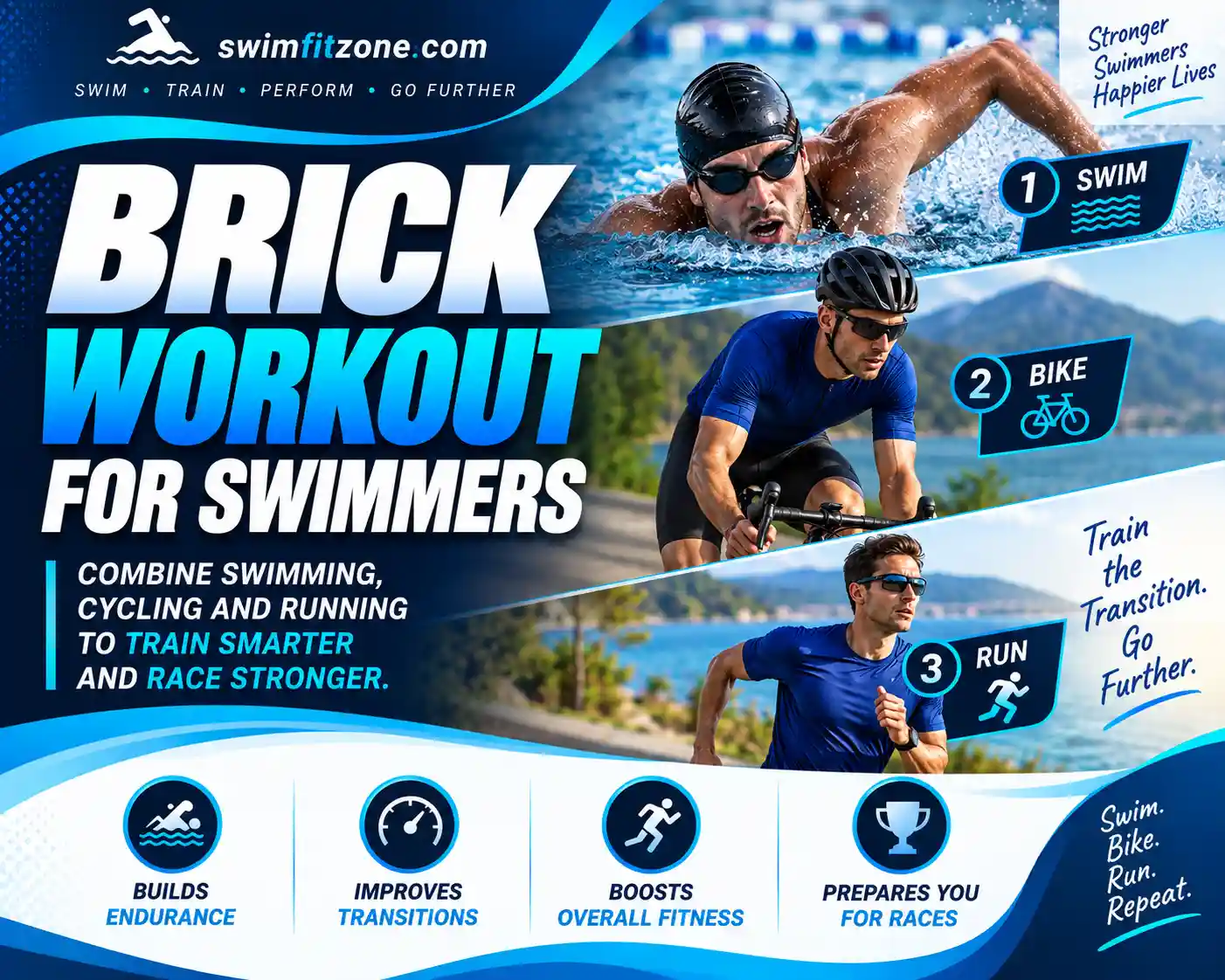
Have you ever finished a swim and felt like your legs were not ready for the bike or run? That awkward first few minutes can be frustrating, especially for swimmers starting triathlon training. A brick workout for swimmers gives you a chance to practice that change between sports before race day, so the transition feels more natural.
As a swimming coach, I have found that bricks work best when they have a clear purpose. You do not need a long or exhausting session. In this guide, I’ll show you simple swim to bike, swim to run, and swim bike run workouts, along with when to use them and how to fit them into your swim training.
Quick Takeaway
- Start with a short swim to bike or swim to run brick.
- Keep your first sessions easy and focus on the transition.
- Use race specific bricks as your triathlon gets closer.
- Protect the quality of your key swim sessions.
- Increase the workload gradually based on your fitness and total training load.
- Use bricks to support swim training rather than replace it.
What Is a Brick Workout for Swimmers?

A brick workout combines two different sports in one training session with little or no meaningful rest between them.
In triathlon, the most common brick is a bike to run workout. For swimmers, a swim to bike or swim to run workout can be more useful because it lets you practice the transition directly from the water.
Common brick workouts include:
• Swimming followed by cycling
• Swimming followed by running
• Swimming followed by cycling and running
The short transition is an important part of the workout.
Swimming in the morning and cycling several hours later is usually cross training. Swimming and then getting on the bike shortly afterward is a swim to bike brick.
Can Swimmers Do Brick Workouts?
Yes. Swimmers can use brick workouts as part of a wider training plan.
They are especially useful for swimmers who:
• Are preparing for a triathlon
• Also cycle or run
• Want to practice race transitions
• Want to add cross training to their routine
• Need experience swimming before another sport
If your main goal is improving pool performance, swimming should remain your priority. Brick workouts can support your overall fitness and race preparation, but they do not replace technique work, swim sets, and swim specific training.
Why Do Swimmers Use Brick Workouts?
Practice the Swim to Bike Transition
Getting out of the water and moving straight into cycling can feel unusual.
A swim to bike brick gives you a chance to practice your transition routine, equipment, pacing, and first few minutes on the bike.
You can practice:
• Removing your goggles and swim cap
• Moving from the pool to your bike
• Putting on your helmet
• Getting your cycling equipment ready
• Starting the bike at a controlled pace
Repeated practice can make the transition feel more familiar.
Practice the Swim to Run Transition
Running after swimming gives you another way to prepare for triathlon racing.
Your breathing pattern and body position change as you move from the water to land. A short run after swimming lets you become familiar with that change.
The goal is not to run as fast as possible. The goal is to make the transition feel normal.
Add Cross Training
Cycling and running can add variety to a swim training plan.
They can also increase your total aerobic work without making every training session another swim.
However, more training is not always better. Your total training load and recovery should guide how much extra work you add.
Prepare for Race Day
Brick sessions can help you practice more than fitness.
You can rehearse:
• Race order
• Transitions
• Pacing
• Equipment
• Hydration
• Nutrition
• Race day routines
This becomes more useful as your race gets closer.
Brick Workout vs Regular Cross Training
The main difference is the time between sports.
A regular cross training day might involve swimming in the morning and cycling several hours later. A brick workout involves swimming followed shortly by cycling or running.
A brick workout is one type of cross training, but it has a specific purpose. It combines two activities with little rest between them, so you also practice changing from swimming to cycling or running. If you want to learn more about training options outside the pool, see our guide to cross training for swimmers.
The short gap makes the transition part of the training.
Both methods can be useful. Cross training gives you additional fitness work, while a brick also gives you a chance to practice changing sports.
How to Do a Brick Workout for Swimmers
Start with a simple combination of swimming and another sport.
Your first brick does not need to be long or difficult.
A basic session looks like this:
Step 1: Swim
Start with the swimming portion of your workout. Keep the distance and intensity appropriate for your goal. You might focus on easy aerobic swimming, technique, endurance, or race preparation. For more ideas on structured pool sessions, see our guide to swimming workout routines.
Step 2: Transition
Move to the next sport with little rest.
Step 3: Bike or Run
Start the second sport at the planned effort.
The right workout depends on your fitness, training history, goal, weekly schedule, and total training load.
These workouts are examples, not fixed rules. Adjust the distance and duration based on your normal swim volume, fitness level, and training experience.
Swim to Bike Brick Workouts
Swim to bike bricks are a useful option for swimmers preparing for triathlon.
They help you practice the change from swimming to cycling.
Beginner Swim to Bike Brick
• Swim for 30 to 40 minutes at an easy effort
• Transition for 2 to 5 minutes
• Bike for 20 to 30 minutes at an easy effort
If you are new to cycling, keep the bike easy. Focus on learning the transition.
Intermediate Swim to Bike Brick
• Swim for 45 to 60 minutes
• Transition for 1 to 3 minutes
• Bike for 40 to 60 minutes
• Add a few short race effort sections if they fit your training plan
Keep most of the swim controlled. There is no need to make the entire workout hard.
Race Specific Swim to Bike Brick
• Swim for 1,000 to 1,500 meters
• Transition for 1 to 3 minutes
• Bike for 45 to 75 minutes
Use this session during race specific training.
Practice the equipment, pacing, hydration, and nutrition routine you expect to use during your triathlon.
Swim to Run Brick Workouts

A swim to run brick can help you practice running soon after swimming.
This can be useful for triathlon preparation, especially if you want to become comfortable with the race transition.
Beginner Swim to Run Brick
• Swim for 20 to 30 minutes at an easy effort
• Transition for 2 to 5 minutes
• Run for 10 minutes at an easy effort
The main goal is becoming comfortable with the transition.
Intermediate Swim to Run Brick
• Swim for 30 to 45 minutes
• Transition for 1 to 3 minutes
• Run for 15 to 25 minutes
Start the run easily. Increase the pace only if your training plan calls for it.
Race Specific Swim to Run Brick
• Swim for 1,000 to 1,500 meters
• Practice your planned transition routine
• Run for 20 to 30 minutes
Use your planned race equipment and practice the same routine you expect to follow on race day.
Swim Bike Run Brick Workout

A swim bike run workout follows the full triathlon sequence.
A simple example is:
• Swim for 750 to 1,000 meters
• Bike for 30 to 45 minutes
• Run for 10 to 15 minutes
Keep the effort easy to moderate unless your training plan says otherwise.
This session can help you practice the complete race sequence, transitions, equipment changes, pacing, hydration, and nutrition.
Which Brick Workout Should You Choose?
The best brick depends on your training goal, fitness level, and triathlon experience.
Which Brick Workout Should You Choose?
The best brick depends on your training goal, fitness level, and triathlon experience.
| Brick Type | Best For | Main Goal | Example |
|---|---|---|---|
| Swim to Bike | Beginners and swimmers | Practice the swim to bike transition | 30 minute swim followed by 20 minute bike |
| Swim to Run | Swimmers preparing for triathlon | Get comfortable running after swimming | 20 minute swim followed by 10 minute run |
| Swim Bike Run | Experienced triathletes | Practice the full race sequence | 750 meter swim, 30 minute bike, 10 minute run |
How Long Should a Brick Workout Be?
There is no single correct length.
A beginner may only need a 20 to 40 minute swim followed by 10 to 30 minutes of cycling or running.
Experienced triathletes may use longer sessions, especially during race specific training.
The right duration depends on:
• Your fitness level
• Your race distance
• Your training phase
• Your normal weekly workload
• Your recovery between sessions
A short brick can still be useful if the goal is transition practice.
How Often Should Swimmers Do Brick Workouts?
Beginners can start with one brick every one to two weeks.
Experienced triathletes may use a brick about once a week during race specific training.
You do not need to follow a fixed schedule.
If your week already contains several hard swim, bike, and run sessions, another hard brick may create unnecessary fatigue.
When Should Swimmers Add Brick Workouts?
Brick workouts do not need to be part of every training phase.
During base training, focus mainly on swimming technique, fitness, and general conditioning.
During build training, you can add occasional bricks.
During race specific training, bricks can become more regular as you practice race demands.
In the final weeks before a race, keep sessions controlled and avoid adding unnecessary fatigue.
As your race gets closer, you can make some brick sessions more specific to your event. Keep your main swim training focused on the skills, endurance, and pacing you need for your race. Our guide to training for swimming competitions covers race pace training, weekly planning, tapering, and other parts of competition preparation.
How Hard Should a Swimmer’s Brick Workout Be?
A brick does not need to be an all out workout.
Beginners should usually keep both sports easy.
More experienced athletes can add short race effort sections when appropriate.
The intensity should match the purpose of the session.
Easy sessions are useful for learning transitions. Moderate sessions can add aerobic work. Race specific sessions can help you rehearse your expected race effort.
Should You Swim Before or After Cycling and Running?
The order depends on your goal.
For triathlon preparation, swimming before cycling and running follows the race sequence.
Swimming first also lets you practice changing from the water into the next sport.
However, if swimming performance is your main goal, completing your important swim session while fresh may be more useful.
The priority is to protect your key swim training while using bricks to support your wider plan.
How to Fit Brick Workouts Around Swim Training
Brick workouts should support your main swimming sessions rather than replace them. If you are trying to organize your swimming, recovery, and additional training across the week, our swim training plan can help you build a more balanced schedule.
Do not let brick workouts reduce the quality of your important swim sessions.
Keep demanding swim workouts when you are fresh when possible.
Avoid putting a very hard brick next to another demanding workout if it affects your recovery.
Your weekly plan should include:
• Swim training
• Cycling
• Running
• Brick workouts
• Rest
• Recovery
A brick is real training load. The second sport is not free extra exercise.
How to Do a Brick Workout Indoors

Indoor training can work well when weather or facility access makes outdoor training difficult.
You can finish your swim and move to an indoor bike or treadmill.
Keep your first indoor brick simple.
Focus on the transition and controlled effort instead of trying to make the workout difficult.
How to Fuel and Recover From a Brick Workout
A short and easy brick may not require extra fueling.
Longer sessions may require fluids and carbohydrates, especially when the bike or run is longer.
Race specific bricks are a good time to practice the nutrition and hydration plan you expect to use during your triathlon.
After a demanding brick, allow enough recovery before another hard session.
Focus on:
• Eating a balanced meal
• Drinking enough fluids
• Getting enough sleep
• Keeping your next workout appropriate for your recovery level
Common Brick Workout Mistakes for Swimmers
Making Every Brick Too Hard
A brick does not need to be a race.
Too much intensity can make recovery harder and affect your other training sessions.
Making the Workout Too Long
Longer is not automatically better.
Start with a manageable session and increase the workload gradually.
Ignoring the Transition
The transition is one of the main reasons for doing a brick.
Practice moving from swimming to cycling or running without unnecessary delays.
Forgetting Equipment
Race specific sessions should include the equipment and routine you expect to use on race day.
Practice with your helmet, bike shoes, goggles, cap, towel, and other race equipment as needed.
Make sure your swim equipment is ready before the session, especially if you are practicing an open water triathlon transition. Your goggles should fit securely and remain comfortable throughout the swim. Our swimming goggles guide explains how to choose the right fit and lens type.
Sacrificing Swim Training
If swimming is your main goal, do not sacrifice important swim sessions just to add more bricks.
Ignoring Recovery
Brick workouts add training stress.
Give your body enough time to recover before another demanding workout.
What Does Research Say About Brick Training?
Research on brick training is strongest for the bike to run transition.
Studies have found that cycling before running can affect running stride and running performance. Research has also reported changes in the energy cost of running after cycling.
This supports the value of practicing transitions for triathletes. However, much less research is available on swim to bike and swim to run bricks. Because of this, brick workouts should not be described as a proven way to make swimmers faster.
If improving swimming performance is your main goal, swim specific training should remain the foundation of your plan.
Most research on brick training focuses on the bike to run transition rather than swim to bike or swim to run. USA Triathlon also explains how brick sessions can help athletes practice transitions and prepare for the demands of race day. You can read its guide to brick workouts in triathlon for additional examples and transition tips.
Are Brick Workouts Necessary for Swimmers?
No. Brick workouts are not necessary for every swimmer.
They are most useful for swimmers who are preparing for a triathlon, want to practice race transitions, or use cycling and running as part of their fitness training.
For swimmers focused mainly on pool performance, technique work, structured swim sets, aerobic training, and recovery should receive more attention.
Frequently Asked Questions
Is a Swim to Bike Workout a Brick?
Yes, when swimming and cycling are performed back to back with little or no meaningful rest.
Is a Brick Workout Good for Swimmers?
It can be useful for swimmers who also cycle or run, especially those preparing for a triathlon.
Can Brick Workouts Make You a Better Swimmer?
Not directly.
Bricks can add aerobic work and improve your experience with transitions, but they should not replace swim specific training.
What Is the Best Brick Workout for a Beginner?
A short swim followed by an easy bike ride or run is a good starting point.
Focus on learning the transition rather than training at a high intensity.
Can I Do a Brick Workout at Home?
yes.
An indoor bike or treadmill can be used for the second part of the workout.
Should a Brick Workout Be Hard?
No.
The intensity should match your goal. Beginners can keep the session easy, while experienced triathletes can include race effort sections when appropriate.
Final Thoughts
From my experience as a swimming coach, brick workouts are most useful when they match your goal. A short swim to bike session can help a beginner learn the transition, while a race specific brick can help a triathlete practice pacing, equipment, and race routine.
You do not need to make every brick hard. Start small, build gradually, and protect your key swim sessions. Used this way, brick workouts can be a useful part of triathlon preparation without taking over your swim training.

