



Introduction
Many people want to improve their heart health but struggle with running or high-impact workouts that hurt their knees or joints. I’ve been there myself, trying to stay fit while dealing with a stiff knee and feeling intimidated by the gym. That’s when I discovered the cardiovascular benefits of swimming. Swimming gave me a way to get a full-body workout, strengthen my heart, and protect my joints at the same time.
You don’t need to be a professional swimmer or spend hours in the pool. Even a few sessions a week can make a measurable difference in your blood pressure, circulation, and overall endurance. Understanding how swimming impacts your heart and how to structure your workouts can help you enjoy lasting health without risking injury.

- Swimming strengthens your heart and improves circulation.
- Low-impact: safe for joints and older adults.
- Regular sessions (150 min/week) improve blood pressure and cholesterol.
- Mixing strokes boosts cardiovascular and full-body benefits.
- Tracking heart rate and progress helps maintain long-term results.
Importance of Cardiovascular Health
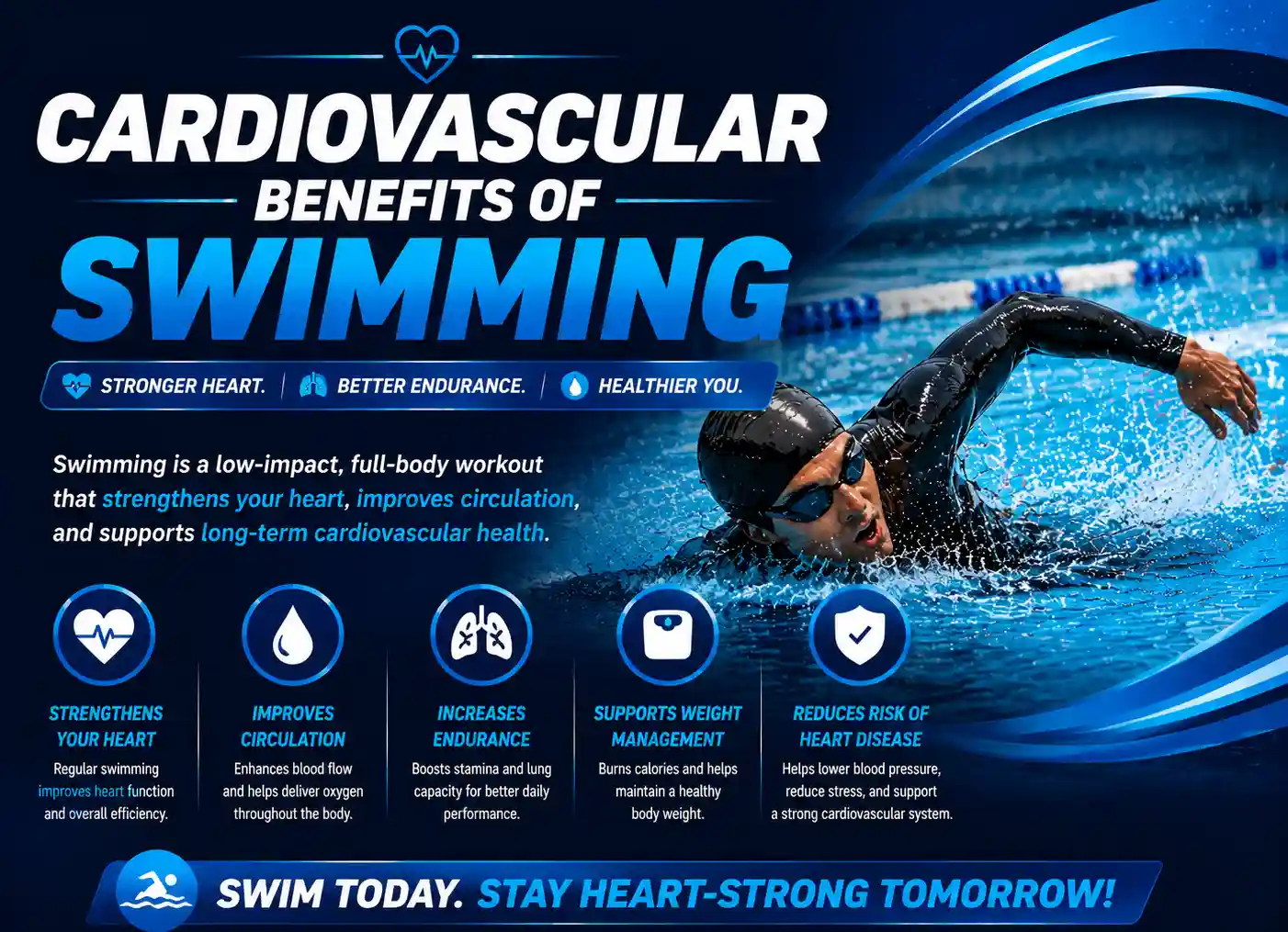
Your heart is the engine that keeps your body alive. A healthy heart pumps blood efficiently, delivering oxygen and nutrients to every part of your body. Poor heart health can lead to high blood pressure, heart disease, stroke, and fatigue. Swimming supports cardiovascular health by strengthening the heart, improving circulation, and helping control blood pressure and cholesterol.
Swimming as a Heart-Friendly Exercise
Swimming is unique because it combines aerobic exercise with low-impact movement. Harvard Health also highlights swimming as a heart-friendly exercise that provides cardiovascular benefits while being gentle on the joints. It works large muscle groups while your body is supported by water. This reduces joint strain and allows people of all ages to exercise safely. What this really means is you get a full-body workout while giving your heart an efficient, safe cardio session.
How Swimming Helps Your Heart
Swimming is a type of aerobic exercise. This means it raises your heart rate and makes your heart pump blood more efficiently. Regular swimming may help lower blood pressure and improve circulation. It also helps balance cholesterol levels by raising good HDL cholesterol and lowering bad LDL cholesterol.
Water pushes against your body as you swim. This resistance makes your heart work harder to pump blood. Over time, your heart becomes stronger and more efficient. Stroke volume increases, which means your heart pumps more blood with each beat. Your arteries also get healthier, which reduces the risk of heart disease.
Swimming also trains your lungs. As you control your breathing while swimming, your lung capacity increases, allowing more oxygen to reach your muscles. Over weeks, you can feel less shortness of breath and more endurance in daily activities.

How Swimming Improves Heart Physiology
Swimming improves your heart and vascular system in several ways:
- Water pressure pushes blood toward your heart, increasing cardiac output.
- Large muscle groups work together, making your heart and lungs deliver more oxygen.
- The heart muscle becomes stronger, and arteries become more elastic.
- Regular aerobic swimming enhances overall blood flow and reduces the risk of plaque buildup.
- Mixing strokes like freestyle, backstroke, and breaststroke engages different muscles, creating varied cardiovascular benefits. Learning proper Swimming Stroke Techniques helps you use each stroke more efficiently while improving endurance and reducing unnecessary energy loss.
This combination of resistance, breathing control, and large-muscle engagement makes swimming a uniquely effective heart-friendly exercise.
Research That Shows Results
Studies show that swimmers have up to 41% lower risk of death from heart disease or stroke compared to non-swimmers. Moderate swimming sessions of about 150 minutes per week improve blood pressure, resting heart rate, and overall cardiovascular endurance. If your goal is to swim longer without getting tired, learning how to improve swimming endurance will help you build stamina safely.
Other studies indicate:
- Blood Pressure: Participants lowered systolic pressure by 5-8 mmHg over 8-12 weeks of swimming.
- VO2 Max Improvement: Cardiovascular endurance increased by 10-15% in regular swimmers.
- Cholesterol: HDL (“good” cholesterol) rose while LDL (“bad” cholesterol) decreased modestly.
These benefits are based on observational and controlled studies, so individual results may vary.
Other Physical Benefits

Swimming improves your body beyond the heart:
- Muscle Strength and Endurance: Moving through water works your arms, legs, back, and core.
As your cardiovascular fitness improves, you’ll also burn more calories during each session, making swimming an excellent choice for people interested in swimming for weight loss.
- Flexibility, Balance, and Coordination: Swimming stretches muscles and improves posture and body control.
- Low-Impact on Joints: Water supports your weight, reducing stress on knees, hips, and spine.
Mental and Social Benefits

Swimming is also excellent for mental health and social engagement:
- Stress Reduction and Mood Improvement: Being in water is calming, reduces anxiety, and promotes better sleep. If nervousness keeps you from entering the pool, these strategies for overcoming swimming anxiety can help you build confidence step by step.
- Recreational and Social Aspects: Swimming in groups, lessons, or with friends adds motivation and enjoyment. This encourages long-term adherence to a heart-healthy routine.
Best Swimming Workouts for Heart Health
Here’s a simple way to start:
| Level | Frequency | Duration | Notes |
|---|---|---|---|
| Beginner | 2–3x/week | 20–30 min | Freestyle/backstroke |
| Intermediate | 3–4x/week | 30–45 min | Include intervals |
| Advanced | 4–5x/week | 45–60 min | Mix strokes, track heart rate |

Tips for success:
- Track your swimming distance, time, or heart rate to measure progress.
- Warm up for 5-10 minutes before each session and stretch after.
- Alternate strokes to engage different muscle groups and maximize cardiovascular benefits.
Comparing Swimming to Other Cardio
Swimming is low-impact, unlike running or high-intensity workouts. That makes it easier on joints and safer for people with arthritis or past injuries.
When it comes to heart benefits:
- Swimming improves circulation, endurance, and lung capacity.
- Running burns more calories in less time but can strain joints.
- Cycling is low-impact but does not work the upper body as much.
Swimming is a full-body workout that gives great cardiovascular benefits while being gentle on your body.
Safety Tips and Precautions
- Consult a doctor if you have high blood pressure, heart conditions, or arrhythmias. Cleveland Clinic also recommends speaking with your healthcare provider before starting a new swimming routine if you have an existing heart condition.
- Follow a proper swimming warm-up routine before entering the pool and stretch after every session to prepare your muscles and gradually raise your heart rate.
- Use correct stroke technique to avoid shoulder or back injury.
- Stay hydrated in the pool.
Following basic swimming safety tips, such as swimming in supervised areas and listening to your body’s limits, helps you enjoy cardiovascular exercise safely.
- Start slowly if you are older or returning from a break, and gradually increase intensity.
- Monitor heart rate and watch for any unusual symptoms.
Mental and Lifestyle Benefits
Swimming does more than strengthen your heart. It reduces stress, improves mood, and boosts sleep quality. Many people also enjoy swimming for relaxation because the steady movements and controlled breathing help them unwind after a busy day. Swimming in groups or with friends also adds social benefits and can help you stay consistent with your routine.
Because swimming is enjoyable and low-impact, it helps people stick with a fitness routine longer. Long-term consistency is key for cardiovascular health and overall wellness.

Enjoying cardiovascular benefits of swimming
Final Thoughts
From my experience coaching and swimming regularly, the benefits go beyond numbers. You feel stronger, more energetic, and calmer. Swimming is a way to care for your heart consistently while enjoying a low-impact, full-body exercise.
If you focus on proper technique, follow recommended routines, and track your progress, the cardiovascular benefits of swimming will compound over time. Personally, I’ve seen beginners, older adults, and advanced swimmers improve their heart health, reduce stress, and stick with fitness longer because swimming is enjoyable and sustainable. Swimming is a practical, evidence-backed way to protect your heart and improve overall wellness.

