



Introduction
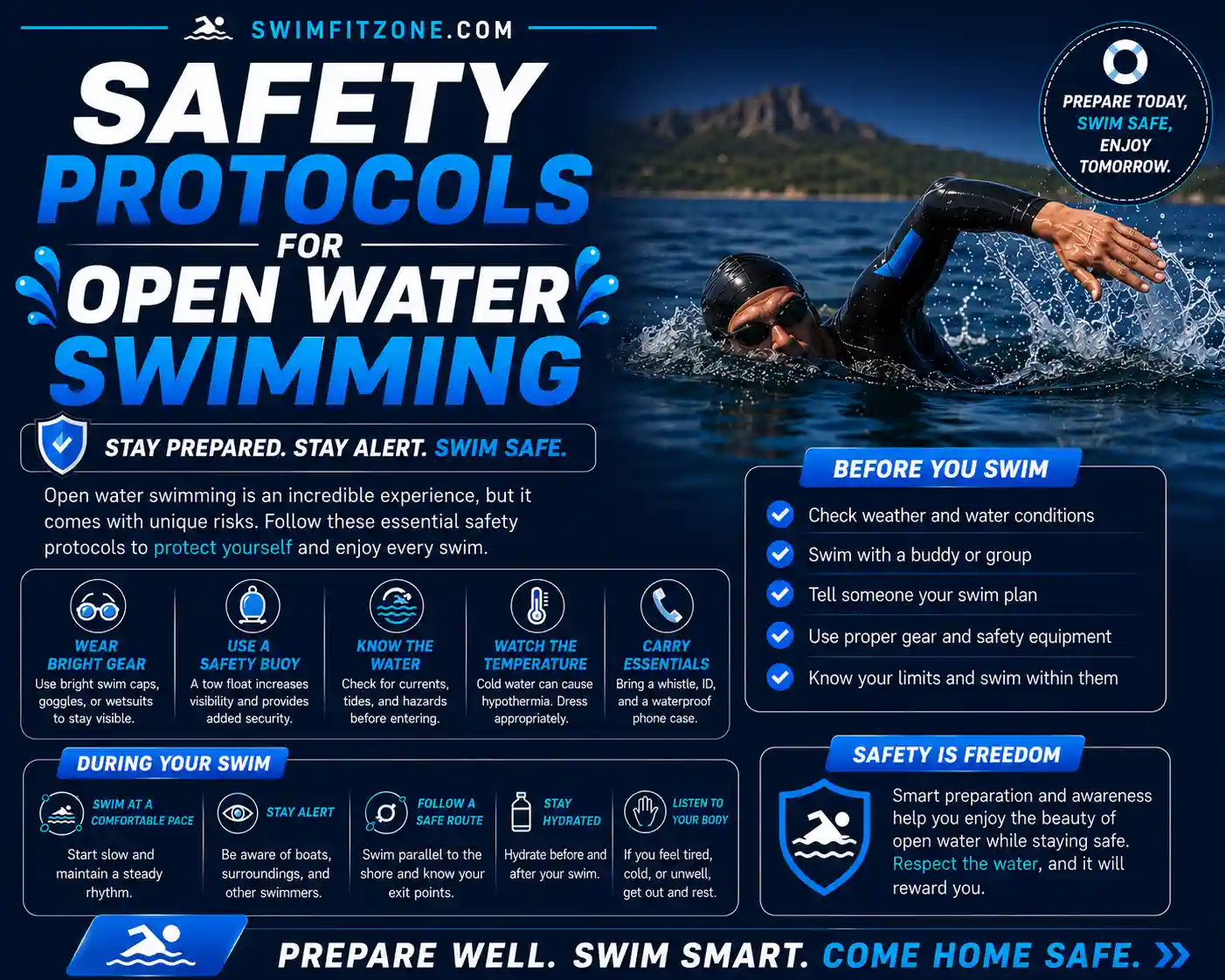
Swimming in lakes, rivers, and oceans can be an exciting way to enjoy the water. Unlike a swimming pool, open water offers changing scenery and new challenges. However, it also comes with risks such as currents, cold water, waves, poor visibility, and sudden weather changes. That is why learning safety protocols for open water swimming is essential before you plan your next swim.
From my experience, the safest swimmers are not always the fastest. They are the ones who prepare well, understand the conditions, and know when to stay out of the water. Whether you are training for fitness, preparing for an open water race, or simply swimming for fun, following a few simple safety habits can help you avoid unnecessary risks and enjoy every swim with confidence.
Key Takeaways
- Always check the weather, water quality, and water temperature before swimming.
- Wear a bright swim cap and use a tow float to stay visible.
- Swim with a partner whenever possible and tell someone your plans.
- Know how to react to emergencies like cramps, panic, or rip currents.
- Leave the water immediately if conditions become unsafe.
Why Open Water Safety Matters

Open water is very different from a swimming pool. There are no lane ropes, walls, or controlled temperatures. Conditions can change within minutes, and help may not always be nearby.
Following proper safety protocols helps you:
- Reduce the risk of accidents.
- Make better decisions before entering the water.
- Build confidence as an open water swimmer.
- Enjoy swimming without unnecessary stress.
Good preparation is the foundation of every safe swim.
Are You Ready for Open Water Swimming?
Before your first open water session, honestly assess your swimming ability.
Ask yourself these questions.
- Can I swim at least 500 meters without stopping?
- Can I tread water or float for five minutes?
- Am I comfortable swimming where I cannot see the bottom?
- Can I stay calm if small waves or currents appear?
If you answer No to any of these questions, spend more time improving your skills in a swimming pool before moving to open water.
Check Conditions Before You Swim
Checking the conditions before every swim only takes a few minutes, but it can prevent many dangerous situations.
Check the Weather
Never judge the weather by appearance alone.
Review the local forecast for:
- Strong winds
- Thunderstorms
- Heavy rain
- Fog
- Sudden temperature changes
Leave the water immediately if the weather begins to change while you are swimming.
Check the Water Quality
Clean-looking water is not always safe.
Avoid swimming if local authorities have issued a water quality advisory or if you notice:
- Harmful algae blooms
- Strong odors
- Dead fish
- Excessive debris
- Muddy water after heavy rainfall
Swimming in contaminated water increases your risk of skin infections and stomach illness.
Know the Water Temperature

Cold water affects your body much faster than many swimmers expect. Even experienced swimmers can experience cold shock, rapid breathing, and reduced muscle control.
Enter cold water slowly and give your body time to adjust before swimming away from shore.
| Water Temperature | What It Means |
|---|---|
| Above 78°F (26°C) | Comfortable for most swimmers. |
| 70–77°F (21–25°C) | Comfortable but longer swims may cool the body. |
| 60–69°F (16–20°C) | Cold. Extra caution and experience are recommended. |
| Below 60°F (16°C) | High risk of cold shock and hypothermia. |
Plan Your Swimming Route
Never enter unfamiliar water without a plan.
Before swimming:
- Choose safe entry and exit points.
- Decide how far you will swim.
- Stay close to shore if you are a beginner.
- Identify visible landmarks such as buoys, docks, or lifeguard towers to help you stay on course.
Planning your route makes it easier to navigate and return safely.
Tell Someone Your Plan
Even if you are an experienced swimmer, someone should know:
- Where you are swimming.
- When you expect to arrive.
- When you plan to finish.
- Who to contact if you do not return.
This simple habit can save valuable time during an emergency.
Wear the Right Safety Equipment
The right equipment improves both your comfort and your visibility in open water.

Essential items include:
- Bright swim cap
- Tow float
- Comfortable goggles
- Wetsuit for cold water
- Whistle
- Drinking water and warm clothing after your swim
A tow float increases your visibility and provides temporary buoyancy while resting. However, it should never be used as a substitute for a life jacket.
If you regularly swim in cooler conditions, wearing the right wetsuit can improve comfort and help reduce heat loss. Here’s how to choose one of the best wetsuits for open water swimming.
| Equipment | Why It Matters |
|---|---|
| Bright Swim Cap | Makes you easier to spot. |
| Tow Float | Improves visibility and offers temporary buoyancy while resting. |
| Swimming Goggles | Provides clear vision for navigation. |
| Wetsuit | Helps retain body heat in colder water. |
| Whistle | Can help attract attention during an emergency. |
Using the right equipment is just as important as knowing how to use it. If you’re unsure which items to buy or how they should fit, our guide on choosing the right swimming gear can help you make the best decision.
Build Safe Habits Before Entering the Water
Good preparation does not stop after checking the weather and packing your gear. Developing safe habits before every swim helps reduce unnecessary risks.
Swim with a Partner
Whenever possible, avoid swimming alone. A swimming partner can help if you become tired, experience a cramp, or face unexpected conditions.
If you must swim alone:
- Choose a location with lifeguards if available.
- Stay close to shore.
- Carry a waterproof phone or emergency communication device if practical.
- Let someone know exactly where you are swimming and when you expect to return.
Warm Up Before You Swim
A short warm-up prepares your muscles and reduces the chance of cramps.
Before entering the water:
- Walk for a few minutes.
- Stretch your shoulders and legs.
- Perform light arm circles.
- Enter the water gradually instead of diving straight in.
Taking a few minutes to warm up before swimming can improve flexibility, increase blood flow, and prepare your muscles for open water conditions. If you’re unsure how to get started, follow a swimming warm-up routine before every session.
Know Your Limits
One of the biggest mistakes beginners make is swimming farther than their ability allows.
Choose a distance that matches your fitness level and remember that swimming back to shore may be more difficult if currents or waves increase.
As your fitness improves, you can safely increase your swimming distance over time. Following a plan to improve your swimming endurance will help you build stamina without doing too much too soon.
Stay Safe While Swimming
Once you enter the water, continue paying attention to your surroundings.
Stay Visible
Wear a brightly colored swim cap and keep your tow float attached throughout your swim. Bright colors make it easier for boats, paddleboarders, kayakers, and lifeguards to see you.
Practice Sighting

Unlike a pool, open water has no lane lines.
Every few strokes, lift your eyes just enough to look toward a fixed landmark such as:
- A buoy
- A dock
- A lifeguard tower
- A tree or building along the shoreline
This helps you swim in the right direction without drifting off course.
Watch for Boats and Other Water Users
Never assume a boat operator can see you.
Stay away from:
- Boat ramps
- Marinas
- Busy boating channels
- Areas used for jet skis
If you hear or see a boat approaching, move toward the side and remain visible.
Leave the Water if Conditions Change
End your swim immediately if you notice:
- Lightning
- Strong winds
- Large waves
- Fast-moving currents
- Poor visibility
There is no benefit in trying to “finish your swim” when conditions become unsafe. Swimming efficiently helps you use less energy when conditions become challenging. Learning proper freestyle swimming tips can improve your technique and help you stay in control during longer open water swims.
Know How to Handle Common Emergencies
Even experienced swimmers can face unexpected situations. Staying calm is one of the most important safety skills.
If You Feel Panicked
Stop swimming hard.
Instead:
- Control your breathing.
- Roll onto your back if possible.
- Float until you feel calm.
- Swim slowly toward shore.
- Signal for help if needed.
Feeling nervous in open water is common, especially during your first few swims. Learning practical ways for overcoming swimming anxiety can help you stay calm and build confidence over time.
If You Get a Muscle Cramp
Muscle cramps often happen because of fatigue, dehydration, or cold water.
If you experience one:
- Stay calm.
- Float if possible.
- Gently stretch the affected muscle.
- Swim slowly toward shore.
- End your swim if the cramp does not improve.
If You Are Caught in a Rip Current

If you are swimming in the ocean, never fight a rip current.
Instead:
- Stay calm.
- Swim parallel to the shoreline.
- Leave the current before turning toward shore.
- Float and signal for help if you become too tired.
Understanding this simple technique can save your life.
Understand Different Open Water Environments
Every swimming location has its own challenges. Knowing what to expect helps you prepare properly.

Lakes
Lakes are often calmer than oceans, making them a popular choice for beginners.
Watch for:
- Poor visibility
- Sudden drop-offs
- Underwater plants
- Slippery rocks
Oceans
Ocean swimming can involve:
- Waves
- Tides
- Rip currents
- Marine life
Whenever possible, swim at beaches with lifeguards and follow local warning flags.
Rivers
Rivers often present the greatest challenge because water conditions can change quickly.
Common hazards include:
- Strong currents
- Floating debris
- Uneven riverbeds
- Changing water depth
For beginners, rivers are generally the least suitable open water environment.
| Location | Main Hazards | Good for Beginners? |
|---|---|---|
| Lake | Poor visibility, drop-offs, underwater plants | Yes, in calm conditions |
| Ocean | Waves, tides, rip currents | Yes, at supervised beaches |
| River | Strong currents, debris, changing depth | Generally not recommended |
Finish Your Swim Safely
Safety does not end when you leave the water.
After every swim:
- Dry yourself and change into warm clothing if needed.
- Drink water to stay hydrated.
- Check for cuts, scrapes, or stings.
- Clean any wounds promptly.
- Think about what went well and what you can improve next time.
Keeping a simple swim log with the location, weather, water temperature, and distance can help you make safer decisions in the future.
Common Open Water Swimming Mistakes
Many open water incidents happen because swimmers overlook basic safety habits.
Avoid these common mistakes:
- Swimming alone without telling anyone.
- Ignoring weather forecasts.
- Entering unfamiliar water without checking conditions.
- Wearing dark-colored swim gear.
- Swimming too far from shore.
- Overestimating your swimming ability.
- Ignoring signs of fatigue or cold.
- Continuing to swim when conditions worsen.
Learning from these mistakes can make every future swim safer.
Quick Safety Checklist
Before entering the water, make sure you can answer Yes to these questions:
- Have I checked the weather forecast?
- Is the water quality safe?
- Do I know my entry and exit points?
- Am I wearing bright safety equipment?
- Has someone been told where I am swimming?
- Am I confident these conditions match my ability?
If the answer is No to any of these, fix the issue before starting your swim.
Final Thoughts
Open water swimming can be one of the most rewarding ways to enjoy the water, but it also demands respect. Every safe swim begins long before you enter the water. By checking the conditions, using the right equipment, and understanding how to respond to changing situations, you greatly reduce the risk of accidents.
As you gain experience, make these safety protocols for open water swimming part of your routine rather than something you only think about occasionally. Safe habits become second nature with practice, allowing you to focus on enjoying the experience, building confidence, and exploring new open water locations with greater peace of mind. Open water safety is only one part of becoming a confident swimmer. Building strong habits both in and out of the water starts with following practical swimming safety tips every time you swim.

