



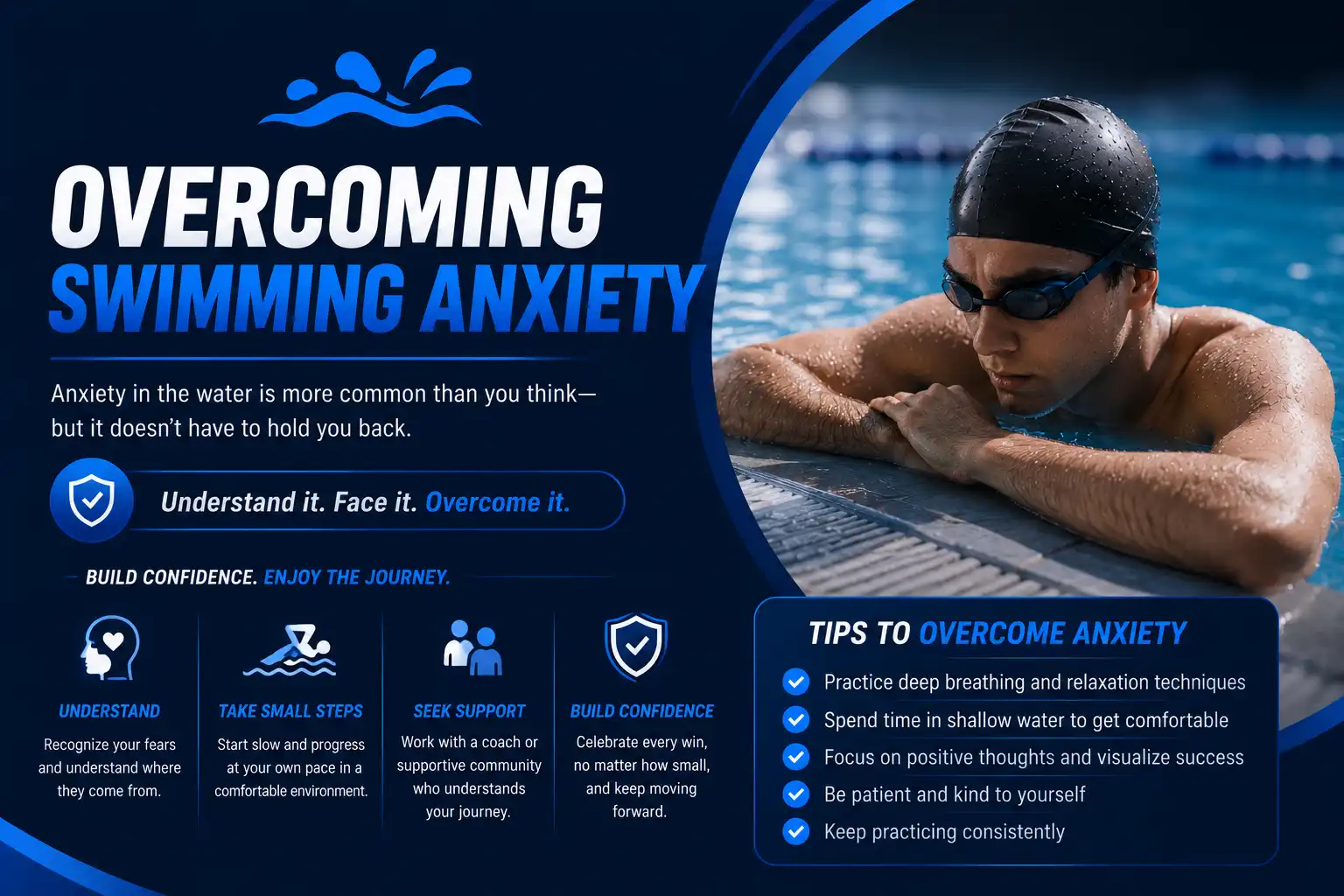
Introduction
Overcoming swimming anxiety can feel frustrating, especially when your mind wants to swim but your body freezes the moment you enter deep water. Many swimmers deal with racing thoughts, tight breathing, panic during laps, or fear of losing control in the water. Some feel embarrassed because they are learning later in life. Others avoid pools and beaches completely after one bad experience. Swimming anxiety affects beginners, adult learners, fitness swimmers, and even experienced swimmers in open water.

I have seen many nervous swimmers struggle with the same problems. Most of them believed something was wrong with them because they could not stay calm in the water. In many cases the real issue was poor breathing, panic cycles, lack of confidence, or trying to progress too quickly. Once swimmers learned how to slow down, control breathing, and build confidence step by step, swimming started feeling safer and more natural. That is exactly what this guide will help you do.
What Is Swimming Anxiety
Swimming anxiety is the fear or nervousness people feel while swimming.
It can happen in pools, lakes, oceans, or even during swim lessons. Some people feel anxious before entering the water. Others panic while swimming.
Swimming anxiety is different from a general fear of water. A person may feel comfortable around water but still panic while swimming.
Examples include:
- fear of deep water
- fear of losing breath
- fear of sinking
- fear of open water
- fear of swimming in crowds
- fear of panic attacks while swimming
Why Swimming Anxiety Happens
Swimming anxiety usually starts because the brain sees water as a danger.
Your nervous system reacts as if you are in danger. Your heart beats faster. Your muscles tighten. Your breathing becomes quick and shallow.
Anxiety creates a cycle:
- fear causes panic
- panic affects breathing
- bad breathing increases fear
- fear makes swimming harder
Breaking this cycle is the key to feeling calm in the water.
Common Causes of Swimming Anxiety
Fear of Deep Water:
Many swimmers feel safe when they can touch the bottom of the pool. Once the water gets deeper anxiety increases. The brain starts thinking about drowning or losing control.
Bad Past Experiences:
A negative experience can stay in your mind for years. Examples include nearly drowning, swallowing water, getting pushed into water, or panic during swim lessons.
Open Water Anxiety:
Pools feel controlled and predictable. Open water feels different. Lakes and oceans can create stress because you cannot see the bottom, waves move your body, there are fewer visual references, and the space feels too large.
Fear of Breathing Problems:
Breathing is one of the biggest causes of swimming anxiety. Some swimmers hold their breath too long. Others rush their breathing and inhale water. This often leads to panic.
Fear of Being Judged:
Adult beginners often worry about looking embarrassed. They may think everyone else swims better, people are watching, or they are learning too late. This mental pressure increases anxiety and makes progress harder.
| Trigger | How It Feels |
|---|---|
| Deep water | Fear of sinking or losing control |
| Open water | Panic from large spaces or low visibility |
| Poor breathing | Tight chest and shortness of breath |
| Crowded pools | Stress from noise and nearby swimmers |
| Past bad experiences | Fear returning during swimming |
| Long pools | Feeling trapped or far from safety |
Signs of Swimming Anxiety
Signs include fast heartbeat, tight chest, trouble breathing, panic in deep water, shaking, dizziness, feeling frozen, or wanting to leave the pool immediately. Some swimmers avoid water completely.
How to Calm Swimming Anxiety
Start with small controlled steps. Trying to force confidence too quickly usually worsens fear.
Start Slowly
You do not need to jump into deep water immediately. Begin in shallow water where you feel safe. Practice standing calmly, walking through the water, splashing your face, or floating near the wall. Small wins help your brain feel safer.
Focus on Breathing First

Good breathing creates calm swimming. Poor breathing creates panic. Practice slow breathing before swimming. Inhale slowly through your nose. Exhale slowly through your mouth. Relax your shoulders. Repeat several times. Once in the pool, focus on steady breathing. Relaxed swimmers usually move more smoothly and use less energy.
Learn to Exhale Underwater
Many swimmers panic because they hold their breath. Blow bubbles underwater, exhale slowly, and lift your head only to inhale. This creates a smoother breathing rhythm.
Use Floatation Support
Floatation tools help reduce fear while practicing movement and breathing. Use kickboards, pool noodles, or float belts.
Practice Floating
Floating helps many swimmers learn how buoyancy supports the body. Start by holding the pool wall, leaning back slowly, relaxing your neck and shoulders, and taking slow breaths.

Avoid Rushing
Slow progress is still progress. Even five calm minutes in the water matters.
A Simple Pre-Swim Routine to Reduce Anxiety
Take five slow breaths, relax shoulders and neck, stretch arms, walk into the water slowly, splash your face, and start with easy movements before swimming faster. This helps the nervous system stay calm before entering the water.
How to Stop Panic While Swimming

Stop moving too fast, float if possible, and move toward the wall if nearby. Focus on one slow breath at a time. Concentrate on one action like floating, kicking slowly, or reaching the wall.
Why Your Legs Sink During Panic
Tension, holding breath, or lifting your head too high can make balancing harder. Relax your body, keep your head neutral, and exhale slowly underwater.
Why Looking Up Can Increase Anxiety
Looking up too much tires your neck, lowers your hips, interrupts breathing rhythm, and increases panic. Keep your head slightly forward and down.
How to Stay Calm Around Other Swimmers
Focus on breathing, keep your pace steady, give yourself space, and avoid comparing yourself to others. Small contact is normal in pools and open water.
Use Visualization Before Swimming
Close your eyes and picture yourself breathing calmly, floating comfortably, moving smoothly, and staying relaxed in deep water. This prepares your mind and builds confidence.
Building Confidence in Open Water

Never swim alone. Start near the shore. Practice sighting. Train in calm conditions. Swimmers who feel nervous in lakes or oceans can also benefit from practicing breathing control and floating techniques that are commonly recommended for managing open water anxiety. Following basic swimming safety tips is especially important when practicing in open water.
Why Long Pools Feel More Stressful
Long pools have fewer chances to stop, longer distances without touching the wall, and more mental pressure. Start with shorter swims and gradually build confidence.
Swimming With a Coach or Friend

A coach or friend can guide breathing, correct mistakes, encourage during difficult moments, and help build confidence step by step. Some swimmers gain confidence faster through private swim lessons with an experienced instructor.
Why Adults Struggle More With Swimming Anxiety
Adults may fear embarrassment, failure, looking inexperienced, or losing control. Learning later in life is normal. Confidence grows through practice.
Track Your Progress
Keep a simple swim journal noting calm time, breathing improvements, floating practice, successful deep-water moments, and new skills. Small improvements matter and build motivation.
A Simple 7-Day Plan to Reduce Swimming Anxiety
| Day | Activity |
|---|---|
| Day 1 | Sit beside the pool and practice calm breathing |
| Day 2 | Walk through shallow water slowly |
| Day 3 | Practice floating near the wall |
| Day 4 | Blow bubbles underwater |
| Day 5 | Practice short swims in shallow water |
| Day 6 | Swim with a friend or instructor |
| Day 7 | Spend more time in deeper water while staying relaxed |
Swimming Anxiety vs Aquaphobia
Swimming anxiety usually appears during swimming situations. Aquaphobia is a stronger fear of water itself and may cause avoidance of pools, beaches, or bathtubs. Swimming anxiety improves more easily through gradual practice.
When to Get Professional Help
Seek help if panic attacks happen often, you completely avoid water, anxiety affects daily life, or past trauma keeps returning. If fear of water continues to affect daily activities, professional guidance and evidence-based coping strategies may help. According to Harvard Health, gradual exposure and confidence-building techniques can reduce fear responses over time.
Quick Takeaways
- Swimming anxiety is common in both beginners and experienced swimmers
- Panic usually starts from poor breathing and fear of losing control
- Small steps build confidence faster than rushing into deep water
- Open water anxiety is different from pool anxiety
- Controlled breathing and floating drills help calm the nervous system
- Most swimmers improve through gradual exposure and regular practice
Final Thoughts
Overcoming swimming anxiety is not about becoming fearless overnight. From experience, anxious swimmers improve most when they stop rushing progress and focus on small wins. Floating calmly, finishing one relaxed lap, or controlling breathing during panic can completely change confidence over time.
Swimmers who succeed are patient with themselves. They practice consistently, avoid comparing to others, and understand that anxiety is a skill issue that improves with proper guidance and repetition. Showing up, practicing calmly, and following gradual steps will make swimming less stressful and more enjoyable. If anxiety is preventing you from enjoying the water, reviewing basic swimming safety and troubleshooting strategies can help you feel more prepared.

