



Introduction
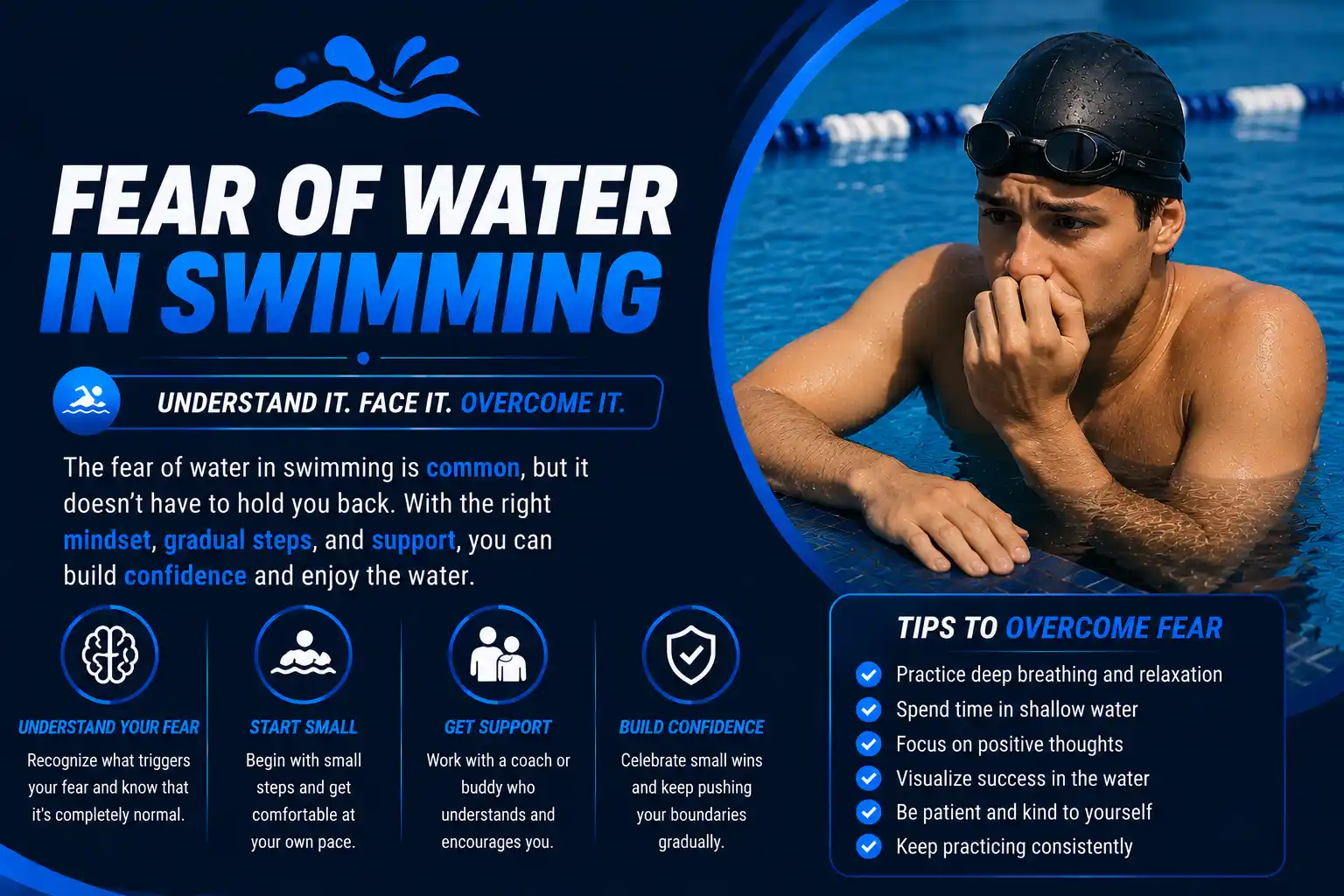
Fear of water in swimming is more common than most people think. Many adults quietly avoid pools, beaches, and swim lessons because they feel embarrassed, unsafe, or afraid of losing control in water. Some panic when they cannot touch the bottom. Others freeze the moment water reaches their face. I have seen beginner swimmers spend years avoiding water activities because of one bad childhood experience or fear of drowning. The hardest part is that many people believe they are the only ones struggling with this fear.

Fear of water does not mean someone is weak or unable to learn swimming. Instructors who work with nervous swimmers often see the same problems again and again: tight breathing, panic in deep water, fear of floating, and anxiety about being judged. The good news is that these fears can improve with slow practice, patience, and the right guidance. Most confident swimmers were not born fearless. They built trust in the water step by step.
Who This Article Is For
This guide is mainly for adults who never learned swimming or feel anxious around water. Many are afraid of deep pools, waves, or putting their face underwater.
It also helps:
- Parents with children afraid of water
- Adults recovering from past trauma or near drowning experiences
- Anyone struggling to breathe or float in water
What Is Fear of Water?
Fear of water is also called aquaphobia. It is a strong fear or anxiety linked to water or swimming.
Some people feel mild nervousness. Others experience panic.
This fear can happen in:
- Swimming pools
- Oceans
- Lakes
- Rivers
- Deep water
- Even shallow water
For some people, the fear started after a bad experience. Others never had an accident but still feel unsafe in water.
In severe cases, people may avoid even baths, showers, or touching water.
Why Are Some People Afraid of Swimming?
There are many reasons why people fear water. Adults often have different triggers than children.

Past Bad Experiences
A near drowning event can create strong fear. Even a small accident during childhood may stay in the mind for years.
Fear of Losing Control
Water feels different from land. Your body floats, moves, and reacts differently. That loss of control can make some people panic.
Fear of Deep Water
Many people feel nervous when they cannot touch the bottom of the pool.
Deep water creates fear because the brain sees it as unsafe.
Fear of Putting the Face Underwater

This is one of the most common swimming fears. Adults and children often worry about:
- Water entering the nose
- Trouble breathing
- Water entering the eyes
- Feeling trapped underwater
Learning swimming in a structured way can make underwater practice feel much less intimidating because each skill is introduced step by step.
Fear of Judgment
Adults often feel embarrassed about learning to swim later in life. Many people assume they missed their chance to learn swimming. In reality, thousands of people begin learning as adults and gradually become comfortable in the water. They may avoid lessons because they think others will judge them or expect them to already know how to swim.
Many adults learn swimming later in life. A good instructor will not judge you.
Other Causes of Water Fear
- Hearing scary stories about water accidents can increase fear
- Family history may also play a role
- Growing up around anxious family members can influence fear
Signs of Water Anxiety
Fear of water affects both the mind and body.
Common signs include:
- Fast heartbeat
- Tight muscles
- Sweating
- Shaking
- Short breathing
- Panic in deep water
- Refusing to enter the pool
- Feeling frozen during swim lessons
Some people even feel anxious before reaching the pool.
Severe Symptoms of Water Fear
Some people with strong fear of water may also feel:
- Nausea or dizziness
- Fainting or lightheadedness
- Trouble sleeping or nightmares about water
- Avoiding even baths or showers
These are signs of severe aquaphobia and may need extra help.
Why the Body Panics in Water
When the brain senses danger, the body enters fight or flight mode.
Your heart beats faster. Muscles become tight. Breathing becomes shallow.
This creates problems in water because relaxed breathing and loose muscles help the body float better.
Panic does the opposite.
Tension makes swimming harder. The harder swimming feels, the more fear grows. That cycle keeps repeating until confidence improves.
Different Types of Fear of Water
Not everyone experiences water fear in the same way.
Fear of Deep Water
This fear usually starts when the swimmer cannot touch the bottom.
Fear of Drowning
Some people constantly think something bad will happen in water.
Fear of Open Water
Lakes and oceans feel more stressful than pools because:
- Water looks darker
- Depth is unknown
- Waves move the body
- There are no nearby walls
Fear of Going Underwater
This fear often begins with breathing worries.
Fear of Water on the Face
Many adults freeze when they try to put their face in water. This can happen even if they are comfortable standing in shallow water.
Common Thoughts People Have Before Entering Water
Many people with water anxiety think things like:
- What if I drown?
- What if I panic in front of everyone?
- What if I cannot breathe?
- What if I sink immediately?
- What if people laugh at me?
These thoughts are common, especially in adult beginners. Learning swimming slowly and safely helps reduce these fears over time.
Fear of Water in Adults
Adults often struggle more than children.
Why?
- Adults overthink more
- Adults worry about embarrassment
- Adults may have past trauma or negative experiences
Many adults say things like:
- I am too old to learn
- People will judge me
- I should already know how to swim
A professional instructor can help adults overcome these worries step by step.
Fear of Water in Children
Children usually fear water because:
- They had a scary moment
- Water entered their nose
- They dislike the feeling of floating
- They feel forced during lessons
Parents can help by staying calm and patient. Children often copy the emotions of adults around them.
How to Stop Being Afraid of Water
Overcoming fear takes small steps. Trying to rush often makes anxiety worse.
1. Start in Shallow Water
Stay where you can stand comfortably. Walk around slowly. Splash water on your arms and face. The goal is comfort first.
2. Practice Breathing
Breathing exercises help the body relax. Many beginner swimmers struggle with breathing control during their first lessons. Proper breathing practice helps reduce panic and improves comfort in the water.
Try this:
- Take a slow breath through the mouth
- Put lips in the water
- Blow bubbles slowly
Repeat several times.
3. Get Comfortable Putting Your Face in Water
Do this step by step:
- Wet the face
- Chin in water
- Lips in water
- Nose in water
- Eyes in water
- Full face underwater
Move slowly. There is no need to rush.
4. Learn Floating
Floating helps build trust in water. Many new swimmers gain confidence faster when they combine floating practice with basic swimming skills. Use a pool noodle or float if needed. Relax the neck and breathe slowly.
5. Take Professional Swimming Lessons
A trained swim instructor can make learning safer and easier. Good instructors understand water anxiety. They teach slowly and build confidence step by step.
Qualified instructors understand how fear affects breathing, body position, and confidence levels in the water.
30 Day Plan to Overcome Fear of Water

Week 1: Water Comfort
Focus on:
- Standing in shallow water
- Walking in the pool
- Splashing water on the face
- Controlled breathing
Week 2: Face Submersion
Practice:
- Blowing bubbles
- Nose in water
- Eyes underwater
- Short underwater holds
Week 3: Floating Skills
Learn:
- Back floating
- Front floating
- Relaxed breathing
- Using floatation support
Week 4: Basic Swimming Skills
Start:
- Kicking drills
- Basic arm movement
- Short swimming distances
- Deep water confidence practice
At this stage, swimmers should focus on simple technique improvements rather than speed.
Small Signs of Progress
You are improving if you can:
- Stay calmer in shallow water
- Put your face underwater for a few seconds
- Float with less tension
- Control your breathing better
- Enter the pool with less fear
Small progress still counts. As confidence grows, many swimmers notice that swimming feels more relaxed and enjoyable instead of stressful.
Pool Fear vs Open Water Fear

Swimming pools feel safer because:
- Water is clear
- Depth is controlled
- Walls are nearby
Open water feels different. Lakes and oceans may cause fear because:
- You cannot see the bottom
- Waves move constantly
- Water feels unpredictable
- Cold temperatures increase discomfort
- Strong currents create uncertainty
- Visibility is often poor
If you fear open water, begin in a pool first.
Common Mistakes That Make Water Fear Worse
Starting Too Fast
Jumping into deep water too early can increase panic.
Holding the Breath
Holding breath creates tension and stress.
Comparing Yourself to Others
Everyone learns at a different pace.
Practicing Only Once in a While
Regular practice helps the brain feel safer around water.
Can Fear of Water Go Away?
Yes. Many people overcome water anxiety with practice and patience.
Progress may feel slow at first. That is normal.
Small wins matter.
The first time you put your face underwater is progress. Floating for five seconds is progress too.
Confidence grows little by little.
When Should You Seek Professional Help?
Some fears are very intense.
You may need extra support if:
- Panic attacks happen near water
- Trauma affects daily life
- Anxiety becomes severe
A therapist or swim coach trained in anxiety support can help.
Professional Therapy Options
For severe fear, trained professionals use techniques such as:
- Cognitive Behavioral Therapy
- Exposure Therapy
Medical organizations such as the Cleveland Clinic explain that exposure-based approaches are commonly used to help people manage aquaphobia. These approaches help reduce panic and improve confidence.
Final Thoughts
Over the years, many beginner swimmers have shared the same story. They spent a long time avoiding swimming because they thought they were too old, too scared, or too far behind to learn. But once they started slowly and stopped comparing themselves to others, things began to change. Small moments like putting the face underwater for the first time or floating without panic became major confidence wins. That is usually how progress happens in swimming. It starts small and grows over time.
From a coaching and learning perspective, the people who improve the most are not always the strongest swimmers. They are the ones who stay patient and keep showing up even when fear feels uncomfortable. Fear of water in swimming can improve at any age with the right approach. The key is building comfort first, then confidence, then skill. One calm step in the water is always better than forcing progress too quickly.

