



Introduction
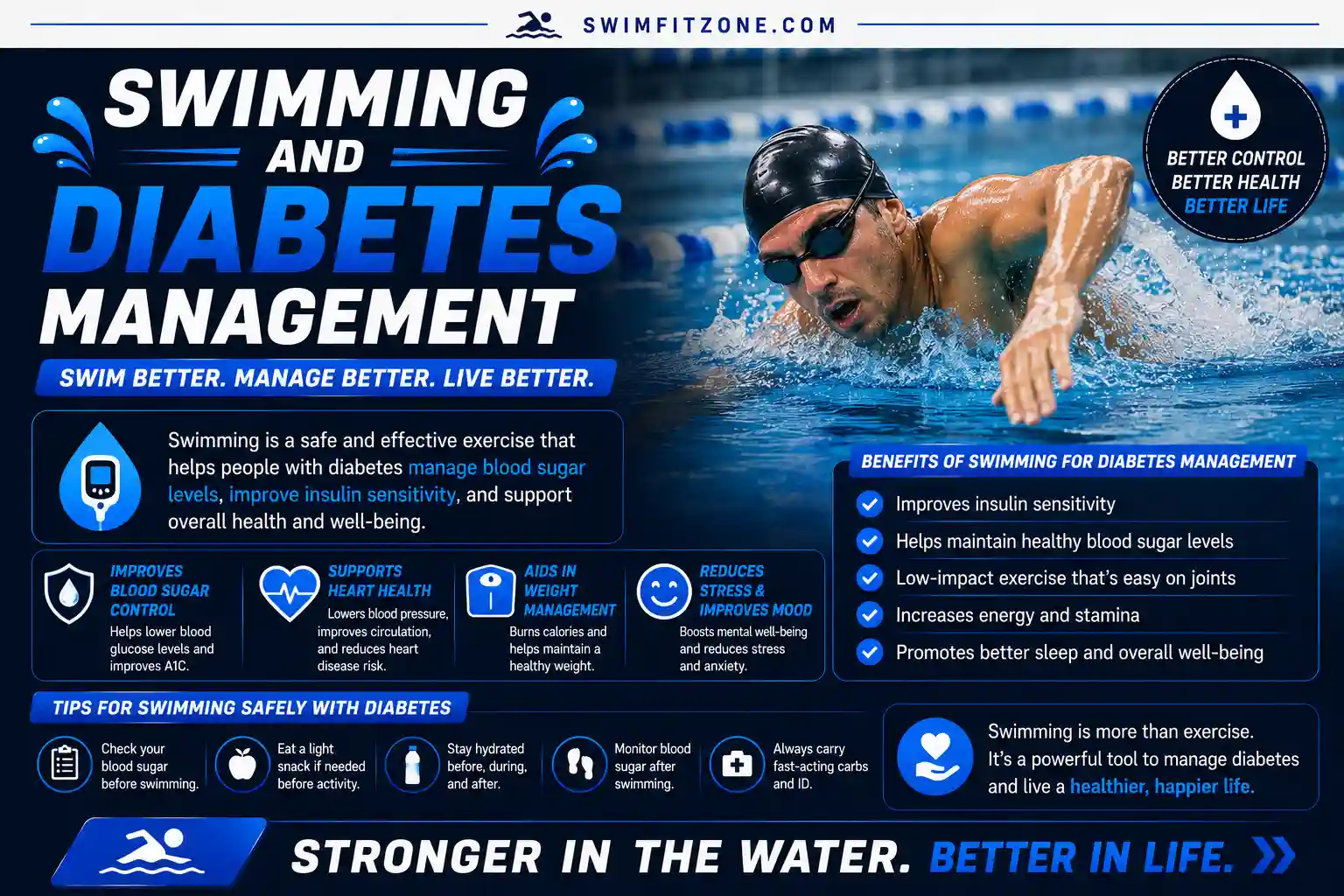
Managing diabetes can feel like a daily balancing act. You may worry about keeping your blood sugar in a healthy range, finding an exercise that does not hurt your joints, or avoiding low blood sugar during a workout. Many people ask whether swimming and diabetes management really go together or if swimming could make blood sugar harder to control. These are valid concerns, especially if you are new to exercise or have had unexpected blood sugar changes in the past.
From years of working with swimmers, one thing stands out. People who start with a simple plan and learn how their body responds often become much more confident in the water. Swimming is not a cure for diabetes, but it can become a valuable part of a healthy lifestyle when combined with healthy eating, medication if prescribed, and regular medical care. This guide explains how swimming affects blood sugar, how to stay safe, and simple steps to build a swimming routine that lasts.
Quick Answer
Swimming and diabetes management work well together for many people. Swimming helps your muscles use glucose for energy, which can support healthy blood sugar management. It also improves fitness, strengthens your heart, and is gentle on your joints. For the best results, check your blood sugar as recommended, stay hydrated, and follow your diabetes care plan.
| Topic | Type 1 Diabetes | Type 2 Diabetes |
|---|---|---|
| Main goal | Prevent low blood sugar | Improve blood sugar management |
| Blood sugar checks | Usually more frequent | Depends on your treatment plan |
| Insulin | Usually required | May or may not be needed |
| Exercise focus | Safe blood sugar management | Long term fitness and health |
Who Should Read This Guide?
This guide is for:
- Adults with Type 1 diabetes
- Adults with Type 2 diabetes
- People with prediabetes
- Older adults looking for a low impact exercise
- Beginners starting a swimming routine
- Family members and caregivers
Whether your goal is better blood sugar control, weight management, or improving your overall health, this guide will help you swim more safely and confidently.
Why Swimming Is Good for Diabetes Management

Swimming is one of the best exercises for many people living with diabetes. It is a full body workout that improves fitness while placing very little pressure on your joints.
Regular swimming may help:
- Support healthy blood sugar management
- Improve insulin sensitivity
- Strengthen your heart and lungs
- Help with weight management
- Build muscle strength
- Improve endurance
- Reduce stress
- Support better overall health
Unlike running or other high impact activities, swimming allows your body to move freely through the water. This makes it an excellent low impact exercise for people with joint discomfort.
If your goal is to build strength while staying active, learning more about the benefits of swimming can help you get even more from your workouts. Keep in mind that swimming works best as part of a complete diabetes management plan. Healthy eating, medication if prescribed, regular checkups, and exercise all work together.
How Swimming Affects Blood Sugar

Many people believe swimming always lowers blood sugar. The truth is a little more complicated.
During Moderate Swimming
When you swim at an easy or moderate pace, your muscles use glucose for energy.
At the same time, your body often becomes more sensitive to insulin. This helps glucose move from your bloodstream into your muscles.
For many people, this can lead to lower blood sugar during or after swimming.
During High Intensity Swimming
Hard training sessions may affect blood sugar differently.
Your body releases stress hormones during very intense exercise. These hormones tell your liver to release stored glucose into your bloodstream.
Because of this, your blood sugar may rise for a short time before returning to normal.
This is one reason why checking your blood sugar before and after swimming is so helpful.
After Swimming
Your body continues working even after you leave the pool.
Your muscles replace the energy they used during exercise. During this time, your body may remain more sensitive to insulin for several hours.
Some people, especially those who use insulin, may develop delayed low blood sugar later in the day or overnight.
Watching your blood sugar after swimming helps you understand how your body responds over time.
Swimming for Type 1 and Type 2 Diabetes
Swimming can benefit people with both types of diabetes, but your routine may look slightly different.
| Topic | Type 1 Diabetes | Type 2 Diabetes |
|---|---|---|
| Main goal | Prevent low blood sugar | Improve blood sugar management |
| Blood sugar checks | Usually more frequent | Depends on your treatment plan |
| Insulin | Usually required | May or may not be needed |
| Exercise focus | Safe blood sugar management | Long term fitness and health |
No matter which type of diabetes you have:
- Check your blood sugar as recommended.
- Stay hydrated.
- Carry fast acting carbohydrates.
- Follow your healthcare provider’s advice.
Before You Get in the Pool

Preparing before every swim helps you stay safe. Following basic swimming safety tips can help you feel more confident every time you enter the water.
Check Your Blood Sugar
Check your blood sugar before you begin swimming.
If your reading is outside the range recommended by your healthcare provider, follow your diabetes care plan before starting your workout.
If you have been advised to check for ketones during high blood sugar, do that before exercising.
Bring Fast Acting Carbohydrates
Always keep a fast source of glucose close to the pool.
Good options include:
- Glucose tablets
- Fruit juice
- Glucose gel
- Regular sports drinks
These can help treat low blood sugar quickly if needed.
Stay Hydrated
You lose fluids while swimming, even if you do not notice it.
Drink water before and after every swim. During longer sessions, take short breaks to stay hydrated.
Tell Someone You Have Diabetes
If you are swimming with a coach, friend, family member, or lifeguard nearby, let them know you have diabetes.
This simple step can help others respond quickly during an emergency.
Wear Medical Identification
A medical ID bracelet or necklace can help first responders recognize your condition if you cannot speak for yourself.
Check Your Diabetes Devices
If you wear a continuous glucose monitor or an insulin pump:
- Follow the manufacturer’s water safety instructions.
- Make sure the device is secure before entering the water.
- Bring extra supplies if needed.
Taking a few minutes to prepare before each swim can help you feel more confident and enjoy your workout with greater peace of mind.
During Your Swim
Once you are in the water, pay attention to how your body feels. Every swim is different, and your blood sugar may respond differently depending on the workout.

While swimming:
- Stay hydrated during longer sessions.
- Swim at a pace that matches your fitness level.
- Take breaks if you feel tired.
- Stop swimming if you feel unwell.
Do not ignore warning signs such as dizziness, shaking, blurred vision, confusion, or unusual weakness. Move to a safe place and follow your diabetes care plan. If symptoms are severe or do not improve, seek medical care right away.
After Swimming
Your swim is over, but your body is still recovering.
After every swim:
- Check your blood sugar.
- Drink water.
- Eat a balanced meal or snack if needed.
- Check your feet for cuts or blisters.
- Record how swimming affected your blood sugar.
- Watch for delayed low blood sugar during the next several hours, especially if you use insulin.
Keeping track of your blood sugar before and after each swim helps you learn what works best for your body.
Swimming With a Continuous Glucose Monitor

Many swimmers use a Continuous Glucose Monitor, also called a CGM.
Before swimming:
- Make sure the sensor is attached securely.
- Follow the manufacturer’s waterproof instructions.
- Use an adhesive patch if recommended.
- Check your readings after swimming if something feels different than expected.
A CGM can help you notice blood sugar trends, but always follow your healthcare team’s advice about using your device during exercise.
Swimming With an Insulin Pump
If you wear an insulin pump, plan ahead before getting into the water.
- Check whether your pump is waterproof or water resistant.
- Follow the manufacturer’s instructions before swimming.
- Keep extra supplies nearby.
- If your pump needs to be disconnected, follow your healthcare provider’s instructions for reconnecting and insulin replacement.
Planning ahead helps reduce stress and keeps your diabetes routine on track.
Open Water Swimming Safety
Swimming in lakes, rivers, or the ocean requires extra care.
For better safety:
- Never swim alone.
- Tell someone where you are going.
- Keep your diabetes supplies nearby.
- Swim only in safe, approved areas.
- Remember that cold water may affect how your body responds to exercise.
If you are new to open water swimming, build your confidence in a pool first.
Take Care of Your Feet
Foot care is an important part of diabetes management.
After every swim:
- Dry your feet well, including between your toes.
- Check for cuts, blisters, redness, or cracked skin.
- Wear sandals or water shoes around the pool if needed.
If you notice a foot injury that does not heal, contact your healthcare provider.
Protect Your Eyes
If you have diabetes related eye disease, ask your eye specialist whether there are any activity limits before starting vigorous swimming.
A comfortable pair of swim goggles also helps protect your eyes from pool chemicals and improves visibility in the water.
What Should You Eat Before and After Swimming?
Your body needs enough energy for exercise.
Before swimming, eat a light meal or snack if it fits your diabetes care plan.
After swimming:
- Drink water.
- Eat a balanced meal or snack if needed.
- Follow your healthcare provider’s advice about meal timing and medication.
Good nutrition helps your body recover after exercise.
Choosing the Best Swimming Stroke
Different strokes offer different benefits. If you are unsure where to begin, our guide to the best swimming strokes for beginners can help you choose the right one.
Freestyle
Freestyle is a great choice for improving fitness and burning more calories. It is ideal for steady lap swimming. Learning proper freestyle swimming technique can also help you swim more efficiently and avoid wasting energy.
Breaststroke
Breaststroke has a slower pace and is comfortable for many beginners.
Backstroke
Backstroke helps improve posture while keeping your face above the water. Many beginners find it easier to breathe during this stroke.
Butterfly
Butterfly is the most demanding stroke. It requires good technique and strong fitness. Most beginners should wait until they gain more experience.
The best stroke is the one that helps you stay active safely and consistently.
4 Week Beginner Swimming Plan

If you are new to swimming, increase your time slowly.
| Week | Goal |
|---|---|
| Week 1 | Swim for 15 to 20 minutes at an easy pace. |
| Week 2 | Increase to about 20 minutes. |
| Week 3 | Swim for about 25 minutes with short rest breaks if needed. |
| Week 4 | Build up to about 30 minutes of steady swimming. |
Before every session, spend a few minutes doing a proper swimming warm up to prepare your muscles and reduce the risk of injury.
Focus on building a routine instead of swimming faster. As your fitness improves, you can gradually improve your swimming endurance by increasing your distance or time in the pool.
Sample Weekly Swimming Schedule
| Day | Activity |
|---|---|
| Monday | Easy swimming for 20 to 30 minutes |
| Tuesday | Rest or light walking |
| Wednesday | Steady lap swimming |
| Thursday | Gentle stretching or rest |
| Friday | Swimming with short faster intervals |
| Saturday | Easy recovery swim or water walking |
| Sunday | Rest |
Adjust this schedule to match your fitness level and your healthcare provider’s advice.
Common Mistakes to Avoid
Many beginners make small mistakes that affect both safety and blood sugar management.
Try to avoid these common problems:
- Skipping your blood sugar check.
- Swimming alone.
- Forgetting fast acting carbohydrates.
- Starting with sessions that are too long.
- Not drinking enough water.
- Ignoring foot care.
- Forgetting to check your blood sugar after swimming.
Building good habits makes every swim safer.
When Should You Avoid Swimming?
Do not swim if:
- You feel dizzy, weak, or confused.
- You have chest pain or trouble breathing.
- Your healthcare provider has advised against exercise.
- You have very high blood sugar with ketones, if you have been told to check for ketones.
- You have an open foot wound or a serious infection.
Waiting until it is safe protects both your health and your recovery.
Swimming or Walking: Which Is Better?
Both activities are excellent for diabetes management.
Swimming may be a better choice if you have:
- Arthritis
- Knee pain
- Hip pain
- Back discomfort
- Joint problems
Walking is easier to start because it requires very little equipment.
The best exercise is the one you enjoy and can continue every week.
Myth vs Fact
Myth: Swimming always lowers blood sugar.
Fact: Blood sugar may go up or down depending on exercise intensity, meals, medication, and your body’s response.
Myth: People with diabetes should avoid swimming.
Fact: Most people with diabetes can swim safely with proper planning and guidance.
Myth: Swimming replaces diabetes treatment.
Fact: Swimming supports diabetes management but does not replace medication, healthy eating, or medical care.
Blood Sugar Tracking Log
Keeping a simple record helps you understand how swimming affects your body over time.
When Should You Talk to Your Healthcare Provider?
Speak with your healthcare provider before starting a swimming program if:
- You are new to exercise.
- You have frequent low blood sugar.
- You have diabetic eye disease.
- You have foot ulcers or poor wound healing.
- You have heart disease or another medical condition that may affect exercise.
They can help you create a plan that matches your health needs.
Final Thoughts
Swimming and diabetes management is about more than spending time in the pool. It is about building healthy habits that support better blood sugar control, improve fitness, and help you stay active with confidence. Every person responds differently to exercise, so pay attention to how your body feels, check your blood sugar as recommended, and make steady progress instead of rushing for quick results.
From my experience working with swimmers, the people who achieve lasting success are the ones who stay consistent. They learn from every swim, adjust their routine when needed, and work closely with their healthcare team. Start with a pace that feels comfortable, celebrate small improvements, and let each swim become another step toward better long term health.

