



Introduction
Have you noticed that your shoulders feel tight, your hips are stiff, or simple movements are not as easy as they used to be? Whether you spend hours sitting at a desk or want to swim more comfortably, poor flexibility can affect your daily life and performance in the pool. If you are wondering how swimming helps with flexibility, you are in the right place. Swimming is a gentle, full body exercise that can improve your range of motion while putting very little stress on your joints.
From my experience working with swimmers, I have learned that flexibility is built through consistent movement, not by forcing painful stretches. Swimmers who practice with good technique often notice their bodies becoming less stiff and their strokes feeling smoother over time. In this guide, you will discover how swimming improves flexibility, which strokes work best, and simple tips to help you get the most from every swim session.
Key Takeaways
- Swimming improves flexibility by moving your joints through a natural range of motion.
- Regular swimming can reduce stiffness and improve everyday movement.
- Each swimming stroke targets different muscles and joints.
- Swimming works best when combined with a warm up and post swim stretching.
- Consistency is the key to long term flexibility.
What Is Flexibility?
Flexibility is the ability of your muscles and joints to move through their full range of motion. It helps you perform daily activities with less effort and lowers the risk of muscle tightness.
Good flexibility can make it easier to:
- Reach overhead.
- Bend down comfortably.
- Improve your posture.
- Move with better balance.
- Perform swimming strokes more efficiently.
Many people confuse flexibility with mobility. Although they are closely connected, they are not the same.
| Flexibility | Mobility |
|---|---|
| Refers to how much a muscle can stretch | Refers to how well a joint moves with control |
| Focuses on muscle length | Focuses on strength and movement together |
| Improved through stretching and movement | Improved through exercise and good movement patterns |
Swimming helps improve both, making it one of the best exercises for overall body movement.
Does Swimming Improve Flexibility?
Yes. Swimming can improve flexibility because it keeps your body moving through smooth and controlled motions. Every stroke stretches and strengthens muscles at the same time.
Unlike many land based exercises, swimming uses the support of water to reduce pressure on your joints. This allows you to move more freely without the discomfort that some people experience during high impact workouts. The CDC also lists swimming as a low impact aerobic activity that supports overall physical health while being easier on the joints than many high impact exercises.
The benefits become noticeable when you swim consistently. While one session may help you feel relaxed, regular swimming over several weeks can gradually increase your range of motion.
How Swimming Helps With Flexibility

Swimming improves flexibility in several natural ways.
1. It Moves Your Body Through a Full Range of Motion
Every swimming stroke requires your arms, legs, and torso to move through large but controlled movements. Repeating these movements helps your muscles stay active while encouraging greater flexibility.
2. Water Reduces Stress on Your Joints
The buoyancy of water supports your body weight. This makes movement easier and allows your joints to move with less pressure, especially if you have stiffness or minor joint discomfort.
3. It Strengthens While It Stretches
Swimming is different from passive stretching because your muscles stay active throughout each stroke. This combination of movement and strength helps create functional flexibility that supports everyday activities.
4. It Improves Blood Flow
Swimming increases circulation, helping deliver oxygen and nutrients to your muscles. Healthy muscles recover more efficiently and are less likely to become tight after exercise.
Which Parts of the Body Benefit the Most?

Swimming works almost every major muscle group, making it an excellent full body exercise.
| Body Area | How Swimming Helps |
|---|---|
| Shoulders | Improves overhead movement and stroke reach |
| Chest | Opens tight chest muscles and supports better posture |
| Spine | Encourages gentle rotation and improves movement |
| Hips | Increases mobility during kicking movements |
| Ankles | Improves flexibility for a stronger kick |
| Hamstrings | Supports smoother leg movement |
People who spend long hours sitting often notice that their shoulders and hips feel less tight after adding swimming to their weekly routine.
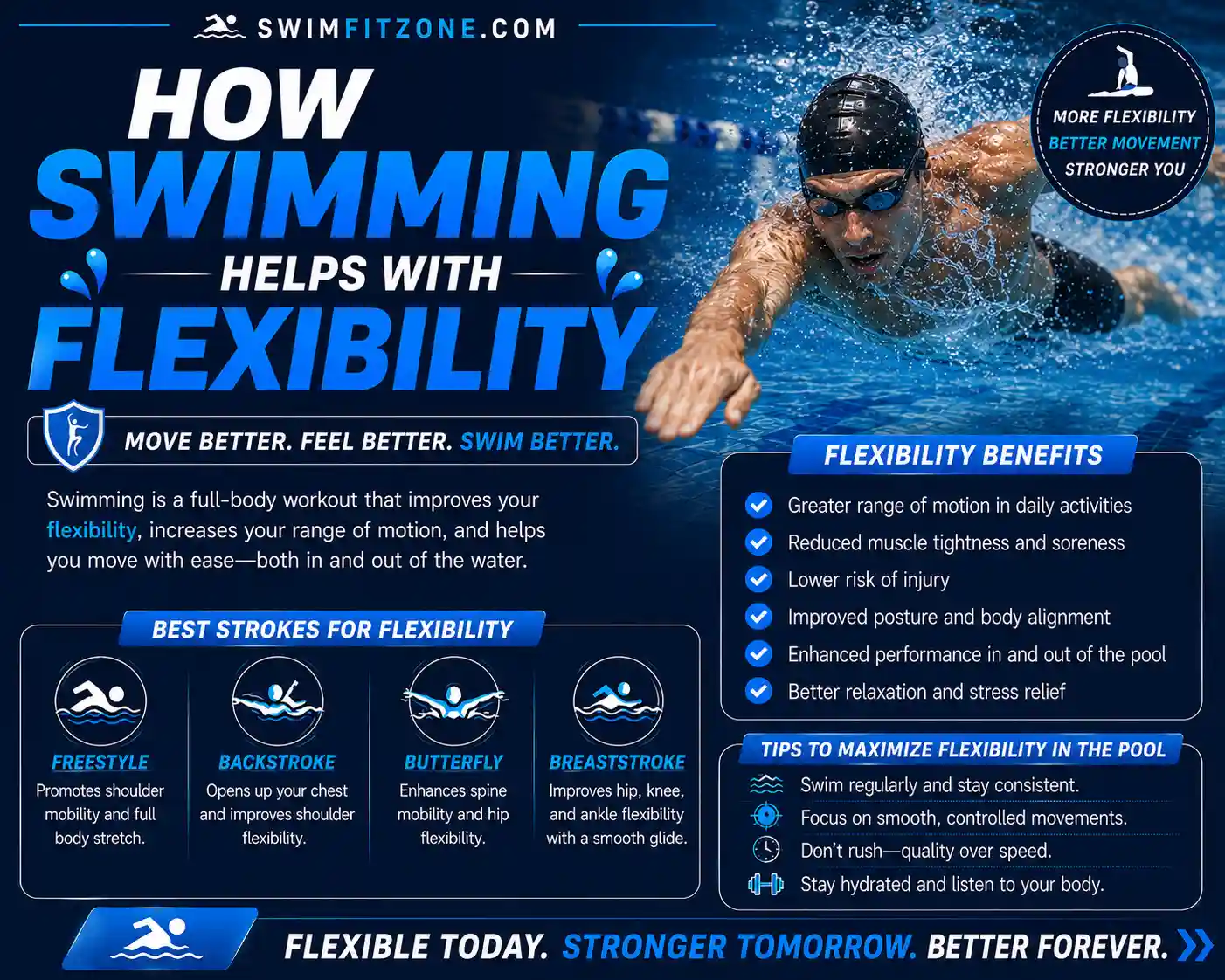
Best Swimming Strokes for Flexibility
Each swimming stroke offers different flexibility benefits.
| Stroke | Main Benefit | Best For |
|---|---|---|
| Freestyle | Shoulder and ankle flexibility | Overall body movement |
| Backstroke | Chest and shoulder mobility | Better posture |
| Breaststroke | Hip flexibility | Lower body mobility |
| Butterfly | Full body flexibility | Advanced swimmers |

Freestyle
Freestyle is the best choice for most people because it provides a balanced workout. The repeated arm rotation helps improve shoulder flexibility, while the kicking motion increases ankle mobility. If you are still learning, these freestyle swimming tips can help you improve your technique while increasing flexibility.
Backstroke
Backstroke naturally opens the chest and encourages better posture. It is a good option for office workers and anyone with rounded shoulders.
Breaststroke
Breaststroke places greater emphasis on the hips and legs. The kick helps improve flexibility in the hips, knees, and ankles. Practicing the correct backstroke technique can improve shoulder mobility and encourage better posture.
Butterfly
Butterfly requires excellent technique and flexibility. It challenges the shoulders, spine, hips, and core more than any other stroke. Beginners should master the other strokes before practicing butterfly regularly.
Swimming Versus Stretching
Swimming and stretching both improve flexibility, but they work in different ways.
Swimming improves flexibility through repeated movement while strengthening your muscles.
Stretching focuses on increasing muscle length and reducing tightness in specific areas. The American College of Sports Medicine also recommends regular flexibility exercises as part of a well rounded fitness program, making stretching a valuable addition to your swimming routine.
The best results come from combining both.
Before swimming:
- Perform a light warm up.
- Use dynamic stretches.
- Prepare your muscles for movement.
A proper warm up helps increase blood flow, loosen your muscles, and prepare your body for swimming. Following a swimming warm up routine can improve your range of motion and help reduce stiffness before you get into the pool.
After swimming:
- Stretch while your muscles are still warm.
- Hold each stretch for about 20 to 30 seconds.
- Focus on your shoulders, chest, hips, calves, and hamstrings.
Using both swimming and stretching together can help improve flexibility faster than relying on either one alone.
Can Swimming Make Everyday Movement Easier?
Yes. Better flexibility does not only improve your swimming. It can also make daily activities more comfortable.
You may notice benefits such as:
- Easier reaching and lifting.
- Less stiffness after sitting.
- Better posture.
- Improved balance.
- More comfortable walking and climbing stairs.
- Reduced muscle tightness after exercise.
These improvements happen gradually through regular practice, making swimming a practical long term choice for improving flexibility and overall movement.
Warm Up Before You Swim
A proper warm up prepares your muscles and joints for movement. It also helps lower the risk of injury and allows you to move more comfortably in the water.
Spend about 5 to 10 minutes warming up before every swim.
Simple warm up routine
- Arm circles for 30 seconds.
- Shoulder rolls for 30 seconds.
- Hip circles for 30 seconds.
- Leg swings for 30 seconds on each leg.
- Walk or march in place for 1 to 2 minutes.
- Swim one or two easy laps before increasing your pace.
A few minutes of preparation can make your swim feel smoother and more effective.
Best Swimming Drills for Flexibility

Swimming drills help you focus on body position and movement while improving flexibility.
Single Arm Freestyle Drill
This drill improves shoulder mobility and helps you develop a smoother stroke.
Kickboard Flutter Kick
Using a kickboard lets you focus on your legs, helping improve hip and ankle flexibility.
Backstroke Rotation Drill
This drill encourages gentle body rotation and improves movement through your shoulders and spine.
Breaststroke Glide Drill
Holding the glide position for a moment after each stroke helps increase flexibility in your hips and legs.
Easy Recovery Swim
Finish your workout with slow and relaxed swimming to help your muscles cool down naturally.
Adding these swimming stroke drills to your weekly routine can improve both flexibility and overall swimming technique.
Drill Summary
| Drill | Main Benefit |
|---|---|
| Single Arm Freestyle | Improves shoulder flexibility |
| Kickboard Flutter Kick | Increases hip and ankle mobility |
| Backstroke Rotation | Improves spinal movement and shoulder mobility |
| Breaststroke Glide | Enhances hip flexibility |
| Easy Recovery Swim | Reduces muscle tightness after training |
Common Mistakes That Slow Progress
Many people expect quick improvements, but small habits can limit your results.
Avoid these common mistakes.
- Skipping your warm up.
- Using poor swimming technique.
- Swimming only once in a while.
- Forgetting to stretch after swimming.
- Trying advanced strokes before mastering the basics.
- Ignoring pain instead of correcting your technique.
Focusing on good form and staying consistent will give you better long term results.
How Long Does It Take to Improve Flexibility?
Every person is different, but most people notice gradual improvements with regular swimming.
| Time | What You May Notice |
|---|---|
| Week 1 to 2 | Less muscle stiffness after swimming |
| Week 3 to 4 | Better shoulder and hip movement |
| Week 5 to 8 | Improved range of motion and easier swimming |
| After 2 to 3 months | Greater flexibility during daily activities and swimming |
The key is to swim regularly instead of expecting immediate results.
Who Benefits the Most?
Swimming is suitable for almost everyone, but some groups may notice even greater improvements.
| Person | Main Benefit |
|---|---|
| Beginners | Builds flexibility safely while learning technique |
| Office workers | Reduces stiffness caused by sitting for long hours |
| Older adults | Supports healthy joint movement with little impact |
| Fitness swimmers | Improves recovery and overall movement |
| Competitive swimmers | Increases stroke efficiency and body position |
No matter your age or fitness level, regular swimming can help you move more comfortably and confidently.
Simple Tips to Improve Flexibility Faster
You can get better results by following a few simple habits.
- Swim two or three times each week.
- Practice different swimming strokes.
- Warm up before entering the pool.
- Stretch after every swim session.
- Stay hydrated throughout the day.
- Focus on smooth and controlled movements.
- Increase your training gradually.
- Listen to your body and rest when needed.
Small improvements made consistently often produce the biggest long term results. As your flexibility improves, you can also focus on building swimming endurance to stay comfortable during longer sessions.

Final Thoughts
Swimming is one of the best low impact exercises for improving flexibility because it combines gentle movement, strength, and joint friendly exercise in every session. As your muscles and joints move through a full range of motion, everyday tasks can become easier and your swimming technique can improve at the same time. While swimming alone can make a real difference, combining it with a proper warm up and post swim stretching will help you see even better results.
From my experience working with swimmers, the people who make the greatest progress are not always the fastest or strongest. They are the ones who stay consistent and focus on good technique every time they get into the water. Flexibility develops gradually, but every swim helps your body move a little better than before. Keep practicing, be patient with your progress, and you will likely notice lasting improvements both in the pool and in your daily life. Pairing regular swimming with a structured swimming workout routine can help you continue improving flexibility, strength, and overall fitness.

