



Introduction
Swimming backstroke might be quite challenging for some individuals who find themselves struggling with lifting their hips, proper coordination between arm strokes and kicking, or effective breathing techniques. I have faced these challenges myself during the period when I had been spending many months in the pool working on my body rolls and flutter kick. Common problems for many include ineffective start techniques, delayed turns, and exercises that seem pointless.
The information provided in this Backstroke Techniques guide has been accumulated based on personal experience as an athlete and trainer. You will learn various tips about fixing flaws in your swimming technique and improving it overall through the implementation of certain tricks. These tips have been created for swimmers of any skill level beginner, intermediate, and advanced ones.

What is Backstroke?
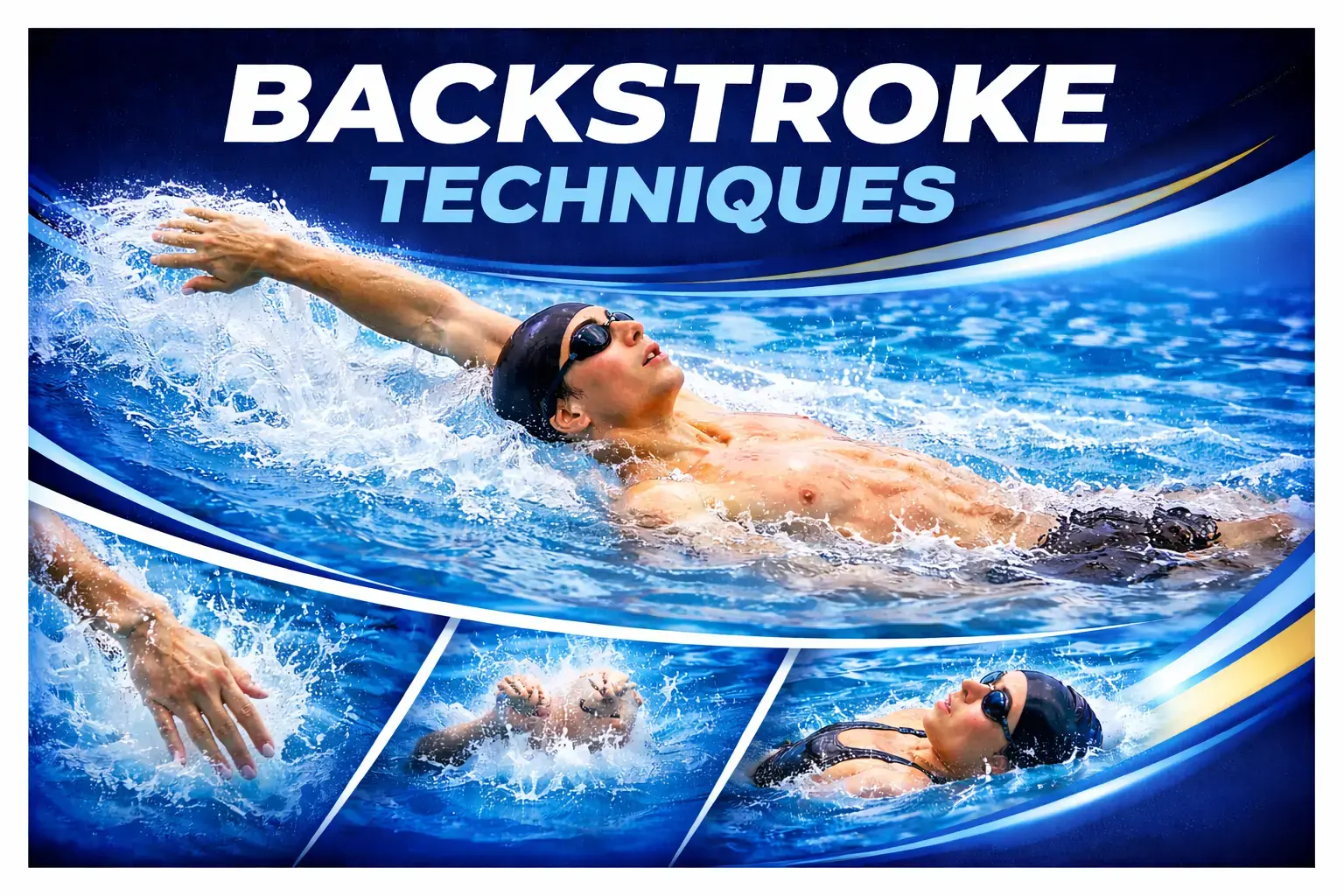
In Backstroke, your back is turned to the water surface. The arms make a rotating movement while your legs make a flutter kick. You find breathing easy when compared to freestyle, as your face is not under the water.
Backstroke is one of the core strokes covered in our Swimming Stroke Techniques guide and is used in both competition and fitness swimming.
Body Position

Proper body positioning is very important. Make sure that you keep a straight and flat body posture. Maintain high hip positioning in the water. Let your head float with your ears underwater.
- Look directly upwards.
- Maintain slightly bent knees.
- Make sure not to let your hips sink.
For beginners: Try floating on your back first, practicing keeping your hips high before adding full arm movement.
Arm Technique

Arms swing alternately in a circle motion. One arm pulls and the other one regains position above water.
- Start by inserting your fingers with your pinky finger first.
- Intermediate Tip: Focus on a smooth catch-and-pull to reduce wasted motion.Pull down in a straight line under your body.
- Finish with a strong push past your hip.
Keep your elbows slightly bent to prevent fatigue.
Intermediate Tip: Focus on a smooth catch-and-pull to reduce wasted motion.
Flutter Kick

Flutter kick comes from your hips. Legs move quickly and evenly.
- Keep legs straight but relaxed.
- Avoid bending knees too much.
- Kick from the hips, not the knees.
A strong kick helps with balance and speed.
Visual Learner Tip: Use fins to see how your legs move naturally and improve rhythm.
Rotation

Rotate your body with each stroke. Shoulders and hips turn together.
- Rotate toward the pulling arm.
- Keep head stable.
- Rotation improves stroke length and reduces fatigue.
Advanced Tip: Maintain rotation angles under 90° for efficiency and to reduce drag.
Breathing
Backstroke makes breathing easier than freestyle. If you also swim freestyle regularly, these Freestyle Swimming Tips can help improve your breathing rhythm and stroke efficiency. You can breathe every stroke or every other stroke, depending on comfort and speed.
- Keep your face above water.
- Breathe naturally and relaxed.
- Exhale underwater to stay steady.
Goal-Oriented Tip: Time your breathing with arm pulls to maximize stroke efficiency.
Starts and Turns

Most beginner guides skip this. But starts and turns can save seconds in competition.
- Backstroke start: Push off the wall with feet planted, arch your body, and streamline.
- Flip turn: Rotate onto your stomach before reaching the wall, perform a somersault, and push off.
- Underwater dolphin kicks: Use 3-5 kicks before surfacing.
Underwater Distance After Starts and Turns
Swimmers may remain underwater for up to 15 meters after a start or turn before surfacing. Dolphin kicks during this phase help maintain speed and streamline position.
Intermediate/Competitive Tip: Focus on strong underwater dolphin kicks to gain an edge in races.
Common Mistakes
Many swimmers make simple errors. Fixing them improves speed.
- Head too high or too low – Hips drop
- Hand entry crosses center line – Pull is less efficient
- Kicking from knees – Slow and tires legs quickly
- Poor rotation – Short strokes and fatigue
Correcting these issues is an important step in overall Swimming Technique Improvement and can help you swim with less effort.
Beginner Tip: Record yourself or ask a coach to check alignment and rotation.
Drills to Improve Backstroke
Drills help practice specific parts of the stroke. You can also explore additional Swimming Stroke Drills to improve coordination and efficiency in the water.
- Single arm drill: Focuses on arm pull and rotation
- Kickboard drill: Improves flutter kick
- Catch up drill: Fixes timing between arms
- Underwater dolphin drill: Improves start and turns
Do each drill slowly first, then increase speed. For swimmers who want additional drill progressions and technique breakdowns, the U.S. Masters Swimming backstroke guide provides detailed examples and practice ideas.
Practice Sets
Structured practice helps improve technique and fitness. Before starting these workouts, spend a few minutes following proper Swimming Warm-Up Routines to prepare your muscles and reduce injury risk.
Beginner Set:
- 200 m easy backstroke warm-up
- 4×25 m single-arm drill
- 4×25 m flutter kick drill
Intermediate Set:
- 4×50 m body rotation focus
- 6×25 m underwater dolphin kicks
- 100 m backstroke steady pace
Advanced Set:
- 8×100 m fast backstroke with turns
- 4×50 m sprint underwater kicks
- Cool down 100 m easy backstroke
Goal-Oriented Tip: Use a stopwatch and track times to see improvements in speed and endurance.
Swimmers looking to handle longer workouts and maintain speed over multiple laps should also learn How to Improve Swimming Endurance.
Tools and Equipment
Some tools help practice backstroke:
- Fins : Improve kick strength
- Pull buoy : Focus on arms
- Kickboard : Isolate leg movement
- Paddles : Build upper-body strength (use carefully)
Visual/Tool Learner Tip: Practice drills with and without equipment to see differences in technique and power.
How to Track Progress
Track your improvement to stay motivated.
- Count strokes per lap
- Time your sets
- Record yourself for video analysis
- Compare lap times weekly
Goal-Oriented Tip: Keep a swim journal with stroke counts, lap times, and drill notes.
Safety and Beginner Cues
- Keep your head in line with your spine to avoid neck strain
- Use drills to maintain balance and stability in the water
- Practice slow, controlled strokes before increasing speed
Competition Rules and Distances
Backstroke is swum in 50 meters, 100 meters, and 200 meters. It is part of the Olympics and major competitions. Swimmers start in the water and follow official rules for turns and stroke technique.
Elite Swimmer Examples
Some of the best backstrokers include Ryan Lochte and Missy Franklin. Observing their technique can help swimmers understand body rotation, arm entry, and underwater efficiency.
Key Takeaways
- Keep hips high, head neutral, and rotate your body with each stroke.
- Flutter kick comes from the hips, not the knees.
- Hands should enter pinky-first, pulling under the body with a slight elbow bend.
- Practice starts, turns, and underwater dolphin kicks to improve race performance.
- Use drills intentionally and track progress for measurable improvement.
Stepwise Drill Summary
| Stage | Focus | Drill | Difficulty | Equipment |
|---|---|---|---|---|
| Beginner | Arm movement | Single-arm backstroke | Easy | None |
| Beginner | Leg movement | Flutter kick with kickboard | Easy | Kickboard |
| Intermediate | Arm-leg timing | Catch-up drill | Medium | Optional fins |
| Intermediate | Rotation | Body roll drill | Medium | None |
| Advanced | Underwater phase | Dolphin kick & streamline | Hard | Fins |

Backstroke Techniques – Frequently Asked Questions
1. What is the proper body position for backstroke?
Your body should be horizontal and straight. Keep hips high in the water. Head should be neutral, looking straight up, with ears slightly submerged.
2. How do I coordinate my arms and legs in backstroke?
Arms move alternately in a circular motion while legs perform a flutter kick from the hips. Use drills like single-arm backstroke and catch-up drill to practice timing and coordination.
3. How can I improve my backstroke start and turns?
- Start: Push off with feet planted, arch body, streamline, and use underwater dolphin kicks.
- Turns: Flip onto your stomach before the wall, perform a somersault, push off, and use up to 15m underwater before surfacing.
4. What drills are best for beginners, intermediate, and advanced swimmers?
| Level | Drill | Focus |
|---|---|---|
| Beginner | Single-arm backstroke | Arm movement & rotation |
| Beginner | Flutter kick with kickboard | Leg movement |
| Intermediate | Catch-up drill | Arm-leg timing |
| Intermediate | Body roll drill | Rotation |
| Advanced | Dolphin kick & streamline | Underwater phase & speed |
5. Which equipment can help improve backstroke?
- Fins: Improve kick strength and rhythm
- Pull buoy: Focus on arms
- Kickboard: Isolate leg movement
- Paddles: Build upper-body strength (use carefully)

Final Thoughts
Backstroke technique development requires patience and determination to refine and improve each of your swimming elements. From my experience as a swim coach, it was clear to me how even minor corrections to your hand placement or rotating skills can significantly reduce your lap time.
By incorporating Backstroke Techniques, monitoring your improvement, and performing deliberate exercises, you will enhance your skills and gain additional confidence in your swimming. Body positioning, arms, flutter kick, and breathing will be your focus during the technique practice, and then incorporate starting, turning, and dolphin kicks.
Consistent effort and conscious practice will help you develop good backstroke skills naturally.

