

Introduction
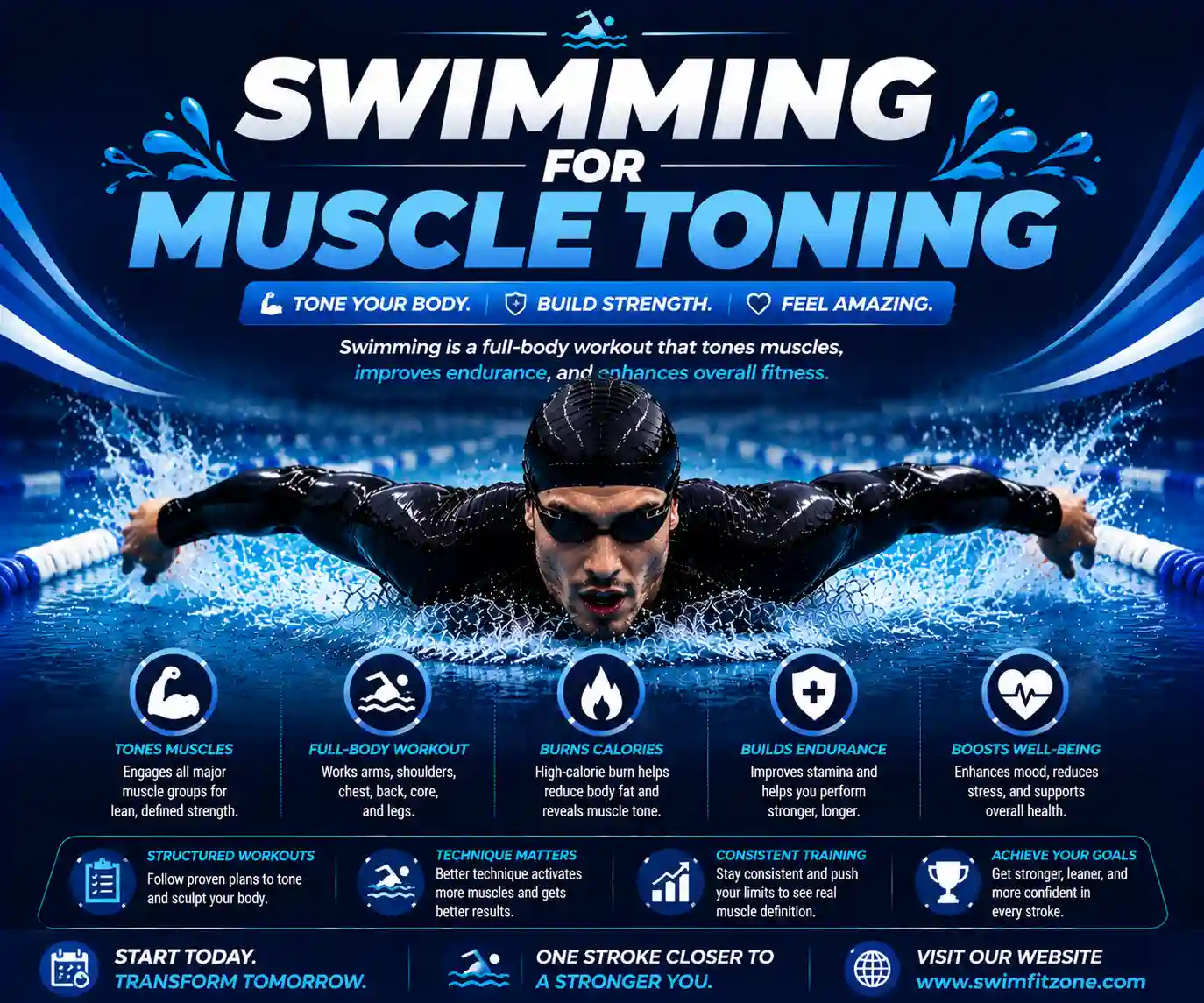
Swimming is more than just cardio. It is one of the best ways to tone your muscles, burn calories, and strengthen your whole body without stressing your joints. Many people swim regularly but struggle to see results because they do not focus on targeted exercises for muscle tone. I have been there myself, feeling like my muscles were not responding. What changed my results was learning how to swim with intention, combining stroke variations and resistance work to actually tone my arms, core, and legs.
The key is using exercises that engage the right muscles, challenge your body, and increase intensity gradually. You do not need heavy weights or fancy machines. With the right strokes, structured sessions, and some equipment if you like, you can get leaner, stronger, and more defined. I have seen it work personally, and what this really means is that consistency and proper form make all the difference.

Why Swimming is Better for Muscle Toning than Other Workouts
Swimming provides natural resistance that works multiple muscle groups at once. Unlike running or cycling, every stroke engages your arms, core, and legs together.
Benefits:
- Water resistance tones muscles without heavy weights
- Full-body workout in every stroke
- Low-impact, so joints and shoulders are protected
- Improves endurance and flexibility while toning muscles
- Burns calories efficiently, helping reveal muscle definition
How Swimming Tones Muscles
Swimming works your entire body. Unlike running or gym-only workouts, water resistance makes every movement more challenging. It builds lean muscle without adding bulk. Your arms, shoulders, core, and legs all get engaged in every stroke.
Muscles worked by each stroke:
- Freestyle: Arms, shoulders, core, hips
- Backstroke: Shoulders, upper back, glutes
- Butterfly: Shoulders, chest, entire core
- Breaststroke: Chest, inner thighs, core
Mixing strokes helps tone muscles evenly while preventing overuse injuries.
Definition of Muscle Toning
Muscle toning does not mean building large muscles like weightlifting. Instead, it refers to lean muscle definition achieved by building strength while reducing body fat. Swimming naturally supports muscle toning because water resistance engages the entire body without adding bulk.
Stroke-Specific Toning Workouts

To tone muscles efficiently, focus on strokes that target key areas:
- Arms: Freestyle and butterfly
- Core: Breaststroke and butterfly
- Legs: Kickboards during freestyle or flutter kicks
- Glutes: Backstroke and breaststroke kicks
Variation tips:
- Increase freestyle tempo every 2 minutes to challenge muscles
- Use fins for leg-focused strokes to intensify toning
- Pull buoys help isolate arms during strokes for stronger upper body engagement
Common Mistakes While Swimming for Muscle Toning
Avoid these mistakes to see results faster:
- Swimming only one stroke and neglecting others
- Swimming too slowly or without intervals
- Ignoring recovery days or overtraining
- Poor stroke technique that reduces muscle engagement
- Not using equipment for resistance when appropriate
Correcting these ensures faster and safer toning.
Beginner-Friendly Swimming Routine

Weekly Plan:
Monday: Pool Session
- Freestyle laps with controlled strokes
- Vertical kicks with arms crossed
- 20 minutes
Tuesday: Pool Session
- Breaststroke and backstroke laps
- Flutter kicks with kickboard
- 20 minutes
Wednesday: Active Recovery
- Light swim or stretching
- Focus on mobility
Thursday: Pool Session
- Interval training: 2 laps freestyle, 1 lap backstroke, repeat
- Treading water for 5 minutes
- 20 minutes
Friday: Pool Session
- Butterfly practice if comfortable or freestyle sprints
- Leg-focused drills with fins
- 20 minutes
Weekend: Optional Recovery
- Light swim or stretching
Tip: Gradually increase laps or intensity each week.
Progression Plan
- Beginner: Focus on 20-25 minutes, basic stroke rotations, minimal equipment
- Intermediate: 30-40 minutes, include intervals, kickboard and pull buoy work
- Advanced: 45-60 minutes, high-intensity intervals, all strokes, resistance gloves, and fins
This ensures continuous improvement without plateauing.
Results Timeline
Expected Outcomes:
- 2 weeks: Improved endurance and reduced fatigue
- 4 weeks: Slight muscle tone in arms, legs, and core
- 8-12 weeks: Visible muscle definition and overall strength improvement
Consistency and proper stroke technique are key.
Session Frequency and Intensity
- Swim 3-5 times per week
- Sessions should last 30-45 minutes
- Include intervals or high-intensity strokes
- Rotate strokes for full-body toning and to avoid overuse injuries
Using Equipment for Toning

Simple pool equipment can make workouts more effective:
- Kickboards: Focus on legs and core
- Fins: Increase leg resistance
- Pull buoys: Isolate arms and shoulders
- Resistance gloves: Engage arms and shoulders more deeply
Combining Swimming with Dryland Exercises

- Push-ups or planks for core stability
- Squats or lunges to complement leg work
- Resistance band exercises for shoulders and back
A hybrid approach ensures balanced muscle tone across the body.
Nutrition Tips
- Protein supports muscle recovery and definition
- Eat healthy sources like eggs, fish, or plant-based options after workouts
- Stay hydrated to maintain performance and support recovery
Recovery and Injury Prevention
- Warm up with light swimming or dynamic stretches
- Cool down with gentle strokes and stretching
- Rest if muscles feel fatigued
- Rotate strokes to prevent repetitive strain
- Swimming tones muscles throughout your entire body
- Mix strokes for balanced toning: freestyle, backstroke, breaststroke, butterfly
- Use kickboards, fins, pull buoys, and resistance gloves to challenge muscles
- Combine pool sessions with light dryland exercises for faster results
- Swim 3–5 times per week and increase intensity gradually
Drill Summary Table
| Day | Workout | Focus Area | Duration / Sets |
|---|---|---|---|
| Monday | Freestyle laps & vertical kicks | Arms, core, legs | 20 min |
| Tuesday | Breaststroke & backstroke laps | Core, legs, glutes | 20 min |
| Wednesday | Light swim / stretching | Recovery | — |
| Thursday | Interval laps & treading water | Full body | 20 min |
| Friday | Butterfly / freestyle sprints & fins | Upper body, legs | 20 min |
| Weekend | Light swim or stretching | Recovery | — |
Final Thoughts

From my personal experience, Swimming for Muscle Toning transforms your body gradually but effectively. Using different strokes, incorporating resistance tools, and following a consistent weekly routine helped me build lean, defined muscles without adding bulk.
Consistency, proper form, and progressive intensity are key. Starting gradually, mixing strokes, and including light dryland exercises made the biggest difference for my arms, core, and legs. Over time, you can achieve visible muscle tone, improved posture, and confidence in the water.

