



Introduction
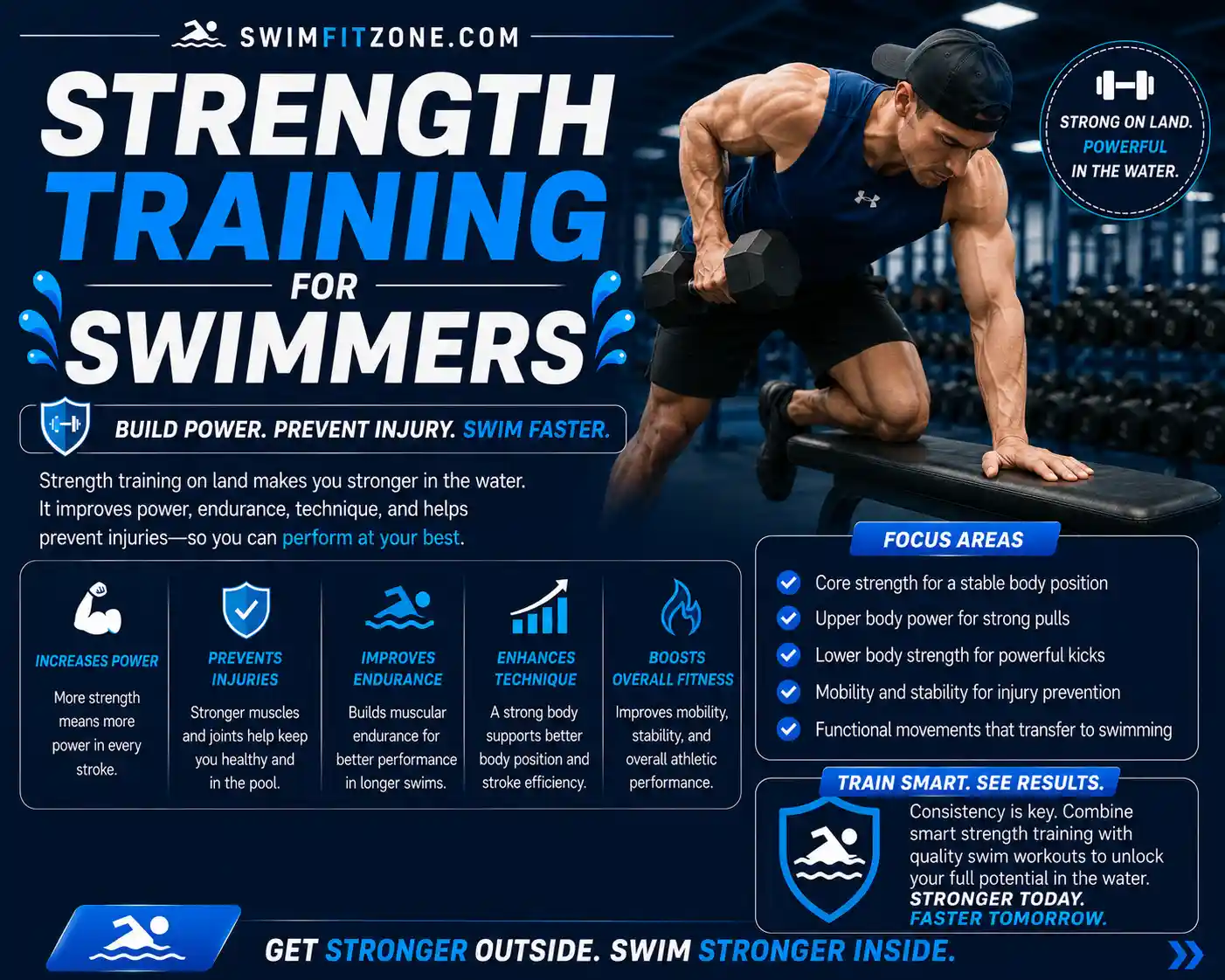
Have you been spending hours in the pool but still not swimming faster or feeling stronger? Many swimmers struggle with weak starts, slow turns, tired shoulders, or a lack of power because swimming alone is not always enough. Strength training for swimmers helps build the power, stability, and endurance needed to improve performance while supporting better technique and reducing the risk of common injuries.
From my experience studying swim training and proven coaching methods, many swimmers either skip strength training or follow bodybuilding workouts that do not improve their swimming. The best results come from exercises that match the demands of the sport. In this guide, you will learn why strength training matters, the best exercises to perform, how to build an effective workout plan, and the mistakes to avoid so you can become a stronger and more efficient swimmer. Strength training becomes even more effective when paired with continuous swimming technique improvement, allowing you to apply your strength more efficiently in the water.
Key Takeaways
- Strength training improves swimming performance when combined with regular swim practice.
- Focus on compound exercises that train your entire body.
- Core and shoulder stability are essential for better stroke efficiency.
- Two to three strength sessions each week are enough for most swimmers.
- Recovery, proper technique, and consistency are just as important as lifting weights.
- Choose exercises that improve swimming performance instead of simply building muscle size.
What Is Strength Training for Swimmers?
Strength training for swimmers is a planned program of exercises that improves the muscles used during swimming. Unlike bodybuilding, the goal is not to gain as much muscle as possible. Instead, swimmers train to produce more force, maintain better body position, and move through the water more efficiently.
A balanced strength program includes:
- Upper body exercises for stronger pulling power.
- Lower body exercises for faster starts and turns.
- Core exercises for better balance and stability.
- Explosive movements that improve speed and power.
When combined with regular swim sessions, strength training can help swimmers perform better in both training and competition.
Why Strength Training Matters for Swimmers

Swimming works every major muscle group, but the resistance provided by water is often not enough to build maximum strength.
Strength training prepares your body to handle harder swim sessions while improving the force you can produce during each stroke. The American College of Sports Medicine also recommends regular resistance training to improve muscular strength, power, and overall physical performance.
It can help you:
- Generate more power with every pull.
- Push off the wall more forcefully.
- Improve kicking strength.
- Maintain good technique as you become tired.
- Reduce the risk of common overuse injuries.
The goal is not to replace swimming. It is to support your performance in the pool. One of the best ways to maximize those results is by following a structured swimming workout routine.
Benefits of Strength Training for Swimmers
Adding strength training to your weekly routine offers several benefits.
- Improves stroke power and efficiency.
- Increases force during starts and turns.
- Helps maintain better body position.
- Builds stronger kicking muscles.
- Supports shoulder stability.
- Reduces the risk of muscle imbalances.
- Improves overall athletic performance.
These benefits become even more noticeable when strength sessions are combined with quality swim practice.
Muscles Swimmers Should Strengthen

Every swimming stroke relies on multiple muscle groups working together. Training your entire body creates better balance and helps reduce injury risk.
| Muscle Group | Why It Matters |
|---|---|
| Lats | Stronger pulling power |
| Shoulders | Better stroke control |
| Rotator cuff | Shoulder stability |
| Core | Better body position |
| Glutes | Stronger kicks and push offs |
| Legs | Faster starts and turns |
Pay extra attention to your lats, shoulders, core, glutes, and legs because they produce most of the power needed during swimming.
Strength vs Power vs Muscle Size
These training terms are often confused, but they have different purposes.
Strength is your ability to produce force.
Power is how quickly you can apply that force during movements such as starts and turns.
Muscle size focuses on increasing muscle mass, which is useful in some sports but is usually not the primary goal for swimmers.
For most swimmers, strength and power should receive the highest priority because they transfer more directly to swimming performance.
Dryland Training vs Weight Training
Dryland training uses bodyweight exercises, resistance bands, medicine balls, and mobility drills to improve balance, coordination, and stability.
Weight training uses barbells, dumbbells, kettlebells, and machines to increase strength and power.
Both methods have value.
Dryland exercises improve movement quality, while weight training builds the force needed for stronger swimming.
The best programs combine both approaches.
Functional Strength for Swimming
Building strength is only part of the process. Swimmers also need to use that strength efficiently in the water.
Functional strength training focuses on movements that improve balance, coordination, stability, and body control. Exercises such as single leg squats, resistance band drills, medicine ball throws, and stability based core exercises help your strength transfer more effectively to swimming. These exercises become even more effective when combined with regular swimming stroke drills.
Best Strength Exercises for Swimmers

You do not need dozens of exercises to become a stronger swimmer. A small group of well chosen movements can produce excellent results.
The best exercises train multiple muscles at the same time while improving movements used during swimming.
Drill Summary Table
| Training Goal | Best Exercises |
|---|---|
| Upper Body | Pull Ups, Rows, Push Ups |
| Lower Body | Squats, Romanian Deadlifts, Lunges |
| Core | Planks, Pallof Press, Dead Bug |
| Explosive Power | Box Jumps, Medicine Ball Slams |
Upper Body Exercises
The upper body produces much of the force during every stroke.
The best exercises include:
- Pull ups
- Seated cable rows
- Lat pulldowns
- Push ups
- Face pulls
These exercises strengthen the lats, shoulders, chest, and upper back while improving pulling power and shoulder stability.
Lower Body Exercises
Strong legs create faster starts, stronger turns, and more powerful push offs.
Include:
- Back squats
- Romanian deadlifts
- Bulgarian split squats
- Hip thrusts
- Walking lunges
Focus on controlled movement instead of lifting the heaviest weight possible.
Core Exercises
Your core connects your upper and lower body during every stroke.
Good options include:
- Front plank
- Side plank
- Pallof press
- Dead bug
- Bird dog
A stronger core helps maintain a streamlined body position and reduces unnecessary movement in the water.
Explosive Power Exercises
Power training helps swimmers produce force quickly.
Include exercises such as:
- Box jumps
- Medicine ball slams
- Jump squats
- Kettlebell swings
Perform explosive exercises early in your workout while your body is still fresh.
Strength Training for Different Swimming Strokes
Although every swimmer benefits from full body strength training, each stroke places different demands on the body.
- Freestyle: Focus on pulling strength, shoulder endurance, and core stability. Pair this with proper freestyle swimming tips to improve stroke efficiency.
- Backstroke: Strengthen the upper back, shoulders, and rotational core muscles.
- Breaststroke: Build strong glutes, hips, and legs for a more powerful kick.
- Butterfly: Develop explosive hip power, core strength, and pulling muscles for efficient dolphin kicks and arm recovery. Good butterfly stroke tips can help you apply that strength more effectively.
If you compete in swimming, you can also review the official World Aquatics competition rules to better understand race requirements for each stroke.

No matter which stroke you swim most often, train your entire body to improve performance and reduce muscle imbalances.
Home Strength Workout for Swimmers
You do not need an expensive gym membership to become a stronger swimmer. A simple routine performed two or three times each week can improve your strength and support better swimming performance.

Beginner Home Workout
- Push ups: 3 sets of 8 to 12 reps
- Bodyweight squats: 3 sets of 12 to 15 reps
- Resistance band rows: 3 sets of 10 to 15 reps
- Glute bridges: 3 sets of 12 to 15 reps
- Front plank: 3 sets of 30 to 45 seconds
- Side plank: 2 sets of 20 to 30 seconds on each side
Warm up before every workout and focus on controlled movements instead of rushing through each exercise.
Gym Strength Workout for Swimmers
If you have access to a gym, choose exercises that build full body strength rather than isolating one muscle at a time.
A balanced workout may include:
- Back squats: 3 to 4 sets of 5 to 8 reps
- Pull ups or lat pulldowns: 3 sets of 6 to 10 reps
- Romanian deadlifts: 3 sets of 6 to 8 reps
- Seated cable rows: 3 sets of 8 to 10 reps
- Dumbbell bench press: 3 sets of 8 to 10 reps
- Pallof press: 3 sets of 10 reps on each side
- Face pulls: 2 to 3 sets of 12 to 15 reps
Train on non consecutive days to allow enough recovery between sessions.
Sample Weekly Strength Training Plan
A simple weekly schedule helps you stay consistent without interfering with your swim practice.
- Monday: Swim practice
- Tuesday: Full body strength workout
- Wednesday: Swim practice
- Thursday: Recovery or mobility work
- Friday: Full body strength workout
- Saturday: Swim practice
- Sunday: Rest
Most swimmers make excellent progress with two or three strength sessions each week. If you’re preparing for races, combine this schedule with a structured training for swimming competitions plan.
How Many Sets and Reps Should Swimmers Do?
Your training goal should determine how many sets and repetitions you perform.
- Build strength: 3 to 5 sets of 3 to 6 reps
- Build power: 3 to 5 sets of 3 to 5 reps
- Build muscle: 3 to 4 sets of 8 to 12 reps
- Improve muscular endurance: 2 to 3 sets of 12 to 20 reps
For most swimmers, strength and power should remain the main priorities because they have the greatest impact on swimming performance.
Should You Lift Before or After Swimming?
If swimming performance is your main goal, complete your key swim session before lifting weights. This allows you to practice your technique while your body is fresh.
If your primary goal is improving strength, lifting before swimming may be suitable. When possible, separate your swim and strength sessions by several hours to improve recovery and maintain good performance in both workouts.
When Should Swimmers Avoid Strength Training?
Strength training is highly beneficial, but there are times when you should reduce or postpone your workout.
Avoid heavy strength training if you:
- Have sharp or ongoing shoulder pain.
- Are recovering from an illness.
- Feel unusually tired after several hard training sessions.
- Are returning from an injury without medical advice.
- Have just completed a major competition and need extra recovery.
Listening to your body helps you train consistently over the long term.
How to Progress Your Strength Training
Progress should happen gradually.
Follow these simple steps:
- Increase the weight only after mastering proper technique.
- Add one or two repetitions before increasing the load.
- Improve your movement quality with every workout.
- Allow enough time for recovery between sessions.
- Track your workouts to measure progress.
Small improvements each week often produce better long term results than making large jumps.
Common Strength Training Mistakes Swimmers Should Avoid
Avoid these common mistakes to get the best results.
- Training only your upper body.
- Skipping warm ups.
- Using poor exercise form.
- Lifting heavier than you can control.
- Ignoring recovery days.
- Neglecting shoulder stability exercises.
Building good habits from the beginning will help you stay healthy and continue improving.
Recovery Tips for Better Swimming Performance
Recovery is where your body becomes stronger.
Follow these tips after hard training sessions:
- Sleep for seven to nine hours whenever possible.
- Eat enough protein throughout the day.
- Stay hydrated before and after training.
- Stretch your shoulders, hips, and legs after workouts.
- Schedule regular recovery days each week.
Good recovery allows you to train consistently and lowers the risk of overuse injuries.
Shoulder Injury Prevention

The shoulder performs thousands of movements during swim training, making it one of the most vulnerable joints.
Protect your shoulders by:
- Strengthening your rotator cuff.
- Including face pulls and band exercises.
- Balancing pulling and pushing movements.
- Improving shoulder mobility.
- Stopping training if you experience sharp pain.
Healthy shoulders help you maintain consistent training throughout the season.
Signs Your Program Is Working
You should notice improvements both in the gym and in the pool.
Look for these signs:
- Stronger push offs.
- More powerful starts.
- Better turns.
- Improved body position.
- Less fatigue during longer swims.
- Better stroke efficiency.
- Faster swim times over several weeks.
Keep a simple training log to monitor your workouts and swimming progress.
Final Thoughts
Strength training can help you become a stronger, faster, and more efficient swimmer when it supports regular time in the pool. From what I have learned through studying swim training and proven coaching methods, swimmers achieve the best results when they focus on proper technique, consistent practice, and exercises that directly improve their performance in the water instead of simply trying to lift heavier weights.
Stay patient and build your strength gradually. Train your entire body, recover well, and continue improving your swimming technique alongside strength training for swimmers. You can also continue improving by learning how to swim faster through better technique and training habits. Consistency will always produce better results than chasing quick progress, and over time you should notice stronger starts, more powerful turns, better endurance, and greater confidence every time you enter the water.

