



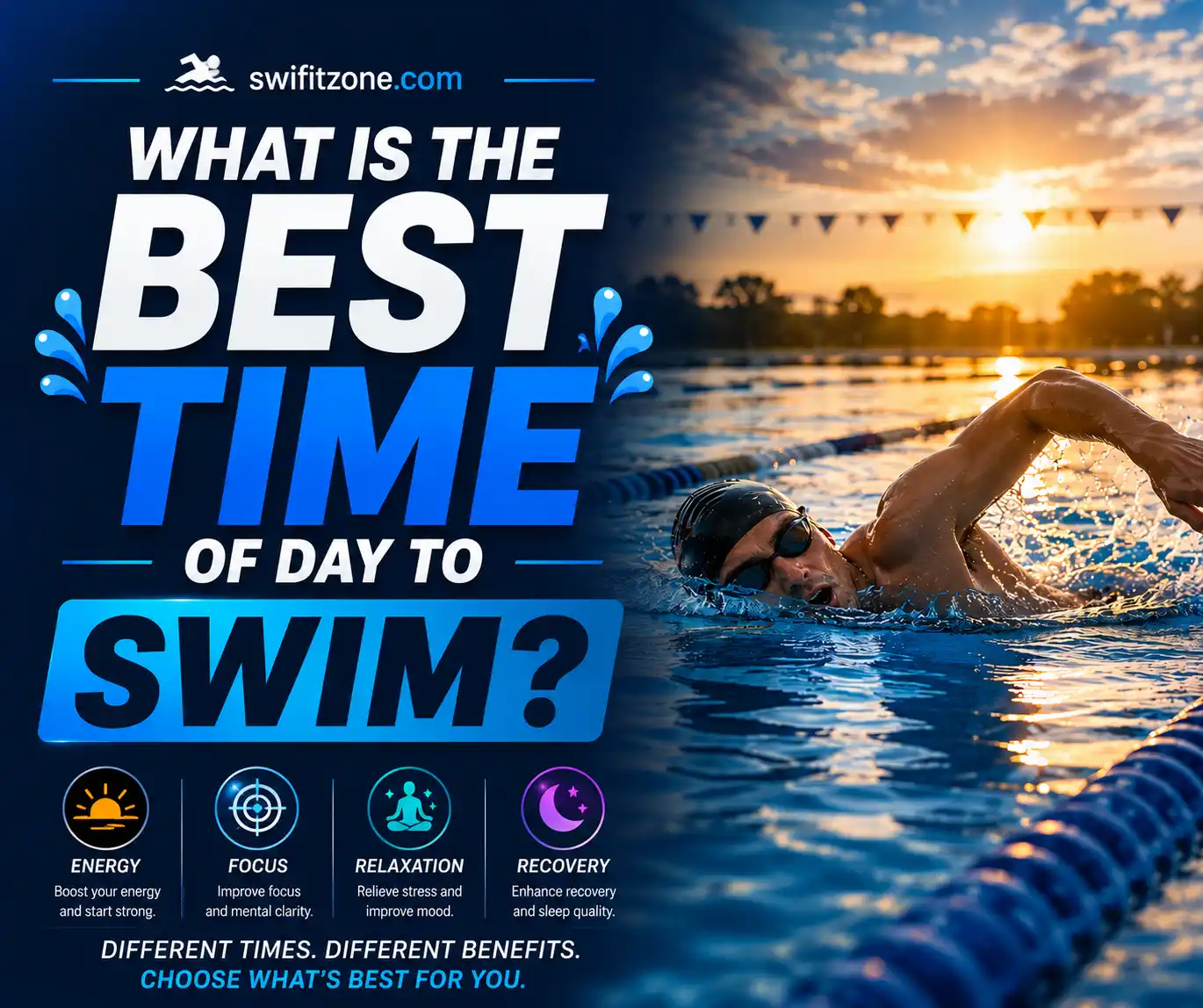
Choosing a swimming time can be harder than it sounds. You may have only a short window before work, during lunch, or after a long day. You may wonder if morning swimming is better for fitness, if afternoon swimming can help performance, or if swimming at night can affect sleep. If you have ever changed your schedule because you thought there was one perfect time, you are not alone. What is the best time of day to swim? The answer depends on your goal, schedule, energy level, sleep, and swimming conditions.
As a swimming coach, I have seen swimmers respond differently to the same training time. Some feel ready to train early in the morning, while others feel stronger later in the day. I have also seen swimmers struggle when their swim time does not fit their daily life. That is why I do not recommend chasing a perfect hour. The best time is one that lets you train safely, feel ready to swim, and return to the pool on a regular basis.
Key Takeaways
- There is no single best time to swim for everyone.
- Morning swimming can suit people who want exercise done early.
- Afternoon swimming may suit swimmers who feel better later in the day.
- Evening swimming can work well after work or school.
- Race swimmers should include some sessions around their race time.
- Outdoor swimmers should consider sun, heat, weather, water conditions, and visibility.
- The best swimming time is usually the time you can maintain.
The Best Time Depends on Your Goals
Research does not show one universal time that is best for every swimmer. Research reviews have found mixed results, although some studies show better endurance performance later in the day. Training at the same time as an event may also help some athletes perform at that time.
Your daily routine matters too. A 6 AM swim that causes you to lose sleep may be a poor choice. A 7 PM swim that you can complete several times each week may be much better.
So ask yourself two questions:
What is my goal?
What swimming time can I maintain?
What’s Your Aim?
For a Regular Fitness Routine
Choose a time you can repeat each week. Morning may work well if you like early exercise. Evening may be better if your mornings are busy.
For Swimming Performance
Some swimmers feel stronger later in the day. Others prefer morning training. If you are working on your swimming endurance, Your swimming technique also matters when you are working on performance.
For Race Training
Your race time matters. If your race starts in the morning, include some morning sessions. If it starts later, include some sessions around that time. You can also review these swim race tips to prepare for race day.
For Relaxation
Evening swimming may suit people who want exercise after work or school. A steady swimming for relaxation routine can also give you a break from daily tasks.
For Weight Management
Do not assume one time will automatically produce greater weight loss. Morning swimming can be useful if it helps you exercise regularly. Evening swimming can work just as well if it is easier to maintain.
Your Natural Daily Rhythm Matters
Some people feel more alert in the morning. Others feel stronger later in the day.
If early workouts leave you tired but afternoon sessions feel better, a later swim may suit you. Pay attention to when you normally feel awake, focused, and ready to exercise.
Morning Swimming
Morning swimming works well for people who want exercise finished before the day becomes busy.

The Pros of Swimming in the Morning
1. Lower Risk for Sunburn
Early outdoor swimming can mean less exposure to strong sunlight than swimming during the middle of the day. UV exposure varies with time, season, and location. The CDC recommends sun protection when swimming outdoors.
2. It May Help You Feel More Awake
Some people enjoy starting the day with movement. Others need more time to wake up. Your own response matters.
3. You Get Your Workout Completed at the Beginning of the Day
Work, school, errands, and family duties can take up later hours. A morning swim gets exercise done early.
4. You Can Enjoy a Quieter Pool
Some pools have fewer swimmers early in the day. Check your local lane schedule because pool traffic varies.
The Cons of Swimming in the Morning
1. The Water Might Be Cold
Outdoor water can feel colder early in the day. Check the water temperature before an early swim.
2. You May Experience Reduced Visibility
Swimming before sunrise can create visibility problems. This matters even more in open water, where poor light can make it harder to see people, boats, and obstacles.
3. Your Body May Need More Time to Wake Up
Some swimmers need more time before hard training. Start with easy swimming and use a proper warm up before harder sets.
AFTERNOON Swimming
Afternoon swimming can suit people with flexible schedules or swimmers who feel better after several hours of normal activity.

The Pros of Swimming in the Afternoon
1. It’s a Great Way to Spend Your Lunch Break
A lunchtime swim can fit into a flexible work schedule. Keep the session realistic so you have time to change and return to work.
2. The Sun Has Had Time to Warm the Water
Outdoor water may feel warmer later in the day, but this depends on location, season, weather, and pool type.
3. You May Feel More Focused
Some swimmers feel more alert after being awake for several hours. Others may feel tired later in the day.
The Cons of Swimming in the Afternoon
1. Your Risk of Sunburn Is Greater
Outdoor swimming can increase UV exposure. Use suitable sun protection and check local UV conditions. The CDC recommends reapplying sunscreen at least every two hours and more often when swimming or sweating.
2. You Risk Overheating
Hot weather can make outdoor swimming harder. Pay attention to heat, humidity, water conditions, and how you feel.
Night Swimming
Night swimming can work well for people who are busy during the day.

The Pros of Swimming at Night
1. A Night Swim Gives You Something to Look Forward To
An evening workout can create a clear routine after work or school.
2. Your Risk of Sunburn Is Very Low
After sunset, direct sunlight is no longer a concern. However, outdoor night swimming has other safety issues, especially visibility.
3. Your Body May Feel More Ready for Exercise
Some people feel physically ready later in the day. This does not mean everyone performs better at night.
4. You May Have Time to Relax After Your Swim
Evening exercise does not automatically harm sleep. Research suggests evening exercise is generally compatible with normal sleep in healthy adults. Very hard exercise close to bedtime may affect some people.
The Cons of Swimming at Night
1. Visibility Is Reduced
Only swim at night where the area is properly lit and night swimming is allowed. In open water, darkness makes it harder to see people, boats, and other hazards.
2. It Can Make It More Difficult to Fall Asleep
Some swimmers sleep normally after evening exercise. Others feel too alert after hard training. If late swimming affects your sleep, move the session earlier.
Is it Better to Swim in the Morning or Evening?
Neither time is automatically better for everyone.
Morning may suit you if you like early exercise, have busy evenings, want your workout done before work, or are preparing for a morning race.
Evening may suit you if you work or study during the day, feel stronger later, enjoy swimming after work, or find early workouts reduce your sleep.
The better choice is the time that fits your life and helps you swim regularly.
Should You Swim Before or After Eating?
You do not need to follow the old rule that says you must wait 30 minutes after eating before swimming. The American Red Cross says there is no current recommendation for a required waiting period, and swimming within one hour of eating does not increase drowning risk.
A large meal right before hard swimming may still feel uncomfortable. Some swimmers prefer a small snack, while others prefer to swim before breakfast.
Choose what lets you train comfortably.
Is Morning Swimming Better for Weight Loss?
Morning swimming is sometimes promoted as the best time for weight loss, especially before breakfast.
However, using more fat during one workout does not automatically mean losing more body fat over time.
If morning swimming helps you exercise regularly, it can be a good choice. If evening swimming is easier to maintain, it can also support your goal.
Focus on regular swimming, overall food intake, and a routine you can keep.
Does the Best Swimming Time Change for Outdoor Swimming?
Yes. Outdoor swimming adds factors such as sunlight, UV levels, air temperature, water temperature, wind, weather, visibility, and storms.
Early morning can reduce exposure to strong daytime sun. Later evening can also reduce direct sunlight, but darkness creates visibility problems.
Natural water can also have extra hazards such as currents, waves, sudden depth changes, underwater obstacles, and storms. Good swimming safety practices are especially important in these conditions.
Swimming on Your Schedule
Your schedule may be the best guide.
Check the times you can realistically swim each week. Then check your pool’s opening hours, lane schedule, busy periods, water temperature, and lifeguard coverage.
If you swim outdoors, also check weather, UV levels, visibility, wind, and water conditions.
Pool traffic varies from one facility to another, so do not assume a certain time will always be quiet.
What If You Can Only Swim at One Time?
Swim at that time.
You do not need to wait for the perfect hour. If 6 AM is your only opening, use it. If 1 PM works best, swim then. If 7 PM fits your life, make it your routine.
A regular swim that fits your life is more useful than a perfect schedule you cannot follow.
| Swimming Time | Good For | Things to Consider |
|---|---|---|
| Morning | Early exercise, busy schedules, morning race training | Cold water, low light, needing more time to warm up |
| Afternoon | Lunch breaks, flexible schedules, later training | Sun exposure, heat, work or school duties |
| Night | After work, relaxation, evening routines | Low visibility, lighting, possible sleep effects |
How to Choose the Best Swimming Time for You

1. Start With Your Goal
Decide why you swim. It may be fitness, weight management, relaxation, race training, or general health.
2. Check Your Daily Schedule
Find a time when you can swim without rushing.
3. Check Pool Conditions
Look at lane availability, opening hours, crowds, water temperature, and lifeguard coverage.
4. Think About Sleep and Meals
Do not choose an early workout if it means losing needed sleep. Also consider how your body feels when swimming before or after eating.
5. Pick a Time You Can Keep
Try your chosen time for a few weeks. Notice your energy, workout quality, sleep, and ability to follow the routine.
If the time works well, keep it. If it does not, change it.
Final Thoughts
After years of swimming and coaching, I have found that the best swimming time is rarely the same for every swimmer. A morning session can work well for someone who wants to finish training before work, while an evening session may suit someone who feels stronger later in the day. I also tell swimmers not to ignore sleep, meal timing, pool crowds, water temperature, sunlight, and visibility. These details can make a swimming routine much easier to maintain.
So, if you are still asking what is the best time of day to swim, start with your goal and schedule. Choose a time when you can train safely, feel ready to swim, and return to the pool regularly. If you are preparing for a race, include some sessions around your race time. If you swim for fitness or general health, focus on a routine you can keep. There is no need to force yourself into a specific hour just because someone else says it is best.

