



Introduction
Swimming a mile is a popular fitness goal for beginners and experienced swimmers. Before you jump into the water, you probably have one simple question: How many laps is a mile in a pool? The answer is not always the same. Some websites say 64 laps, others say 66, while some mention 70 or more. This can leave anyone feeling confused before they even start their workout.
I’ve seen this happen many times with new swimmers. Some stop too early because they counted the wrong number of laps. Others swim farther than planned because they followed advice meant for a different pool size. If swimming a mile feels challenging right now, learning how to improve your swimming endurance can make longer swims feel much easier. The good news is that once you know your pool length and understand a few basic swimming terms, counting your distance becomes easy. This guide explains everything in simple language so you can swim with confidence.
Key Takeaways
- The number of laps depends on your pool size.
- A true mile is 1,760 yards or 1,609 meters.
- A swimming mile used in many U.S. competitions is 1,650 yards.
- Most public pools in the United States are 25 yards long.
- Always know whether your workout counts laps or lengths.
- Swimming one mile is an excellent goal for fitness and endurance.

How Many Laps Is a Mile in a Pool?
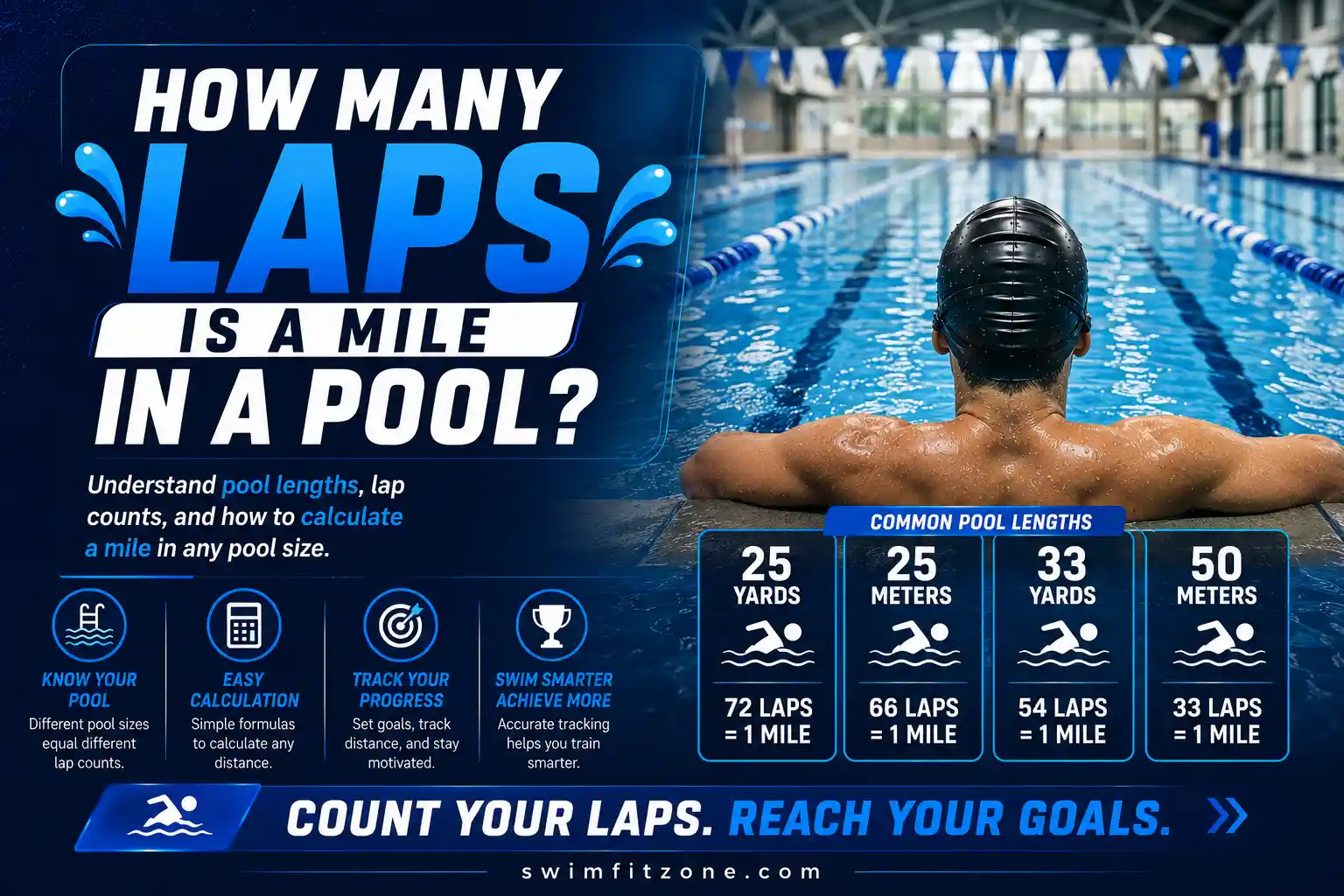
The answer depends on the length of the pool. There is no single number that works for every swimming pool because pools are built in different sizes.
Most swimmers in the United States use one of these pools.
- 25 yard pool
- 25 meter pool
- 50 meter Olympic pool
The meaning of the word lap also creates confusion. Some swimmers use lap to mean one length of the pool. Others use it to mean swimming to the other end and back again.
Before you start counting, find out how long your pool is and how your coach or pool defines a lap. Once you know those two things, measuring your swimming distance becomes much easier.
If you are new to swimming, do not worry about remembering every number right away. Learn your pool length first. Then decide whether you want to swim a true mile or a swimming mile. After that, tracking your distance becomes simple. Learning more about basic swimming skills can also help you feel more confident in the pool.
How Many Laps Is a Mile in a 25 Yard Pool?

A 25 yard pool is the most common pool size in the United States. You will find these pools at schools, fitness centers, YMCAs, and community pools.
A true mile is 1,760 yards. Since each length is 25 yards, you need just over 70 lengths to complete one true mile.
Many swimmers also talk about a swimming mile. This is 1,650 yards instead of 1,760 yards. In a 25 yard pool, that equals 66 lengths.
If your goal is general fitness, many people simply round the distance to make counting easier during a workout.
Always check your training plan before you begin. Some workouts are based on a true mile, while others follow the competitive swimming mile. Most swimmers complete these workouts using freestyle swimming because it is the fastest and most efficient stroke for longer distances.
How Many Laps Is a Mile in a 25 Meter Pool?
Many countries use 25 meter pools for training and competitions. Some larger aquatic centers in the United States also have them.
Since a meter is longer than a yard, you need fewer lengths to complete the same distance. A true mile takes just over 64 lengths in a 25 meter pool. If your workout is written in meters, follow those distances instead of converting everything into yards. This makes your training easier to follow and helps you compare your progress over time.
How Many Laps Is a Mile in a 50 Meter Olympic Pool?
Olympic swimming pools are 50 meters long.
Because each length is longer, you complete fewer lengths to swim the same total distance.
Swimming in a 50 meter pool also feels different. You spend more time swimming before each turn, which means you rely more on your endurance and less on pushing off the wall.
Many swimmers preparing for open water races enjoy training in long course pools because they are closer to race conditions.
Why Different Websites Give Different Answers?
If you searched this question online, you probably noticed that websites often give different numbers.
There are three main reasons for this.
- They may be talking about different pool sizes.
- They may be using a true mile or a swimming mile.
- They may define a lap differently.
This is why one website can be correct while another gives a different answer. Once you know which type of pool and mile they are discussing, the numbers make sense.
Why Does the Number of Laps Change?
Swimming pools are not all built to the same length.
The shorter the pool, the more times you must turn to cover the same distance.
You may swim in a standard competition pool one day and a hotel or apartment pool the next. Even though your goal stays the same, the number of lengths changes because the pool is different.
Knowing your pool length before every workout helps you measure your swimming distance correctly.
Lap vs Length
A length means swimming from one end of the pool to the other.
A lap does not always mean the same thing.
Many coaches and competitive swimmers use lap to mean one length. Many recreational swimmers use lap to mean swimming down and back. This difference causes a lot of confusion. The easiest way to avoid mistakes is to follow distances written in yards or meters instead of relying only on the word lap.
True Mile vs Swimming Mile
- A true mile is the same distance used for running and walking. It equals 1,760 yards or 1,609 meters.
- A swimming mile is 1,650 yards. It has been used in American swimming competitions for many years.
- International competitions usually feature the 1,500 meter freestyle instead of a mile race.
- Knowing which distance your workout uses helps you train more accurately.
Why Is a Swimming Mile 1,650 Yards?
The swimming mile became popular because many American competitions were held in 25 yard pools. Swimming 66 lengths created a race that was close to one mile. Over time, this became the standard distance for the mile freestyle event in the United States. You can learn more about competitive swimming distances from U.S. Masters Swimming, which explains the difference between a true mile and the traditional 1,650 yard swimming mile.
If you compete in swimming, always follow the race distance listed by your coach or event organizer instead of assuming every mile is the same.
How to Calculate Laps in Any Pool
If your pool is not a standard size, you can calculate the distance yourself.
Simply divide the total distance you want to swim by the length of your pool.
This works for hotel pools, private pools, apartment pools, and backyard pools. Once you know this simple method, you can calculate almost any swim workout with confidence.
Is Swimming One Mile a Good Workout?

Yes. Swimming one mile is an excellent full body workout.
It strengthens your arms, shoulders, back, core, and legs while giving your joints a low impact form of exercise. If your goal is to improve overall fitness, swimming for weight loss and fitness offers even more benefits beyond distance training. It also helps improve heart and lung endurance over time. The CDC Physical Activity Guidelines also recognize swimming laps as a vigorous aerobic activity that supports overall health. Many fitness swimmers use one mile as a weekly goal because it is challenging without feeling overwhelming.
If your goal is weight loss, swimming one mile can also burn a good number of calories. The exact amount depends on your body weight, swimming stroke, and pace. For most recreational swimmers, one mile is enough to improve endurance and overall fitness. You do not need to swim farther unless you are training for a specific event.
Can Beginners Swim a Mile?
Yes. Most beginners can reach this goal with regular practice.
Do not expect to finish a mile during your first swim. Build your endurance one workout at a time. Many adults return to swimming after years away from the pool. If that sounds like you, focus on building confidence before worrying about speed. Breaking the mile into smaller sets makes the workout feel much easier and helps you maintain good technique.
If you are completely new to the pool, starting with swimming for beginners can help you build confidence before working toward your first mile.
How Long Does It Take to Swim a Mile?
Your swimming time depends on your experience, stroke, fitness level, and rest breaks.
Beginners may take close to an hour.
Experienced fitness swimmers usually finish much faster.
Freestyle is normally the quickest stroke for long distance swimming because it allows you to keep a smooth rhythm. Instead of comparing yourself with others, focus on improving your own time little by little. Following structured swimming workout routines can help you improve your pace and endurance over time.
How to Count Laps Without Losing Track

Many swimmers lose count during longer workouts.
One of the easiest ways to avoid this is to divide the mile into smaller goals.
You can also use a swim watch, waterproof lap counter, or simple markers like coins or rubber bands. One trick I often recommend is focusing on one small section of the workout at a time instead of thinking about the full mile. It keeps your mind focused and makes counting much easier.
Tips for Swimming Your First Mile

- Start at a comfortable pace.
- Focus on smooth strokes instead of swimming fast.
- Keep your breathing steady.
- Take short rest breaks if you need them.
- Drink water before and after your workout.
- Celebrate small improvements because every swim helps build endurance.
Every experienced swimmer started as a beginner. Your first mile does not need to be perfect. Finishing the distance at your own pace is something to be proud of.
A proper swimming warm up routine prepares your muscles and helps reduce fatigue during longer swims.
Common Mistakes to Avoid
- Avoid confusing laps with lengths.
- Know the size of your pool before you begin.
- Do not confuse a true mile with a swimming mile.
- Do not swim too fast at the beginning.
- Pay attention to good technique instead of distance alone.
- Remember that endurance takes time to build.
Do not worry if your first few workouts feel difficult. Every session helps you become more comfortable and confident in the water.
| Goal | What to Do |
|---|---|
| Know your distance | Check your pool length before swimming. |
| Build endurance | Increase your distance gradually. |
| Count correctly | Track lengths using a watch or simple markers. |
| Improve technique | Focus on smooth strokes and controlled breathing. |
Before You Start Your Swim
- Know your pool length.
- Decide whether you are swimming a true mile or a swimming mile.
- Count your lengths carefully.
- Swim at a steady pace.
- Focus on good technique.
Final Thoughts
Swimming your first mile is about more than reaching a number. It is about building confidence, improving your technique, and enjoying the progress you make with every workout. From my experience, swimmers who focus on steady improvement instead of speed stay motivated longer and enjoy swimming much more. Even if you need a few breaks during your first mile, you are still moving closer to your goal.
Now you know how many laps is a mile in a pool and why the answer changes from one pool to another. Start with the pool you have, count your distance carefully, and stay consistent with your training. Over time, your endurance will improve, your technique will become smoother, and swimming a mile will feel much easier than it did on your first day.

