



Introduction
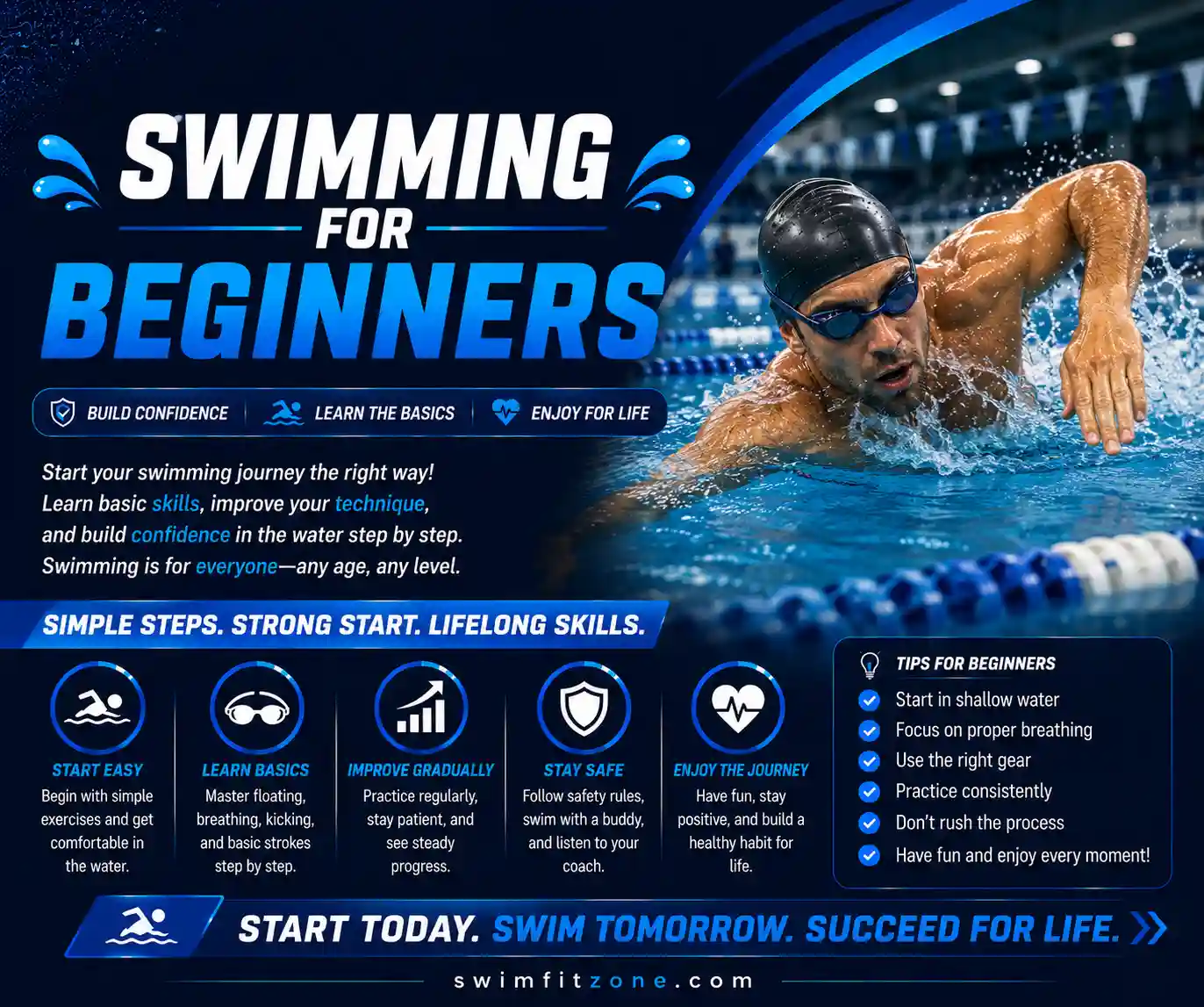
Starting swimming for beginners can feel exciting, but it can also be a little overwhelming. You may worry about sinking, breathing at the wrong time, or feeling embarrassed because other swimmers seem more experienced. Many adults even think they are too old to learn. The truth is that almost every confident swimmer started with the same fears. Swimming is a skill that anyone can learn with patience, practice, and the right guidance.
From my experience, beginners improve the fastest when they focus on simple skills before trying to swim long distances. I have seen many new swimmers spend too much energy fighting the water instead of learning how to relax in it. Once they became comfortable with breathing and floating, everything else became much easier. This guide follows that same step by step approach to help you build confidence, learn safely, and enjoy every swimming session.
Key Takeaways
- Start with water confidence before learning swimming strokes.
- Practice breathing, floating, and kicking before freestyle.
- Wear comfortable swim gear that fits properly.
- Focus on technique instead of speed.
- Practice two or three times each week for steady progress.
- Stay patient because every swimmer learns at a different pace.
What Equipment Do I Need to Swim?
You do not need expensive gear to start swimming. A few basic items are enough to help you stay comfortable and focus on learning.
Basic Swim Gear
Bring these essentials to every swim session:
- Swimsuit: Choose one that fits well and allows you to move freely.
- Swim goggles: Protect your eyes and help you see clearly underwater.
- Swim cap: Keeps hair out of your face and may be required at some pools.
- Towel: Helps you dry off after swimming.
Nice to Have Items
These items are helpful but optional:
- Flip flops for wet pool areas.
- A reusable water bottle.
- A kickboard for kicking practice.
- A mesh bag for carrying wet gear.
If you want help selecting the right equipment for your needs, read our guide on choosing the right swimming gear before making your first purchase.
How to Care for Your Swim Gear
Taking care of your equipment helps it last longer.
- Rinse your gear with clean water after every swim.
- Let everything air dry before storing it.
- Keep your goggles in a protective case.
- Avoid leaving wet gear inside your bag for long periods.
Good equipment makes practice more comfortable, but your progress comes from regular practice and good technique.
How to Fit Swim Cap, Goggles, and Swimsuit

Properly fitted gear helps you stay focused in the pool.
Your swimsuit should fit comfortably without restricting movement. Goggles should seal gently around your eyes without feeling too tight. Adjust the strap before entering the water to prevent leaks. A comfortable pair of swimming goggles makes it much easier to see clearly and practice with confidence.
If you wear a swim cap, tuck your hair inside so it stays out of your face. Spending a few minutes adjusting your gear before swimming can make your practice much more enjoyable.
Getting Acquainted With Your Pool
Knowing your pool helps you feel more confident before you begin.
Pool Length
Most swimming pools are 25 yards, 25 meters, or 50 meters long. As a beginner, do not worry about swimming long distances. Focus on learning the correct technique first.
Pool Depth
Always check the depth before entering the water. Start in the shallow end where you can stand comfortably. This is the best place to practice breathing, floating, and kicking.
Move into deeper water only after you feel confident with the basics and when a lifeguard or instructor is nearby.
Clocks
Many pools have large pace clocks used during swim workouts. Beginners do not need to use them right away. As your skills improve, they can help you measure your swimming and rest time.
Getting in and Out of the Water Safely
Swimming safely begins before you start your first lap. Learning a few basic safety habits before entering the water can help prevent common accidents and make every practice session more enjoyable. Before practicing on your own, take a few minutes to review basic water safety recommendations from trusted organizations.
Keep these simple rules in mind:
- Enter the pool using the steps or ladder unless instructed otherwise.
- Walk around the pool deck because wet surfaces are slippery.
- Check your surroundings before entering a lane.
- Rest at the pool wall whenever you feel tired.
- Leave the pool carefully using the steps or ladder.
If you are learning to swim, practice with a friend, instructor, or lifeguard nearby whenever possible. If you want more practical advice for staying safe in and around the pool, read our swimming safety tips guide.
Build Water Confidence First
Many beginners think they should swim across the pool on their first day. That is not necessary.
Instead, spend your first few sessions becoming comfortable in the water. If fear is stopping you from getting into the water, our guide on overcoming swimming anxiety shares practical ways to build confidence.

Try these simple exercises:
- Walk through the shallow end.
- Hold the pool wall.
- Put your face in the water.
- Blow bubbles.
- Stand up calmly after each attempt.
These exercises help you trust the water and reduce fear. Once you feel relaxed, learning swimming strokes becomes much easier.
If you prefer learning with professional guidance, swimming lessons for beginners can help you build confidence and correct technique much faster.
Proper Breathing
Breathing is one of the most important swimming skills.
Many beginners hold their breath underwater. This makes their body stiff and causes them to become tired quickly.

Practice this simple breathing pattern:
- Take a breath through your mouth before putting your face in the water.
- Slowly breathe out through your nose or mouth while underwater.
- Lift or turn your head to breathe in again.
- Repeat until the movement feels natural.
A good beginner exercise is blowing bubbles while standing in shallow water. Repeat the exercise until you feel relaxed.
Beginner Tip: If you feel out of breath after one lap, slow down. Relaxed breathing and smooth movements are more important than swimming fast.
Floating
Floating teaches you how to relax in the water.
Many beginners sink because they become tense. Relaxing your body makes floating easier, although some people naturally float more easily than others.

Practice in the shallow end:
- Take a deep breath.
- Lean back slowly.
- Keep your ears in the water.
- Look toward the ceiling.
- Stretch your arms and legs comfortably.
You can also practice front floating while holding the pool wall.
Do not worry if your legs sink slightly. This is normal and improves with practice.
Learn Swimming One Step at a Time
Trying to learn everything at once can make swimming feel difficult. Building your skills in the right order helps you improve faster.
Follow this simple learning path:
- Water confidence
- Proper breathing
- Floating
- Gliding
- Kicking
- Freestyle
- Backstroke
- Breaststroke
- Butterfly
Each skill prepares you for the next one. Taking your time now will help you become a stronger swimmer later.
Coordinating Limbs
Once you feel comfortable breathing and floating, begin combining your arm and leg movements.
Start by practicing flutter kicks while holding the pool wall or using a kickboard. Then add slow arm movements while keeping your breathing steady.
Remember these tips:
- Keep your movements smooth.
- Pull through the water instead of slapping the surface.
- Maintain a steady kicking rhythm.
- Stay relaxed.
Swimming depends more on timing than strength. Good coordination helps you swim farther while using less energy.
Kicking

A good kick keeps your body balanced and helps you move forward.
Practice these simple techniques:
- Kick from your hips instead of your knees.
- Keep your legs fairly straight with a slight bend.
- Point your toes.
- Make small and steady kicks.
Avoid these common mistakes.
- Kicking too hard.
- Bending your knees too much.
- Making large splashes.
- Keeping your legs stiff.
A kickboard is a useful training tool for practicing your kick without worrying about your arm movements.
Basic Swimming Strokes
Once you are comfortable with breathing, floating, and kicking, you are ready to learn the four basic swimming strokes. Each stroke teaches different skills and helps you become a more confident swimmer.
- Freestyle: The easiest and most popular stroke for beginners.
- Backstroke: Helps improve balance while keeping your face above the water.
- Breaststroke: Uses slower, controlled movements and is easy to practice at a relaxed pace.
- Butterfly: The most advanced stroke that requires strength, timing, and coordination.
Start with freestyle and build your confidence before learning the other strokes.
How to Swim Freestyle
Freestyle is usually the first stroke beginners learn because it is simple and efficient.

Follow these basic steps.
- Keep your body straight and relaxed.
- Look slightly downward instead of straight ahead.
- Move one arm forward while the other pulls through the water.
- Use small flutter kicks from your hips.
- Turn your head to the side to breathe.
Do not focus on speed. Smooth movements and steady breathing are much more important.
How to Swim Backstroke
Backstroke is performed while floating on your back.
Keep these tips in mind.
- Keep your ears in the water.
- Look upward instead of lifting your head.
- Move your arms in a steady, alternating rhythm.
- Use small flutter kicks to stay balanced.
A relaxed body position helps you move through the water with less effort.
How to Swim Breaststroke
Breaststroke is slower than freestyle and has a smooth, steady rhythm.
To practice breaststroke:
- Stretch both arms forward.
- Pull your hands toward your chest.
- Perform a frog kick.
- Glide before starting the next stroke.
The glide is one of the most important parts of breaststroke because it helps you save energy.
How to Swim Butterfly
Butterfly is the most challenging swimming stroke.
Both arms move together while your body creates a smooth wave motion. Your legs perform a dolphin kick instead of a flutter kick.
Most beginners should learn butterfly only after becoming comfortable with freestyle, backstroke, and breaststroke.
Which Swimming Stroke Is Best for Beginners?
Freestyle is the best choice for most beginners because it is easy to learn and helps build endurance.
Breaststroke is another good option if you prefer a slower pace and want more time to breathe during each stroke.
There is no perfect stroke for everyone. Try each one as your confidence grows and choose the stroke that feels most natural. If you want to compare different beginner friendly strokes, read our guide to the best swimming strokes for beginners.
Why Learn All Four Strokes?
Learning all four strokes helps you become a better swimmer.
Each stroke develops different skills.
- Freestyle improves endurance.
- Backstroke improves body position.
- Breaststroke builds coordination.
- Butterfly develops strength and timing.
Practicing different strokes also keeps your workouts interesting and works more muscle groups. As your skills improve, learning proper swimming stroke techniques will help you become a more efficient swimmer.
Swimming Technique Simplified
Good technique helps you swim farther while using less energy.
Reducing Drag
Drag is the resistance you feel while moving through the water.
Reduce drag by:
- Keeping your body straight.
- Looking slightly downward.
- Keeping your legs close to the surface.
- Avoiding unnecessary movements.
Small changes in body position can make swimming feel much easier.
Creating Propulsion
Propulsion is the force that moves you forward.
Create better propulsion by:
- Pulling the water behind you with your hands and forearms.
- Keeping your kick steady.
- Coordinating your breathing with your arm movements.
Swimming should feel smooth instead of rushed.
Understanding Interval Training
Interval training helps improve endurance without swimming continuously.
Beginners should learn proper technique first before adding structured workouts.
Timed Intervals
Swim for a set amount of time, then rest.
Example:
- Swim for 30 seconds.
- Rest for 30 seconds.
- Repeat several times.
Fixed Rest Intervals
Swim a chosen distance, then take the same amount of rest after every lap.
As your fitness improves, you can increase the swimming distance or shorten your rest periods.
Beginner Swimming Workouts to Get You Started
You do not need long workouts to improve. Short and consistent practice sessions are more effective.

Basic Workout
About 20 minutes.
- 5 minutes of breathing practice.
- 5 minutes of floating and kicking.
- 10 minutes of freestyle practice.
Intermediate Workout
About 40 minutes.
- Warm up.
- Freestyle practice.
- Backstroke and breaststroke practice.
- Easy interval training.
Advanced Workout
About 60 minutes.
- Longer freestyle swims.
- Practice all four strokes.
- Interval training.
- Cool down.
Once you are comfortable with these sessions, try these structured Swimming Workout Routines to continue improving.
Drill Summary
| Drill | Purpose | Recommended Time |
|---|---|---|
| Bubble Breathing | Improve breathing control | 5 minutes |
| Front Float | Build water confidence | 5 minutes |
| Flutter Kick | Improve leg movement | 5 to 10 minutes |
| Freestyle Practice | Learn basic stroke technique | 10 to 15 minutes |
How Often Should Beginners Swim?
Swimming two or three times each week is enough for most beginners to make steady progress.
Regular practice helps improve:
- Breathing.
- Body position.
- Endurance.
- Water confidence.
If you miss a workout, simply continue with your next practice. Consistency matters more than perfection.
Rest and Recovery Matter
Your body improves during recovery.
After each swim:
- Drink plenty of water.
- Eat a healthy meal.
- Stretch gently if needed.
- Get enough sleep.
Rest days allow your muscles to recover and prepare for the next practice session.
Common Mistakes Beginners Make
Every beginner makes mistakes. Learning from them will help you improve faster.
Avoid these common problems.
- Holding your breath underwater.
- Looking straight ahead while swimming.
- Kicking too hard.
- Bending your knees too much.
- Skipping your warm up.
- Trying to swim too fast.
- Practicing only once in a while.
Focus on learning good technique before trying to increase speed.
Everyone Learns at a Different Pace
Some people learn swimming in a few weeks, while others need several months.
Do not compare yourself with experienced swimmers.
Instead:
- Celebrate small improvements.
- Practice regularly.
- Focus on one skill at a time.
Every lesson brings you one step closer to becoming a confident swimmer.
What Is Proper Swimming Etiquette?

Good manners help everyone enjoy the pool.
Remember to:
- Walk instead of running.
- Choose the correct swimming lane.
- Let faster swimmers pass.
- Rest at the end of the lane instead of the middle.
- Follow the lifeguard’s instructions.
- Keep the pool clean.
Respecting other swimmers creates a safer and more enjoyable environment.
What Are the Features of a Competitive Swimming Pool?
Competitive pools are built for training and swimming events.
Most have:
- Clearly marked lanes.
- Lane ropes.
- Starting blocks.
- Depth markers.
- Distance markings.
You do not need to train in a competitive pool to become a good swimmer. Any safe pool is a great place to practice.
Why Swimming Is the Best Exercise for You
Swimming is one of the few exercises that works your entire body while putting very little stress on your joints. Research shows that regular swimming can improve heart health, muscle strength, and overall fitness while placing less stress on the joints.
Regular swimming can help you:
- Improve heart health.
- Build muscle strength.
- Increase endurance.
- Improve flexibility.
- Burn calories.
- Reduce stress.
Because the water supports your body, swimming is suitable for children, adults, older adults, and people returning to exercise after a break. If you would like to learn more about how swimming supports your heart and overall fitness, read our guide on cardiovascular benefits of swimming.
What’s Next After Learning the Basics?
Once you feel comfortable swimming several pool lengths, you can start building new skills.
Your next goals may include:
- Improving freestyle technique.
- Learning all four competitive strokes.
- Swimming longer distances.
- Joining swim lessons.
- Following structured swim workouts.
Keep practicing the basics because strong fundamentals make every new skill easier to learn.
Final Thoughts
Learning swimming for beginners is about much more than reaching the other side of the pool. It is about building confidence, feeling safe in the water, and improving one skill at a time. Some days you will make quick progress, while other days may feel challenging. That is a normal part of learning. Stay patient, practice regularly, and celebrate every small improvement because each one brings you closer to your goal.
From my experience, the swimmers who improve the most are not always the strongest or the fastest. They are the ones who stay consistent and never stop practicing the basics. Good breathing, relaxed body position, and proper technique will always take you further than rushing through your lessons. Keep enjoying the process, trust your progress, and remember that swimming is a lifelong skill that supports your health, confidence, and safety wherever you go.

