



Introduction
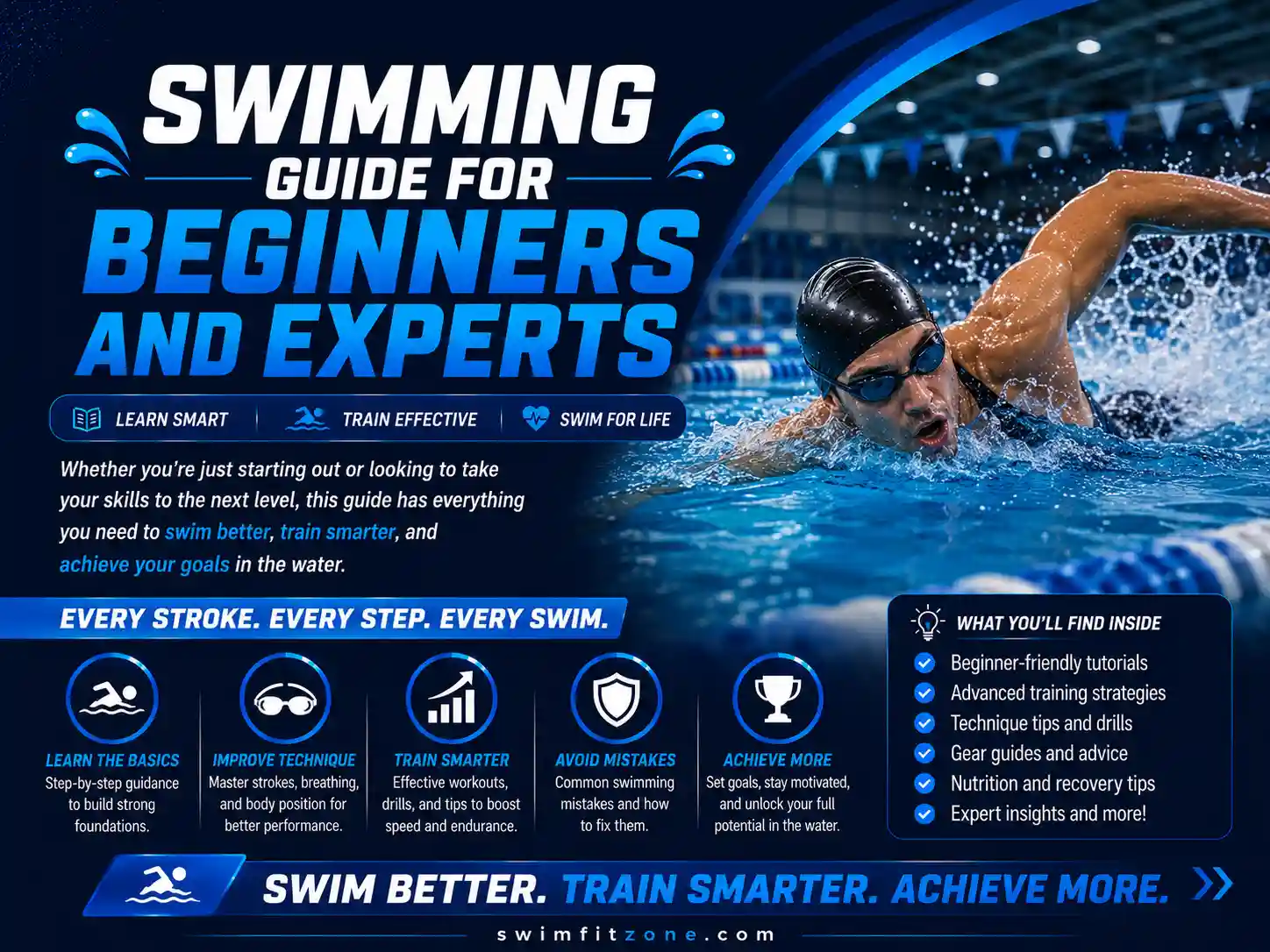
Many people want to learn swimming but feel unsure about taking the first step. Some worry about sinking, while others struggle with breathing or lack confidence in deep water. Even experienced swimmers can feel stuck when their speed, endurance, or technique stops improving. If you have faced any of these challenges, this Swimming Guide for Beginners & Experts will help you move forward with simple, practical advice that works for every skill level.
While researching swimming techniques and creating educational content for SwimFitZone, I noticed one thing again and again. The swimmers who improve the most are not always the strongest or the fastest. They are the ones who build a solid foundation, practice consistently, and stay patient. This guide follows the same approach. It takes you from the basics of water confidence to improving your swimming technique with clear steps that are easy to follow.
Key Takeaways
- Swimming is a life skill that improves fitness, confidence, and water safety.
- Start with breathing, floating, and body position before learning strokes.
- Freestyle is the best first stroke for most beginners.
- Good technique helps you swim farther with less effort.
- Practice regularly and improve one skill at a time.
- Experienced swimmers should focus on efficiency instead of only swimming faster.
What Is Swimming?

Swimming is the skill of moving through water by using your arms, legs, and breathing together. It can be enjoyed for fitness, recreation, relaxation, water safety, or competition.
Unlike many other activities, swimming trains nearly every major muscle group while placing very little stress on your joints. That makes it a great choice for children, adults, older adults, and anyone looking for a low impact workout.
No matter your goal, learning the correct technique from the beginning will make swimming easier and more enjoyable. If you want to build a strong foundation, learning the proper swimming stroke techniques will help you develop better form, improve efficiency, and avoid common beginner mistakes.
Why Should You Learn Swimming?
Swimming offers benefits that go beyond exercise.
Improves overall fitness
Swimming strengthens your:
- Arms
- Shoulders
- Back
- Core
- Legs
It also improves your heart and lung health.
Builds endurance
As your breathing and technique improve, you will be able to swim longer without getting tired.
Protects your joints
Water supports your body weight, making swimming easier on your knees, hips, and ankles than many land based exercises.
Reduces stress
The steady rhythm of swimming helps many people relax and clear their minds after a busy day.
Improves water safety
Learning to swim helps you stay safer around pools, lakes, rivers, and beaches. It is one of the most valuable life skills you can develop.
Choose Your Swimming Goal
Everyone enters the water for a different reason. Knowing your goal helps you practice with a clear purpose.
You may want to:
- Learn basic water safety.
- Build confidence in the water.
- Improve your fitness.
- Lose weight.
- Swim longer distances.
- Learn all four swimming strokes.
- Prepare for competitions.
- Enjoy swimming as a lifelong hobby.
Your goal may change as your skills improve, and that is completely normal.
Swimming Levels
Knowing your current level helps you focus on the right skills.
| Level | Main Focus |
|---|---|
| Beginner | Water confidence and basic skills |
| Intermediate | Better technique and endurance |
| Advanced | Stroke efficiency and speed |
| Expert | Performance and race preparation |
Avoid rushing through the learning process. Strong basics make advanced skills much easier to master.
Essential Swimming Gear

You do not need expensive equipment to begin swimming.
Start with the essentials.
| Gear | Purpose |
| Swimsuit | Comfortable movement |
| Swimming goggles | Clear vision and eye protection |
| Swim cap | Keeps hair secure and reduces drag |
| Kickboard | Improves kicking practice |
| Pull buoy | Builds upper body technique |
| Swim fins | Develops stronger kicks |
| Water bottle | Keeps you hydrated |
Buy additional training equipment only after becoming comfortable with the basics. If you’re buying equipment for the first time, start with the best swimming gear for beginners before investing in advanced accessories.
Water Safety Before You Start

Safety should always come first. Following basic swimming safety tips helps reduce risks and makes every practice session more enjoyable.
Before entering the water:
- Choose a supervised swimming area.
- Never swim alone if you are a beginner.
- Check the water depth.
- Walk around the pool instead of running.
- Stay within your skill level.
- Listen to lifeguards and instructors.
- Take breaks when needed.
- Drink enough water during practice.
If you plan to swim in open water, always check the weather and water conditions before entering.
If you feel nervous about getting into the water, learning how to overcome a fear of water can help you build confidence.
Understand Your Swimming Pool
Taking a few minutes to understand the pool layout can make your first session more comfortable.
Look for:
- The shallow end
- The deep end
- Lane ropes
- Pool depth markings
- Entry and exit points
- Lifeguard stations
If you are unsure about anything, ask a lifeguard or instructor before getting into the water.
Beginner Swimming Skills Every Swimmer Should Learn
A strong foundation is the key to becoming a confident swimmer.
Before learning swimming strokes, master these basic skills. If you want extra practice ideas, these basic swimming skills can help reinforce the fundamentals before moving on to swimming strokes.
Once you feel comfortable with these basics, practicing swim stroke lessons can help you develop proper technique from the beginning.
Build Water Confidence
Start in shallow water where you can comfortably stand.
Practice these simple exercises:
- Wet your face.
- Put your ears under the water.
- Place your face in the water for a few seconds.
- Open your eyes while wearing goggles.
Repeat until you feel relaxed.
Confidence grows with every practice session.
Learn Proper Breathing
Good breathing makes swimming feel easier and more natural.
Practice this simple routine:
- Take a deep breath through your mouth.
- Place your face in the water.
- Blow bubbles through your nose or mouth.
- Turn your head just enough to take another breath.
Avoid these common mistakes:
- Holding your breath
- Lifting your whole head
- Taking short, quick breaths
- Panicking after missing one breath
Stay calm and maintain a steady breathing rhythm.
Learn How to Float
Floating teaches you to trust the water.
Many beginners believe they sink because of their body weight. In most cases, poor body position is the real reason.
To practice floating:
- Stand in shallow water.
- Take a deep breath.
- Stretch your arms and legs.
- Relax your body.
- Let the water support you.
Helpful tips:
- Keep your body long.
- Stay relaxed.
- Keep your lungs full of air.
- Practice often.
The more relaxed you become, the easier floating feels.
Learn to Tread Water

Treading water helps you stay in one place without touching the bottom.
This is an important safety skill, especially in deeper water.
Focus on these steps:
- Keep your head above the water.
- Move your hands in small circles.
- Keep your legs moving.
- Breathe slowly and steadily.
Start with short practice sessions and gradually increase your time.
Practice Flutter Kicks
Flutter kicks help move you forward while keeping your body balanced.
Practice with a kickboard. Adding a few swimming stroke drills to your routine can also strengthen your kick and improve coordination.
Focus on these points:
- Kick from your hips.
- Keep your legs relaxed.
- Make small, quick kicks.
- Point your toes.
- Avoid bending your knees too much.
Small kicks are much more efficient than large splashes.
Coordinate Your Arm Movements
Your arms provide most of your forward movement.
Practice these steps:
- Reach forward.
- Pull the water toward your hips.
- Recover your arm smoothly.
- Stay relaxed.
Smooth movements are more effective than fast, rushed movements.
Maintain a Good Body Position
Good body position helps you move through the water with less effort.
Imagine your body forming one straight line from your head to your feet.
Try to avoid:
- Looking too far forward.
- Letting your hips sink.
- Bending your body too much.
A streamlined position helps you swim farther while using less energy.
If you want to refine your form even more, these swimming technique improvement tips can help correct common mistakes.
Learn the Four Main Swimming Strokes
Once you feel comfortable with the basic skills, start learning the four main swimming strokes. Learn one stroke at a time and focus on good technique before increasing your speed.

Freestyle
Freestyle is the easiest stroke for most beginners. It is efficient, fast, and commonly used for fitness and lap swimming.
Focus on these points:
- Keep your body straight.
- Reach forward with each arm.
- Pull the water toward your hips.
- Use steady flutter kicks.
- Turn your head to breathe without lifting it too high.
Freestyle is the best choice for building endurance and improving overall swimming fitness. Learning proper freestyle swimming tips can help you become more efficient and reduce unnecessary effort.
Backstroke
Backstroke is performed while lying on your back. It helps improve balance, coordination, and body awareness.
Remember to:
- Keep your ears close to the water.
- Look straight up.
- Rotate your shoulders naturally.
- Use relaxed flutter kicks.
- Move your arms in smooth circles.
Many swimmers use backstroke as a recovery stroke because breathing feels more comfortable. If you want to improve your form even further, learning the right backstroke techniques can help you build better balance, coordination, and stroke timing.
Breaststroke
Breaststroke is slower than freestyle, but many beginners find it easier because they lift their head naturally during each stroke.
Practice these skills:
- Pull your arms together.
- Glide after every stroke.
- Kick with both legs at the same time.
- Match your breathing with your arm movement.
Breaststroke is a great choice for relaxed swimming and improving control.
Butterfly
Butterfly is the most technically demanding competitive swimming stroke. It requires strength, coordination, and good timing.
Before learning butterfly, make sure you are comfortable with the other three strokes.
Focus on:
- Strong dolphin kicks.
- Smooth body movement.
- Powerful arm pulls.
- Controlled breathing.
Take your time. Good technique is much more important than speed. Before trying longer butterfly sessions, review these butterfly stroke tips to build proper timing and coordination.
Which Stroke Should You Learn First?
The best learning order is:
| Stroke | Difficulty | Best For |
|---|---|---|
| Freestyle | Easy | Beginners |
| Backstroke | Easy to Moderate | Body balance |
| Breaststroke | Moderate | Comfortable swimming |
| Butterfly | Advanced | Competitive swimming |
Learning in this order helps you build confidence while improving one skill at a time.
If you’re still deciding which stroke to learn first, our guide to the best swimming strokes for beginners can help you choose the right one based on your goals and current skill level.
Beginner and Expert Swimming
Every swimmer has different goals. Beginners focus on learning the basics, while experienced swimmers work on improving efficiency.
| Beginner | Expert |
| Learn breathing | Improve breathing rhythm |
| Learn floating | Improve body position |
| Swim short distances | Build endurance |
| Practice basic strokes | Refine stroke technique |
| Build confidence | Increase efficiency and speed |
No matter your level, strong fundamentals remain important.
Tips to Improve Your Swimming Technique
Improving your technique helps you swim farther while using less energy. Once your movements become smoother, you can start building swimming endurance to maintain good form over longer distances.

Keep a Streamlined Position
A streamlined body creates less resistance in the water.
Try to:
- Keep your head in line with your body.
- Keep your hips close to the surface.
- Stretch forward with each stroke.
Improve Your Breathing
Good breathing helps you stay relaxed.
Practice these habits:
- Exhale underwater.
- Take quick, controlled breaths.
- Avoid holding your breath.
Focus on Quality Instead of Speed
Many swimmers try to swim faster before improving their technique.
Instead:
- Swim slowly.
- Focus on smooth movements.
- Correct one mistake at a time.
Small improvements lead to better results over time.
Common Swimming Mistakes
Avoiding common mistakes helps you improve faster.
Beginner Mistakes
- Holding your breath.
- Looking forward instead of down.
- Kicking too hard.
- Skipping basic drills.
- Rushing through practice.
Experienced Swimmer Mistakes
- Ignoring technique.
- Swimming every session at the same pace.
- Poor breathing rhythm.
- Skipping recovery.
- Overtraining.
Learning from these mistakes helps you continue improving.
Basic Swimming Pool Etiquette
Good pool etiquette makes swimming safer and more enjoyable for everyone.
Follow these simple rules:
- Shower before entering if required.
- Swim in the correct lane.
- Let faster swimmers pass.
- Avoid blocking the pool wall.
- Respect other swimmers.
- Follow instructions from lifeguards.
These small habits create a better experience for everyone in the pool.
Pool Swimming and Open Water Swimming
Both types of swimming offer unique experiences.
| Pool Swimming | Open Water Swimming |
| Calm water | Waves and currents |
| Clear lane lines | No lane markers |
| Controlled environment | Changing conditions |
| Easier for beginners | Better for experienced swimmers |

If you are new to open water swimming:
- Never swim alone.
- Wear a bright swim buoy if needed.
- Check weather and water conditions.
- Stay close to the shore.
- Tell someone where you are swimming.
Before your first outdoor swim, reading a beginner’s guide to outdoor swimming can help you understand additional safety tips and what to expect.
Swimming Skills Checklist
Use this checklist to measure your progress.
Beginner
- Feel comfortable in the water.
- Float confidently.
- Control your breathing.
- Swim 25 meters.
Intermediate
- Swim 100 meters without stopping.
- Learn freestyle and backstroke.
- Improve body position.
- Build endurance.
Advanced
- Swim all four strokes.
- Improve stroke efficiency.
- Build speed.
- Swim longer distances comfortably.
| Drill | Purpose | Best For |
|---|---|---|
| Bubble Breathing | Improve breathing control | Beginners |
| Floating Practice | Build water confidence | Beginners |
| Kickboard Drill | Strengthen flutter kicks | All Levels |
| Single Arm Freestyle | Improve arm technique | Intermediate |
| Catch Up Drill | Improve stroke timing | Intermediate and Advanced |

Final Thoughts
Every swimmer starts somewhere. Some people need time to feel comfortable in the water, while others want to improve skills they have practiced for years. Progress does not happen overnight, but every lesson, every lap, and every small improvement brings you closer to becoming a stronger and more confident swimmer. Stay patient, practice regularly, and focus on doing the basics well before moving to advanced techniques.
While researching swimming techniques and creating educational resources for SwimFitZone, I noticed one thing again and again. Swimmers who make steady progress focus on building a strong foundation, improving their technique, and practicing consistently. Whether your goal is to swim safely, stay fit, or eventually begin training for swimming competitions, mastering the fundamentals will help you improve with confidence for years to come.

