


Introduction
If you have ever struggled with weak arms, sloppy strokes, or shoulder pain while swimming, you are not alone. I have spent years testing different tools to fix these exact problems, and the one that consistently makes a difference is swim paddles. They push your muscles harder, highlight mistakes in your stroke, and help you swim more efficiently but only if you use them correctly. Many swimmers pick them up, use the wrong size, or overdo it and end up frustrated or injured.

From personal experience, using swim paddles changed how I feel in the water. My catch and pull became stronger, my stroke became smoother, and I noticed real speed improvements in just a few weeks. What this really means is that the right paddle, at the right time, can be a game-changer for swimmers at any level from beginners trying to fix form to triathletes building endurance.
Why Use Swim Paddles
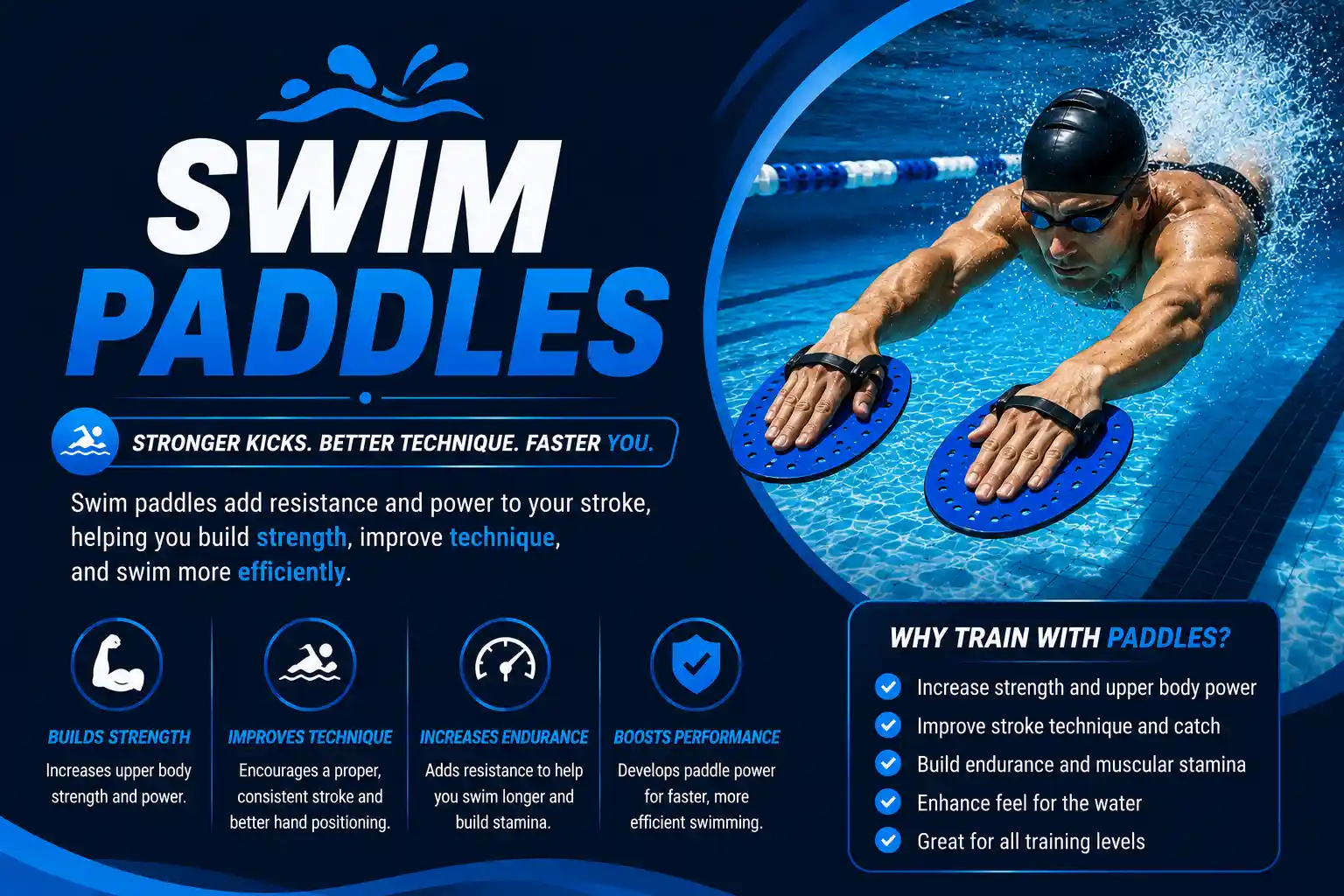
Swim paddles increase water resistance. This forces your muscles to work harder. You get stronger arms, shoulders, and back muscles.
They also help you feel your stroke better. When your hand moves incorrectly in water, paddles make it obvious. This helps you fix mistakes faster.
Here is what swim paddles can do:
- Build arm and shoulder strength
- Improve stroke technique
- Make your swim workouts more effective
Additional Benefits of Swim Paddles
Swim paddles do more than build strength. They encourage a high elbow catch and proper hand entry. You can target specific muscles like lats, traps, and shoulders. This improves your overall stroke mechanics.
They also make you aware of mistakes quickly helping you refine your stroke efficiently.
Types of Swim Paddles

Not all paddles are the same. Choosing the right type matters:
- Flat Paddles. Simple and easy. Good for beginners.
- Contoured Paddles. Curve fits the hand. Helps with catch and pull.
- Fingertip Paddles. Small paddles for high stroke feel. Great for technique drills.
- Strapless Paddles. Free on the hand. Good for advanced swimmers.
- Anti-Paddles and Gloves. Adds resistance without big paddles. Works for drills and endurance.
Each type fits a different goal. Beginners usually start with flat or small paddles. Competitive swimmers may use contoured or strapless paddles.
How to Choose the Right Size
Paddle size affects your stroke and shoulders. Too big can strain your shoulder. Too small might not help.
Simple guide:
- Your hand should fill most of the paddle surface.
- Fingers should touch the top edge.
- Check for comfort before training.
Tip. Try a smaller size if you are unsure. You can always move up later.
Using Swim Paddles Safely

Paddles can hurt shoulders if used wrong. Here is how to avoid injury:
- Warm up arms and shoulders before use.
- Keep elbows high during the catch.
- Do not overuse paddles. Limit to a few sessions a week.
- Stop if you feel shoulder pain.
Pro tip: Mix paddle drills with normal swimming. This balances strength and technique.
Sprint Training and Limitations
Paddles build strength and improve technique. But they do not always help with sprint speed. Too large paddles can slow your stroke rate.
What this really means is paddles are best for efficiency and endurance, not for high turnover sprint training.
Technique Focus Catch and Pull
Paddles highlight your catch and pull phases. This is when your hand enters the water and pulls backward.
If your elbow drops or your hand moves wrong, paddles make it obvious. Use this feedback to adjust your stroke. Your hand should enter smoothly and pull straight back.
Stroke-Specific Advice
Not all strokes need the same paddle use:
- Freestyle: Most effective for technique and strength.
- Backstroke: Helps with rotation and proper hand entry.
- Butterfly: Use small paddles for technique, bigger ones for strength.
- Breaststroke: Light paddles only. Avoid heavy paddles to protect shoulders.
Pull Buoy Recommendation

Using a pull buoy with paddles helps isolate the arms. It keeps your legs afloat and reduces body drag. This makes your stroke cleaner and more effective.
Paddle Drills for Different Strokes
Here is how you can use paddles in each stroke:
Freestyle
- Focus on your catch and pull.
- Keep a steady tempo.
- Use small paddles at first.
Backstroke
- Keep hand entry smooth.
- Use paddles to feel proper rotation.
Butterfly
- Helps strengthen the pull phase.
- Use small paddles for technique, bigger for strength.
Breaststroke
- Not always needed, but small paddles can improve pull technique.
Weekly Training with Swim Paddles
Here is a sample plan:
| Day | Drill / Focus | Paddle Size |
|---|---|---|
| 1 | Freestyle technique | Small |
| 2 | Mixed stroke drills | Small |
| 3 | Rest | – |
| 4 | Mixed stroke with paddles | Medium |
| 5 | Strength focus | Large |
Adjust time and size for your level. Beginners need shorter sessions. Advanced swimmers can use bigger paddles and more sets.

Training Limits and Progression
Do not use paddles for every session. Experts suggest 10 to 25 percent of total yardage.
Start with smaller paddles or fewer laps. Increase gradually as your strength and technique improve. This prevents overuse injuries and improves results safely.
Simple Progressive Paddle Plan:
- Week 1 to 2: Small paddles, focus on technique, 2 sessions per week.
- Week 3 to 4: Medium paddles, add more laps, maintain good form.
- Week 5 to 6: Larger paddles for strength, 3 sessions per week, mix with normal swimming.
Paddle Versus Other Gear
Some people compare paddles with resistance gloves or fins. Here is the difference:
- Paddles: Best for arm strength and stroke feel.
- Gloves: Adds resistance without hurting the shoulder much.
- Fins: Focus on legs and speed, not arms.
Other Tools to Use Alongside Paddles
Paddles work well with other training aids:
- Resistance bands for dryland shoulder strength.
- Drag chutes for extra water resistance.
- Fins to improve kick while paddling focuses on arms.
Common Mistakes
- Using paddles every session.
- Choosing too large a paddle.
- Ignoring shoulder pain.
- Poor stroke technique.
Fix these and you will train smarter, not harder.
Key Takeaways
- Choose the right paddle size to avoid shoulder strain
- Use paddles 10 to 25 percent of total swim yardage
- Focus on catch and pull technique with every session
- Pair paddles with a pull buoy for cleaner strokes
- Gradually increase paddle size or session length for safe progression

Final Thoughts
After years of training with different paddles and observing my own results, I can confidently say that swim paddles are one of the best tools for improving technique and strength. They are not just equipment; they are extensions of your body in the water. Using them correctly can prevent injuries and help you train more efficiently.
From personal experience, combining paddle drills with a pull buoy and structured weekly sessions made a noticeable difference in my strokes and endurance. If you use them strategically, listen to your body, and follow a progression plan, swim paddles can transform your swimming and help you reach your goals faster.

