



Introduction
If you’re a competitive swimmer, you know how frustrating it is when your swim cap slips off mid-race or feels tight enough to distract you. I’ve been there trying to fix a cap before a sprint start, losing precious seconds. That’s why choosing the right Swim Caps for Competitions isn’t just a gear decision it can make a real difference in your performance and confidence in the water.

Through years of training and coaching swimmers of all levels, I’ve tested dozens of caps. I’ve seen firsthand how the wrong fit, hair type, or material can slow a swimmer down while the right cap can give that edge during starts, turns, and sprints. This guide will help you pick a cap that fits, protects your hair, and keeps you legal under competition rules. Choosing the right swim cap is only one part of race-day preparation. A structured training for swimming competitions plan also gives you time to test your gear, make adjustments, and build confidence before the starting signal.
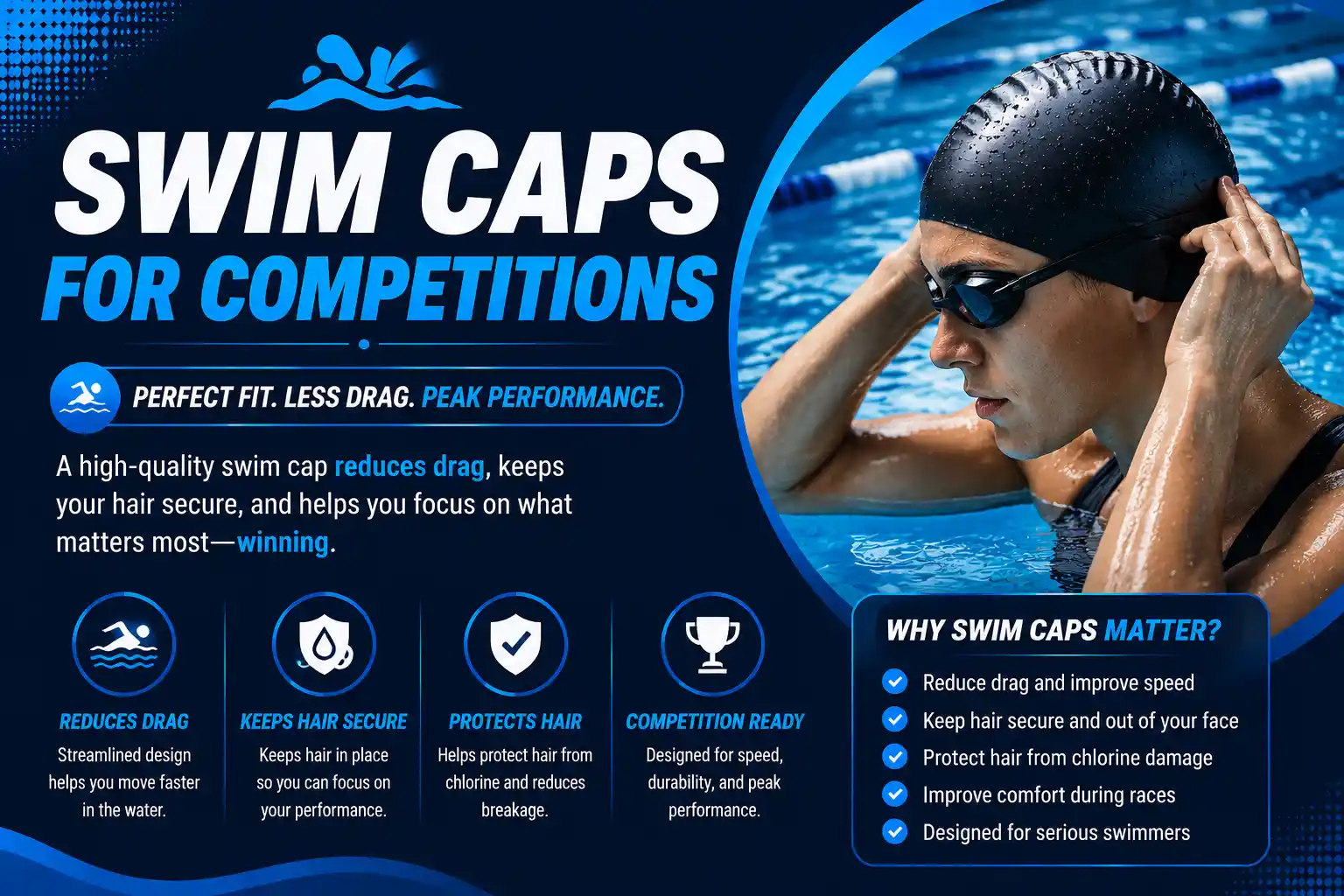
Why Swim Caps Matter
Swim caps help reduce water drag. Less drag means you move faster. They also keep your hair out of your face and hold your goggles in place.
Not all caps are made the same. Some work better for sprints, others for long distances. Some are better for thick or long hair. Choosing the right cap matters.
Competitive swimmers also care about following rules. Using the wrong cap in a meet can affect your ability to compete legally.
Types of Swim Caps

Silicone Caps
Silicone caps are soft and stretch well. They last longer than latex. They are gentle on hair and provide a smooth surface to cut through water. Most competitive swimmers use silicone for races.
Latex Caps
Latex is thin and lightweight. They create less drag but can tear more easily. Some pros prefer latex for short sprints. If you have thick hair, latex alone might feel tight.
Lycra and Fabric Caps
These are comfortable and easy to wear. They work for training and warm-ups but are usually not preferred in official competitions.
Dome and Specialty Racing Caps
Dome caps are molded to fit the head perfectly. They reduce drag and stay on during dives and turns. Specialty caps like double caps combine latex and silicone for a tighter fit. This is popular in sprint races.
Competition Rules for Swim Caps
Most meets check that your cap fits well, does not have raised designs, and does not interfere with judging or timing. FINA and USA Swimming allow silicone, latex, and approved specialty caps. The rules mainly focus on cap size, logo placement, and markings, not the material itself. Always confirm before race day to avoid disqualification.
Choosing the Right Swim Cap
Picking the right cap depends on hair type, head size, and the type of race.
- Long hair should be tied in a bun or ponytail. Make sure the cap stretches over it without tearing.
- Caps come in small, medium, and large. A snug fit helps reduce drag. Too tight can hurt. Too loose can slip off.
- Sprints need thin, tight caps for speed. Long-distance races benefit from comfort and durability.
- Make sure your cap meets competition rules. Avoid non-approved logos or markings.
Different swimming competitions may have their own equipment requirements, so always check the event rules before race day.
Choosing the wrong cap can affect race times, comfort, and even your ability to compete legally. If you’re comparing different cap styles before buying, this comparison of silicone, latex, and other swimming cap types explains the advantages of each option.
How Swim Caps Reduce Drag
Swim caps smooth out bumps and hair so water flows over your head with less resistance. A snug, smooth cap can shave seconds off your time, especially in sprint events. This is why choosing the right fit and material is important for performance.
While a swim cap helps reduce drag, improving your body position through swimming technique improvement can make an even bigger difference in your overall speed.
Key Takeaways
- Choose a cap that fits snugly but isn’t painful.
- Long hair may need extra-large silicone or double caps.
- Material affects drag: silicone is durable, latex is lighter.
- Check competition rules before racing.
- Proper prep and technique can prevent cap slippage.
Drill Summary Table
| Cap Type | Best For | Pros | Cons |
|---|---|---|---|
| Silicone | Most races | Durable, good coverage | Slightly heavier than latex |
| Latex | Sprint races | Light, low drag | Tears easily |
| Dome | Elite meets | Tight fit, low drag | Higher price |
| Lycra | Training | Comfortable | Not ideal for racing |
Race Day Tips
Even the best cap can fail if you don’t wear it right.

- Some swimmers wear a latex cap under a silicone cap to keep it on tight and reduce drag.
- Wet hair first, use light conditioner, and smooth it down before putting on the cap.
- Start from the forehead, pull over the crown, and tuck the edges. Avoid pulling too hard.
Pro swimmers follow these tips to keep the cap on, maintain hair safety, and maximize speed.
Before putting your cap on, complete a short swimming warm-up routine to prepare your muscles and reduce pre-race stiffness.
Pro Swimmer Practices

Many elite sprinters wear a latex cap under a silicone cap to reduce drag and keep the cap in place. Swimmers with long or thick hair often choose extra-large silicone caps to cover their buns or ponytails comfortably.
Hair Protection Tips
Wet hair before putting on a cap to reduce friction. Use a light conditioner to smooth hair and prevent tearing. Make sure hair is secured in a bun or ponytail for a tight, comfortable fit.

Product Recommendations

Here are some picks to guide your choice:
- Best overall: Silicone dome cap. Fits most heads, low drag, lasts long.
- Best for long hair: Extra-large silicone cap. Stretches over buns and thick hair.
- Best for sprints: Thin latex cap. Minimal drag, light feel.
- Best for distance: Soft silicone cap. Comfortable over long races.
The right cap depends on your hair, head size, and event. For the best race-day setup, pair your cap with properly fitted swimming goggles to improve comfort, visibility, and focus in the pool.
Common Mistakes
Swimmers often make simple mistakes that affect performance:
- Wearing a cap too loose or too tight
- Using non-approved caps in meets
- Not prepping hair, which can make the cap slip
- Ignoring material choice for event type
Avoid these, and your cap will help you swim faster.
Final Thoughts
Over the years, I’ve helped swimmers fix cap issues during meets and watched how small adjustments, like using a double cap or selecting the right size for long hair, can shave off seconds. From experience, the right Swim Caps for Competitions is as important as your goggles or swimsuit it’s a tool that keeps you fast and focused.
Trusting your gear comes from testing and knowledge. I’ve spent countless hours comparing materials, fits, and styles, and the insights here reflect real-world performance. Pick a cap that fits your head, works with your hair, and meets competition rules, and you’ll notice the difference in every race.

