



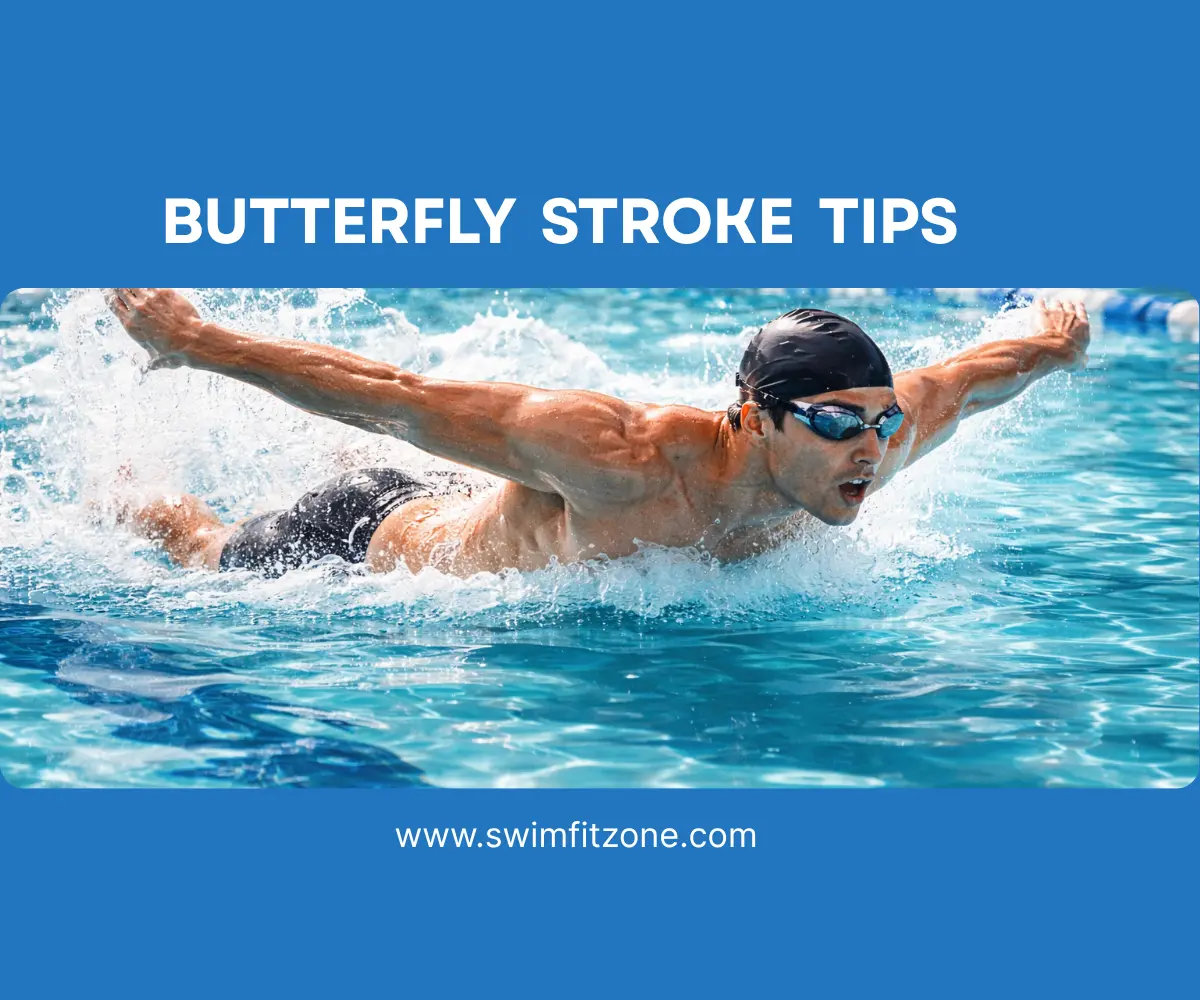
Swimming butterfly can feel almost impossible at first. Many swimmers struggle with timing, breathing, and keeping their hips high in the water. I’ve spent years training and coaching butterfly, and I know how frustrating it is to see fatigue set in after just a few strokes, or to feel like no matter how hard you try, your stroke isn’t smooth.
That’s why I created this guide of Butterfly Stroke Tips. I want to share not just the technique, but the insights I’ve learned from my own experience and from coaching swimmers of all levels. By following these tips, you can fix common mistakes, build endurance, and swim butterfly with confidence and efficiency.

What is Butterfly Stroke
Butterfly is one of the four main swimming strokes. It has a unique wave-like motion. Both arms move together. Your legs kick like a dolphin. It is fast but tiring.
Learning butterfly improves strength, endurance, and coordination.
Butterfly in the Water: Body Position

Your body should stay flat and straight. Hips must stay high in the water. Keep your head in line with your spine.
- Keep shoulders relaxed
- Core should stay tight
- Avoid lifting your head too much
This reduces drag and makes swimming easier.
Timing and Rhythm
Timing is key in butterfly. Arms and legs must work together.
- Two kicks per arm cycle
- Breathe once every two strokes or as needed
- Keep a smooth rhythm, not jerky
Good timing saves energy and helps speed.
Arm Action

Arms pull water strongly. The movement has four parts:
- Entry : hands enter water shoulder-width apart
- Down sweep : push water downward
- In sweep : pull hands under chest
- Recovery : bring arms above water to start again
Strong arms increase propulsion and balance.
Dolphin Kick

Kick from the hips. Keep legs straight but relaxed. Two kicks per stroke:
- First kick: when arms enter water
- Second kick: during arm pull
A proper dolphin kick keeps the body moving forward efficiently.
Body Undulation

Move your chest and hips like a wave. This is the heart of butterfly:
- Start motion from your chest
- Hips follow naturally
- Arms and legs follow the wave
Wave motion reduces resistance and makes swimming smoother.
Breathing

Breathe at the right time. Usually once per two strokes:
- Lift head slightly to inhale
- Exhale underwater
- Keep rhythm smooth
Good breathing prevents fatigue and keeps speed steady.
Why Butterfly Is Hard
Butterfly is challenging because it uses your whole body at once. You need strong arms, shoulders, core, and legs. Timing must be perfect. Even small mistakes can slow you down. That is why many swimmers tire quickly.
How Butterfly Affects Your Body
Butterfly puts stress on your:
- Shoulders : due to continuous arm rotation
- Core : to maintain wave-like motion
- Hips and legs : for dolphin kicks
- Lungs : because breathing is limited
Understanding this helps you train safely and prevent injuries.
Common Challenges
Butterfly is tough. Here are common problems:
- Hips sinking – keep core tight
- Arms out of sync – focus on timing
- Fatigue – swim shorter sets first
Drills help fix these issues.
Common Race Errors
- Head lifts too high – slows body motion
- Kick out of sync – reduces speed
- Stopping dolphin rhythm – wastes energy
- Over-breathing – breaks stroke timing
Focus on smooth motion and timing during sprints and distance races.
Exact Mistakes and How to Fix Them
Mistake: Head too high
Fix: Keep chin just above water, look slightly forward
Mistake: Hips sinking
Fix: Tighten your core and lift hips with your kick
Mistake: Arms out of sync
Fix: Practice single-arm butterfly drills to match timing
Mistake: Fatigue too fast
Fix: Pace yourself, do shorter sets first, and rest well
Drills for Butterfly
Drills make practice more effective. Try these:
- Single-arm butterfly – one arm at a time
- Dolphin kick with board – strengthens legs
- 3-3-3 drill – three strokes with right arm, left arm, then both
Do each drill slowly at first. Focus on form and understand why each drill helps.
Precise Timing Flow
- First kick: as arms start to pull
- Second kick: as hands enter water for recovery
- Breathe: during arm pull, not after recovery
- Keep rhythm steady to conserve energy and maintain speed
Energy and Endurance Tips
Butterfly uses a lot of energy. Follow these tips:
- Pace yourself. Don’t sprint every lap
- Rest between sets
- Train dryland strengthen core, shoulders, and hips
Building endurance helps you swim longer without losing form.
Practice Routine Example
- Day 1: Technique drills – single-arm fly, 3-3-3 drill
- Day 2: Dolphin kick sets with board, core exercises
- Day 3: Endurance fly sets – 25m to 50m repeats with rest
- Day 4: Light swim or recovery, focus on breathing rhythm
Repeat weekly and track progress.
Advanced Tips

For intermediate and competitive swimmers:
- Fine-tune arm recovery to reduce drag
- Keep a steady rhythm for sprint and distance
- Focus on smooth undulation and timing
- Use underwater dolphin kick off the wall for faster laps
- Practice race-day pacing and breathing strategies
Tips for Fitness Swimmers
- Focus on stroke efficiency to avoid fatigue
- Use shorter sets with controlled breathing
- Strengthen core and shoulders with dryland exercises
- Gradually increase distance for endurance
Tips for Coaches
- Use drills that target specific problems (timing, hip lift, breathing)
- Progress students from beginner → intermediate → advanced
- Give visual feedback to correct form
- Track students’ progress weekly
Key Butterfly Stroke Takeaways
| Element | Key Tip | Common Mistake | Fix |
|---|---|---|---|
| Body Position | Keep hips high | Hips sink | Tighten core, lift with kick |
| Arm Action | Follow four-phase pull | Arms out of sync | Practice single-arm drill |
| Dolphin Kick | Two kicks per stroke | Kicks mistimed | Kick with arm pull rhythm |
| Breathing | Breathe during arm pull | Lift head too high | Keep chin just above water |
| Timing | Smooth coordinated rhythm | Jerky strokes | Focus on coordinated arms & kicks |

Butterfly Drills Summary
| Drill | Purpose | Who It Helps |
|---|---|---|
| Single-Arm Butterfly | Improves arm timing & rhythm | Beginners & Intermediates |
| Dolphin Kick with Board | Strengthens legs | All levels |
| 3-3-3 Drill | Timing & coordination | Intermediates & Advanced |
| Kick Sets | Endurance & power | Fitness & Advanced |
| Focused Breathing Drill | Breathing rhythm | Beginners & fatigued swimmers |

Butterfly Stroke Tips – Frequently Asked Questions
1. What is the correct body position for butterfly?
Keep your body flat and horizontal. Hips high, core tight, head in line with spine. Avoid lifting your head too high when breathing.
2. How many dolphin kicks should I do per stroke?
Two kicks per arm cycle. First kick as arms start to pull, second kick as hands enter water for recovery.
3. When should I breathe during butterfly?
Breathe during the arm pull phase, not recovery. Lift chin just above water and exhale underwater before next breath.
4. What are the most common mistakes swimmers make?
- Head lifted too high – slows body, drops hips
- Hips sinking – lose propulsion
- Arms out of sync – jerky strokes
- Fatigue sets in too early – poor endurance
5. How can I fix common butterfly mistakes?
- Hips sinking → tighten core, kick with rhythm
- Arms out of sync → practice single-arm butterfly drills
- Head too high → keep chin just above water
- Fatigue → pace yourself, use shorter sets, strengthen core and shoulders
6. Which drills are best for butterfly?
Refer to the Butterfly Drills Summary table above for drill type, purpose, and target audience.
7. How can I build endurance for butterfly?
- Start with shorter sets and gradually increase distance
- Incorporate kick sets and drill repetitions
- Add dryland exercises for core, shoulders, and hips
- Practice proper breathing and timing to conserve energy
8. Can beginners swim butterfly efficiently?
Yes. Focus on rhythm, body position, and simple drills first. Don’t try long distances until timing and breathing are mastered.
9. How can advanced swimmers improve speed?
- Fine-tune arm recovery to reduce drag
- Use underwater dolphin kick off the wall effectively
- Practice advanced drills for stroke efficiency
- Focus on race-day pacing and energy management
10. How can coaches help swimmers improve butterfly?
- Use drill progression from beginner → advanced
- Correct mistakes visually and verbally
- Track student performance weekly
- Focus on problem-specific drills for timing, breathing, and rhythm

Final Thoughts
I have spent years swimming and coaching butterfly, helping beginners, intermediates, and advanced swimmers overcome the exact challenges you face. From struggling with rhythm to fighting fatigue, I’ve seen it all and I’ve helped swimmers turn those frustrations into smooth, powerful strokes.
By applying these Butterfly Stroke Tips, focusing on body position, timing, arm action, breathing, and endurance, you’ll not only improve your stroke but also enjoy swimming more. Remember, mastery comes from practice, attention to detail, and understanding your own body. With consistent effort and the strategies shared here, you can transform your butterfly stroke and swim with both speed and confidence.
